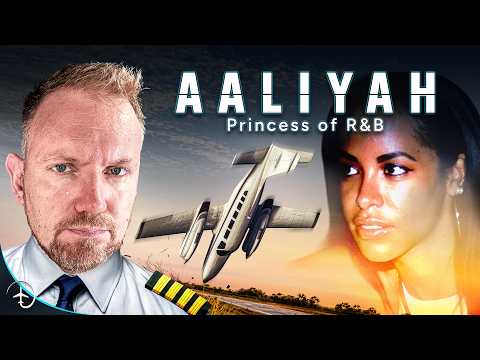
[0:00]Everything about this flight was wrong. So the destiny of Alia and the rest of her entourage was sealed before they even left the ground. And the reasons why truly tragic.
[0:19]Late in the afternoon on August 25th, 2001, the sun was beating down on the ramp on what was then known as Mars Harbor Airport. A small field located on a peninsula of the island of Great Abaco in the northern Bahamas. Now, Mars Harbor is not the kind of airport. Most people picture when they imagine international air travel. There are no long jet bridges or taxiways lined with wide-bodied airliners. Instead, the airport serves the scattered islands of the Abaco chain with a small number of aircraft, charter flights and private planes, often moving people the 300 km separating Bahamas from the southern tip of Florida. Now, park near the edge of the ramp on that particular sweltering Saturday was a small white 42 Bravo with registration November 8097 Whisky. These kinds of small piston engine twins were commonly used for short commuter flights between islands and the mainland at the time. And on this day, it was screwed by a single pilot and was about to carry eight passengers. Among those was A, a 22-year-old singer and a. taxing out for a takeover.
[2:00]It was physically incapable of ever making. In the summer of 2001, Alia had traveled to the Bahamas together with the small production team to film the music video for Rock the boat. One of the singles from her recently released self- titled album. By that point in her career, she had already become one of the most recognizable figures in contemporary R&B and the label wanted a video that matched the polished cinematic style that had defined her earlier releases. The concept for this particular video was centered on wide ocean views, shallow turquoise water and long stretches of pale sand. The kind of scenery that would be impossible to reproduce on a studio set. So for that reason, the production was scheduled on location in the Bahamas which by this time had become a common destination for American film and music video shots looking for a tropical backdrop. without having to travel halfway around the world to get it. But working in a location like this always creates logistic challenges that doesn't exist in normal studio productions and that's because a professional music video crew does not travel lightly. Even a relatively small shoot requires multiple cameras, stabilized mounts, lighting equipment, batteries, sound gear, wardrobe, makeup kits as well as the personal luggage of the cast and crew. And much of that equipment needs to be shipped in rigid protective cases that can weigh 20 or sometimes 30 kilograms each. So when dozen of those cases move together, the total payload can quickly climb into the hundreds of kilos. Now on a main land production, those loads would normally be moved by truck between locations, but on a chain of small islands, the only practical way to move both people and equipment quickly is by air. So in this case, a series of charter cargo flights had brought all of the equipment over to the island in the first place. Now these productions also typically operate very dynamically with decisions made on short notice, which is why small short aircraft are often a routine part of island production work. Those include aircraft like the 42, the Piper Navaho or the Beachcraft King Air who are designed specifically for short flights carrying small groups of passengers between aircraft that may have only a single runway and limited ground infrastructure. These planes can also depart on flexible schedules and move cruise and equipment far more quickly than ferry boats or commercial aircraft connections ever could. And in the days leading up to August 25th, Ali's production team had been moving between locations around the Abaccos while filming that videos beach and ocean scenes. And like many location shots, the scheduled had done gradually tight as the crew tried to complete every planned shots before they had to leave. By the afternoon of the last day of filming. The work had then finally been finished and the team began preparing to return back to Florida with the next stage of post production work was awaiting them. And this obviously meant that they now had to gather all of their equipment, packing up the cases and arrange the short charger flights that would carry everything back across to Opola Airport. A small airfield outside of Miami. Now to arrange this, the production team work together with a broker to charter a small multi-engine plane, but a last minute change of charter company meant that the original charter wouldn't work, so they had now found a new company, Black Hawk International Airways. which was a small Florida based charter operator that regularly flew routes between South Florida and the islands in Northern Bahamas. This change meant that instead of flying the 404 that had originally been arranged. The group would now be using the smaller 402 Bravo. An aircraft whose maximum take off weight was roughly 700 kilos lower than the originally planned aircraft. Now on paper. This shorter appeared to be operated through a structure that was fairly typical. The 402 which was scheduled for the flight was not directly registered to Black Hawk International Airways but was instead listed as being owned by company called Skystream incorporated. Arrangements like that were not unheard of in small charter operations where aircraft ownership, leasing companies and operating businesses could be structured through multiple corporate entities. In many cases a company would hold the aircraft itself in one corporation while the charter flights were marketed and operated under another. But what investigators would later discover was that the relationship between these two companies was closer than it initially appeared. You see the corporate records for Skystream incorporated listed an address in Pembroke Pines, Florida and when those records were compared with the filings for Black Hawk International Airways, they revealed that both companies shared that same registered address. In fact, the address used for both corporate filings corresponded to the personal home address of the owner associated with the charter company. And they would also discovered that the work surrounding the ownership of the aircraft was just a tip of the iceberg of shady stuff. Another detail that would later draw attention was just how recently the pilot on this faithful flight had been brought into the operation. According to the records reviewed by the investigators, he had been hired only a few days before this particular flights to operate the aircraft on behalf of Black Hawk international airlines. Now, charter companies higher and dismissed pilots all the time. So it's not uncommon for them to do so when a need arises. But under the operating arrangement for this particular airplane, the situation was more restrictive than it first appeared. You see, November 8097 Whisky was only authorized to be operated commercially by the owner of Black Hawk Aviation. But he was not the pilot on this day.
[8:26]Instead, this newly hired pilot was flying while the owner was back in Florida. In other words, even though the pilot had been hired to fly the flight departing Mars Harbor on this day, he did not hold the authorization required to legally operate this specific aircraft. A fact that would become an important finding once investigators began examining how the flight had been arranged and who was responsible for ensuring that the pilot met the necessary qualifications.
[8:52]Now, in the aviation industry, we have learned through painful experience that enterprising corporate structures often hide weakness And also that hardware work around very rarely solve actual design problems. And that same pattern is true in everyday items as well. Let me use this as an example. You see the pivot here?
[9:19]Well, that's added to help the blade of this shaker move effortlessly in any direction, which seems like a good idea at first, but flexible blade mounts actually cause a fundamental problem. You see, when a blade isn't rigidly supported It actually moves when it hits your hair which changes the blade's cutting angle mid stroke and that leads to some hairs being cut cleanly while others are tugged meaning an uneven unpredictable shave and skin irritation. Now for most of my adult life I used to assume that irritation was just a part of the shaving process but it turns out that that's not true at all. It's just a byproduct of how most raisers are designed. Instead of developing a fixed blade, the shaving industry just added work arounds like lubrication strips to reduce friction or shoving bombs to apply afterwards. But what you really need is a properly designed solution to the problem which is what you get from today's sponsor. Hennessy. This blade stays completely still, minimizing skin irritation and razor burn while also giving you the smoothest shape possible. It is actually designed by a team of aerospace machine So you know that every design choice has been rigorously considered. I have been using this one for years at this point and I wouldn't use any other racer if I could avoid it. Now for you to get your hands on this thing of beauty, scan, this QR code or go to Hennessy.com/mentorpilot and use the code mentor pilot to get 100 free blades when you buy a racer. A huge thank you to Hennessy for sponsoring. Now let's Let's get back to the video where the ownership structure of this aircraft wasn't the only thing that the investigators found to be questionable. Some of the most troubling information that would later be uncovered had to do with the pilot himself and the irregularities investigator discovered in his log books. Log books are records that we pilots carefully maintain to document every hour we spent flying. So they form the backbone of our professional records. Every flight is meant to be logged with the aircraft type, the length of the flight and the kind of experience gained on it, whether that is cross country, night operations, IFR or VFR and how much of that time has been spent as pilot in command. Now, shorter operators rely heavily on these records when determining whether a pilot has the experience required to safely operate a particular aircraft. And as such, they are invaluable for these companies in their fast pace and dynamic world. But when the investigator later examined, this pilot's records, they found evidence that the numbers maybe didn't really reflect his actual flying activity. For example, the log book showed that eight months before this flight, a single update had added 279 hours of experience. And that same update had also added 121 day landings and 81 night landings and the pilot recorded cross country experience also increased by 70 9 hours. while solar flight time and pilot in command time each rose by 212 hours.
[12:38]And the amount of dual instruction received increased by an additional 67 hours. Now updating your log book to cover a lot of flying after you've forgotten to do it for a few weeks or month, probably well definitely it's a bit unprofessional, but it can in some cases be understandable. But this update also showed that all of this experience had been gained in just one day. Now, these numbers are important in aviation because each category represents a different type of skill development. Landings, building, repetitive handling skills required to safely bring an aircraft back onto the runway, cross country time reflects experience navigating longer flights between airport and pilot in command time represents the hours spent making operational decisions and managing the aircraft independently. So these categories are used by regulators, operators and insurance providers to determine whether a pilot has reached the level of experience necessary to safely conduct commercial operations. And quite obviously experience matters particularly in aircraft like the Cessna 402 which require careful handling during take off and landing, especially when operating close to the limits of its performance. Now, any operator, charter operators include are expected to verify a pilot's experience before assigning them with flights to carry passengers. Precisely because those passengers are relying on the operator to ensure that the person in the cockpit meets the necessary qualifications. So that's sudden appearance of hundreds of hours across multiple categories, therefore raised serious questions about this pilot's actual flying experience. In practical terms, it is very likely that this pilot had simply made up hundreds of hours of experience In order to make himself more employable and qualified, a mastermind that could have only worked when applying for a job at a small charter operation. Larger operators and airlines would have seen through those falsifications immediately and the pilot would have never been hired. But now he was and both tragically and ironically in this case, if this music video had been shot a month later after September 11th of 2001, this story like would have never happened. Since stricter attitudes towards due diligence and security background checks for pilots after 911 would have brought these inconsistencies to light. Those and the pilots consistent legal troubles which included a facial arrest and conviction for possession of crack cocaine only a few weeks before being hired by Black Hawk Aviation. Anyway, like I mentioned before, by the afternoon of August 25th, the filming in the had finally wrapped up and the production team were now preparing for the return flight back to Florida. The airport was operating as it normally would a summer Saturday like this with a handful of small aircraft moving passenger between the islands and the mainland, while ground crew were loading baggage by hand along the ramp. But for this production group that was now preparing to leave the island, the departure process would have looked very different from that of an ordinary charter flight. Instead of the usual collection of suitcases and carry on bags, the equipment waiting to be loaded now also included those heavy protective cases. Use for the filming equipment that I mentioned earlier. And when those were combined with the personal luggage of the passengers, the total payload for each passenger would have been significantly higher than on a normal charger flight. On top of that, several witnesses later told investigators that members of the group were pressing the pilot to depart as quickly as possible since they were eager to get back to Florida as soon as they could. And that might have caused him to skip some steps in the loading and preflight procedures.
[16:40]In other words, this would have meant that he never exercised the level of command authority that we expect of the person responsible for a relatively complex operation like this. In the aviation, the pilot in command is always ultimately responsible for determining whether a flight can be conducted safely or not regardless of external pressures. But in this case It looks like he was unwilling to take a stand and refuse to fly the plane as it was being loaded. Witnesses later also described how the baggage and equipment were overcrowded loaded onto the. And that is an important detail here because unlike a commercial airline or even something larger like a Caravane, an aircraft of this size doesn't separate baggage from passengers in cargo holds beneath the cabin floor. Instead luggage is placed in small compartments or directly inside of the cabin itself, meaning that where that weight is position can be just as important as how much weight is carried overall. In fact, one of the most basic steps in preparing any aircraft for departure is calculating its weight and balance, which we pilots do by adding together the weight of the aircraft itself, the fuel on board, the passengers plus any baggage, cargo or catering. And those numbers are then used to determine from the aircraft which represents the point where the aircraft can be thought to be. In this case however, investigators later determined that none of the passengers or their baggage had been weighed before the flight and that the pilot himself was loading the bags and equipment was then just loaded into the airplane while passengers boarded and took their seats. And among those passengers were two members of the security staff each weighing approximately 135 kilograms who were done seated in the rear most seats of the aircraft. In small aircraft like the 402, these details matters a lot. The allowed weight margins are relatively narrow here. So even a few heavy passengers or pieces of cargo placed too far towards the rear can shift the aircraft center of gravity dramatically. When the loading of this aircraft was later reconstructed, the results were Based on the estimated weight of the passengers baggage and equipment, the aircraft had been loaded more than 410 kilograms above its maximum allowable take off weight. And that was partly because the plane had nine people on board which was one more than it was certified to carry. On top of that, there was no evidence that the pilot ever completed any kind of weight and balance calculation which in turn meant that he likely had no idea that the distribution of the weight had pushed the aircraft to center of gravity approximately 11 cm off of the maximum allowable limit. Now to someone unfamiliar with aircraft weight and balance, 11 cm might not sound like very much. And in a large airliner like the 737 that fly, that kind of shift might not immediately sound that dramatic either. But the important thing to understand here is that every aircraft is designed to operate within a specific range of central gravity positions known as the G envelope. Within that range, the airplane remains stable and controllable and the pilot can safely maneuver the aircraft throughout all phases of flight. And adherence to those limits become especially critical in smaller aircraft as they often are more sensitive. But they are important to any type of aircraft out there. Now the aircraft manufacturers and the operators, therefore spent a huge amount of effort managing this balance. On larger aircrafts like the Boeing 737 or an Airbus A320, baggage and cargo can be loaded into different compartments beneath the cabin floor. And those compartments are then chosen carefully and limited to how much baggage can stay in each so that the aircraft weight stays within the approved center of gravity limits. And this by the way is also why you have to use your assigned seat for take off and landing. On longer, long haul flights, the fuel can then be used to adjust the aircraft balance with some larger is actually pumping fuel between tanks to keep the aircraft operating at an efficient and stable center of gravity. And modern fly by wire aircraft like the Airbus family can often go even further. Their flight computers constantly monitor the aircraft balance and can help stabilize the aircraft if the center of gravity shifts within the approved envelope. But even those sophisticated systems still operate within strict limits. If the aircraft center of gravity moves outside of the Even the most advanced flight control systems cannot overcome the loss of physics. The 402 on the other hand has none of those layers of automation or large cargo compartments to spread weight around. Its cabin is quite compact, its loading options are limited and the acceptable center of gravity range is correspondingly narrow. So in practical terms, that means that simply moving passengers or cargo can shift the balance far more dramatically than it would in much larger aircraft. Now when the center of gravity moves too far towards the rear like it did in this case, the aircraft becomes significantly less stable in pitch. Since the tail surfaces lose some of the leverage they normally use to counteract the lifting force from the wings. And the aircraft therefore becomes much easier to pitch upwards. Sometimes even too easy. But at the same time, it becomes much harder to counteract that upward pitch once it starts. And that loss of stability obviously becomes particularly dangerous during the take off phase when the aircraft is slow, close to the ground and operating at the very edge of its aerodynamic performance. So by the time this aircraft lined up on the runway at Mars Harbor on that afternoon, it wasn't just heavy. It was also badly out of balance in a way that would make it far more difficult to control at exactly the moment when precise control mattered the most. And if it would of the take off which it was now set up to do with the extra weight it was also carrying its wings could quickly exceed their critical angle of attack and the aircraft would be far more likely to enter into an aerodynamic stall. Now, on the normal loading conditions the pilot would quickly lower the nose and recover from something like that. But again with the center of gravity pushed far to the aft, this aircraft would now resist those corrective inputs, making it extremely difficult to lower the angle. attack and restore normal air flow over the wings. And as if those problems weren't enough, investigators would later uncover another deeply troubling detail. toxicology testing later conducted, revealed that the pilot flying had bought alcohol and cocaine in his system. Now the report didn't determine the exact level of impairment that this would have caused and it is therefore impossible to say with certainly how intoxicated he might have been during the actual flight. But in any case, just the fact that those substances were present at all represented another serious violation, which on their own would have been absolutely disqualifying for commercial flight operation. In any case, once everyone had been seated and the baggage had been loaded, the pilots started up to piston engines and began taxing the aircraft out towards the runway. Witnesses later told investigators that the engines sounded rough as the aircraft prepared to depart, backfiring and although investigators would be unable later to determine whether this affected an actual mechanical issue. Since no evidence was ever found of any damage to the engines. Black Hawk also later refused to provide investigators with any maintenance records and of course, sadly because the said didn't have a cockpit voice recorder, we will never know if those noises were heard in the cockpit or if the pilot noticed them. Anyway, Mars Harbor Airport was like I mentioned in the beginning, a relatively small regional airport with a single runway 0927. That runway was more than adequate for a properly loaded 42 which under normal conditions would require well under half of that runway length in order to become safely airborne. But the key phrase is under normal conditions. Aircraft performance calculations assume that the airplane is operating within its certified weight limits because when an aircraft is loaded beyond those limits, the physics of flight begin to change in rapidly unpredictable ways. The wings must generate more lift to support the additional mass and generating that lift requires higher air speed, which in turn will mean that the airplane needs a longer distance to accelerate a long way before it can safely take off. At the same time, excess weight also reduces the aircraft's ability to climb once it leaves the ground, as the engines must work harder simply to keep the aircraft airborne. which leaves far less performance available for any potential problems. So with that in mind, at time 1850 local, with the sun now setting, his engines running and his passengers and board strapped into their seats, the pilot line up the aircraft and began his take off roll. The small twin accelerated slowly down the runway, gathering speed as the engines pushed the overloaded airplane forward. Now witnesses later described the aircraft becoming airborne was struggling to take off and that it needed more than 100 extra meters of the runway than it would normally do. Investigators also noted that the flaps had been set to 15°, which would have increased drag further during the take off roll, since according to the checklist, the flaps should have been set to zero. Then, almost immediately after leaving the ground, things really started going dramatically wrong, as the aircraft nose began to rise far more steeply than expected. Because of its aft center of gravity, the airplane had now become far more sensitive to pitch input. So even the light control input that the pilot made in order to try to rotate. Now shot the nose up to nearly unrecoverable angles in under a second. And that in turn meant that only a few meters above the ground, the now quickly found itself in a fully developed aerodynamic stall. Now normally, like I said, the correct response to that would have been to push the nose downward, reducing the angle of attack and allowing airflow to reattach to the wing. But with the center of gravity now positioned so far back, the pitch control was almost gone, meaning that in this case, the tail surfaces couldn't get the nose down properly. So with little altitude and insufficient air speed, there was now simply no time or space left for recovery. The small twin just rolled over to the left with its nose soon pointing almost vertically down as it ploughed towards the ground with the entire sequence from lift off to impact, lasting only a few seconds. Emerges responders from the airport rushed to the crash site almost immediately, but the violence of the impact and the post crash fire left very little that they could do. Six of the occupants, including Aaliyah, were killed on impact, and the other three died shortly after the first responders had arrived, bringing the total death toll up to nine, everyone on board. Within hours, investigators from the local aviation authorities began the process of reconstructing what had happened, and as the wreckage was examined and the circumstances of the flight were pieced together, a clear picture began to emerge. The investigation ultimately determined that the aircraft had departed far above its maximum allowable takeoff weight, with its center of gravity equally far outside of certified limits. The loading of the aircraft, the placement of passengers and equipment, and the failure to conduct proper weight calculations had all played a role in creating an aircraft that would have been nearly impossible for a pilot to control, regardless of his experience or physical state. And all of this, of course, had happened at the hands of an unqualified pilot, possibly intoxicated to some extent, and enabled by multiple serious shortcomings in oversight by the charter operator. But the lesson that I want people to remember from this is that if you are a pilot in this type of operation, please do not rush. Take your time and do your calculations accurately and don't be afraid to say no if your operator or customers try and rush you. And obviously, stay honest and follow the rules that all license holders have promised to obey, because they are there for a reason, and any shortcut that you take might come at a very steep price. Now, this was a slightly shorter extra video that we made whilst working on larger projects, and talking of which, here comes a taste of a new Black Box video that we just released, and that I think that you will find really interesting.
[30:09]Now, please check out the full video that I will be linking to somewhere around here, and remember to subscribe if you like more videos like that. My name is Peter Hornfeld, and you're watching Mentor Pilot. Have an absolutely fantastic day, and I'll see you next time. Bye bye.


