[0:04]If you've noticed spots on your skin and blood in your bedding, then you might have bed bugs. Bed bugs are small insects that often live on furniture or bedding. Their bites can be itchy but they don't usually cause other health problems. And in this video, we'll cover what bed bugs are, signs and symptoms, how to get rid of this condition, and finally, how to get rid of these little critters. If you do enjoy the video and learn something new, please remember to consider liking the video, as well as subscribing to the channel. Now, bed bugs can be dark, yellow, red, or brown. Adults are around 5 mm long fully grown, and they look like this. They can hide in many places, including on bed frames, mattresses, clothing, furniture, behind pictures and even under loose wallpaper. Here you're seeing a picture of bed bugs that are infesting a sofa. You may have bed bugs if you've noticed little bites, which often occur on skin which is exposed whilst sleeping. And this is things like the face, the neck, and the arms. You may have noticed spots of blood on your bedding. This is from the bites or from squashing a bed bug. You may also have noticed small brown spots on bedding or furniture. This is bed bug poop. Bed bug bites can be raised or itchy, and they're often in a line or grouped together. And you're going to see some examples of typical bed bug bites on screen now. On white skin, bed bug bites usually look red, whereas on black or brown skin, they may look purple, and they may be harder to see. Some people can have a reaction to the bites. This can be very itchy and there may be painful swellings. And very rarely, some people can develop a severe allergic reaction, which is called anaphylaxis. This is where the tongue and the face swell, and this is a medical emergency, and the person must seek urgent medical treatment straight away. So, if you've got bed bug bites, well, how do you treat them? Well, the good news is that they usually clear up on their own within a week or so. Things that you can do at home to help include putting on something cool, like a clean, damp cloth on the affected area to help with the itching and any swelling. Keeping the affected area clean, and trying not to scratch the bites. This is to avoid getting a secondary infection. Now, if you're still finding the bites are bothersome, then your local pharmacist should be able to help you. They can advise on things such as a mild steroid cream. This is something like hydrocortisone cream. This can ease the bed bug bite. However, children under 10 years of age and pregnant women should get advice from a doctor before using hydrocortisone cream. They may also advise you on antihistamines. These may help if the bites are very itchy, and you're not able to sleep. Now, if these things don't work, and the bites are still very painful, swollen or itchy after trying these treatments from a pharmacist, then you should see a doctor. Similarly, if the pain or swelling around the bites is spreading, you might have an infection, and you may need treatment with antibiotics. And again, you'll need to see a doctor. If you're concerned about the bites or you feel that you need medical input, then always do the safest thing, and that's to seek advice from a trained healthcare professional. Finally, if you think you have bed bugs, then you should contact your local council or pest control service. It's really difficult to get rid of bed bugs yourself because they can be hard to find and they also might be resistant to some insecticides. Now, there are some things that you can try yourself, but these are unlikely to get rid of bed bugs completely. And these things are washing affected bedding and clothing on a hot wash. So by this, I mean 60 degrees C or more, as well as tumble drying on a hot setting for at least 30 minutes. You can put affected clothing or bedding in a plastic bag and put it in a freezer for three to four days, and you should also clean and vacuum regularly. Bed bugs are found in both clean and dirty places, but regular cleaning will help you spot them earlier and make sure that you can get on top of them. There are three things to avoid. These are not keeping clutter around your bed, not bringing second-hand furniture indoors without fully checking it first, and don't take luggage or clothing indoors without checking it carefully, if you come from somewhere where you know there were bed bugs. This is because they can be an absolute nightmare to get rid of once you've got them in the first place. I hope you enjoyed this video and you learned something new. If you did, please remember to like it, leave me a comment, and if you've got any other thoughts or top tips on managing bed bugs, I'd love to hear from you. Subscribe to the channel for weekly medical education videos if you haven't done so already, and please also check out the references and resources that I used to make this video, and these can be found in the description box. There's lots more useful information which is contained within these links. Finally, I do have to stress that this has been designed as an educational video, not a clinical advice video, and for legal reasons, please read the full disclaimer in the description box of the video. If you've noticed any new or concerning skin lesions, especially ones which are dark, bleeding, or ones that look irregular, please go see your health provider. As ever, thank you very much for watching, and until next time.
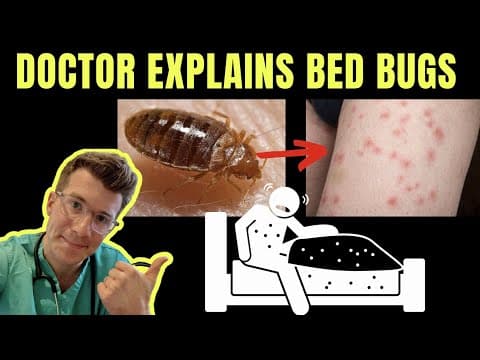
Doctor explains BED BUGS - including SYMPTOMS, TREATMENT AND PREVENTION ( +PHOTOS!)
Doctor O'Donovan
4m 57s997 words~5 min read
YouTube auto captions
Transcript source
YouTube auto captions
This transcript was extracted from YouTube's auto-generated caption track. The transcript below is server-rendered so it can be read, searched, cited, and shared without opening the original YouTube player.
Pull quotes
[0:04]If you've noticed spots on your skin and blood in your bedding, then you might have bed bugs.
[0:04]And in this video, we'll cover what bed bugs are, signs and symptoms, how to get rid of this condition, and finally, how to get rid of these little critters.
[0:04]If you do enjoy the video and learn something new, please remember to consider liking the video, as well as subscribing to the channel.
[0:04]They can hide in many places, including on bed frames, mattresses, clothing, furniture, behind pictures and even under loose wallpaper.
Use this transcript
Related transcript hubs
Watch on YouTube
Share
MORE TRANSCRIPTS


