[0:04]Last summer, when I was alone in Tallinn, Estonia, I had to face a challenge. This challenge was this simple phrase and many others like it. Tere tulemast. I presume none of you speak Estonian? I take that as a no. So, and I was in the same situation as you are right now back in last summer, because I never spoke Estonian. Never read an Estonian book, never watched an Estonian movie, never actually listened to an Estonian song or met anybody from Estonia. Yet I had to act quickly. I had to be able to at that one single spot, be able to understand what the barista was saying when I was ordering my coffee. Be able to understand what the passport security person was asking me at the airport when I was coming to Estonia and when I was leaving Tallinn. I had to be able to comprehend the language, to comprehend it at that very single moment. And this experience raised the question. How can one learn a language in a very limited amount of time, comprehend it, be able to act with it, be able to work with it, to meet people with it and most of all to progress in it. I attended a talk last September, which was right about this issue. It was held by a polyglot. She was from Slovakia and was willing to talk about how she is learning, how she was learning and is still learning to this day, new languages. She told us of people that speak six, 10, 12, 16 languages even. They devote their whole lives to this idea of being able to comprehend every single one of them or as many as they could. And if you were thinking that there is a magical way, some magical secret, which she told me, I have to disappoint you. There is no single super method. What if the polyglots, all of them worldwide, agree on one thing, it is that there is no way, one fastest way how to learn a language. It has to be personal. You have to be able to choose a personal way and find it and and find your language through a personal personal way and modify it as much as you possibly can to suit you, to suit your type of learning. Some people prefer to stuff their head full of vocabulary and to fill it with words and phrases until their head bursts. Some of us prefer to watch a movie, to talk with a person at pub or like me, when going back from the library working on an essay for six hours, till in till dying morning, meet a drunken Frenchman and talk to him in plain French and practice as much as I can. There are many ways. Some people even prefer those video games that you know your phones, you know, the memorizes and those kind of things. I'm not much a fan of that, but that's a personal thing again. Today what I'll be presenting to you is something different. It is or these are the four points which are intrinsic to our learning, which are the building blocks of any learning of any language you will ever do. It doesn't matter if it's Chinese, if it's Arabic, it is Hebrew, Estonian, French, Spanish, any language whatsoever. These four things, message, importance, observation, comprehension, all amount to the same thing, the same goal. Learning a language effectively. And they all are, as you'll soon find, interconnected. You cannot just focus on one of them, you cannot just focus on importance and hope that you will through this your this relevance to who you are, you'll be able to learn it quickly. Or similarly, you cannot just focus on comprehension, as we do in our schools nowadays, we focus too much on memorizing vocabulary, or learning phrases about whatever thing that there is prescribed by the booklets. But that's not how you learn a language. I'll get into them more later once I progress through the talk. The first one is message. Some of you, this might seem bizarre about what I mean my message. It is, well, you'll see yourselves. This sentence is in Estonian. Since none of you speak Estonian, I'm not going to be asking what it actually means. But does anybody or rather, let me read it. I'm not fluent in Estonian, so just like be ready with me, so. All human beings are born free and equal in dignity and rights. Now, still you have no clue what this actually means. I don't presume that from some magical learning of some some broken Estonian, you magically speak or learned understand this one phrase. But already, you can see that there is ya twice. And because language is logically structured, you are able to deduce that probably because also these two words have the same endings, this one and this one and then these two, then maybe that means and. And already in less than 30 seconds, you understand one word in language that you've never seen in your whole life. And through progressing like this, through making these small steps, you're able to actually learn it. What if I put another sentence here? In a language that some of you speak. Maybe more than some of you, maybe all of you. But certainly there is more familiar because we are in an Anglophone, francophone society. So, most of us presumably. And what if I put another one which all of us speak in English? This is how you learn a language. Once you find the meaning, the message behind a sentence, you are able to acquire the language. There are signifiers in a language, which all help you to build a logical structure of this said language. When you first understand the message, you unconsciously acquire the language. This doesn't mean that by understanding one phrase from the Charter of Human Rights from the UN United Nations, you understand Estonian or French or English for that matter. It simply means that you will have the building blocks with which you can build the learning, you have the logical structure which builds on this language. Then you have importance, importance. Every language, no matter what it is, has to be useful to you, has to be relevant to you, has to be something you enjoy. When I was in school many years ago, in my very elementary school, I was forced to study Spanish. I hated it. I couldn't stand it. Nothing against Spanish, nothing against that. It was simply I just didn't enjoy it. I couldn't learn a single sentence. When I was in Italy for my Duke of Edinburgh residential trip, I was I decided to study Italian and I was just like, yes, I'm going to learn this language. And then I failed. Because I was not able to enjoy it, because I just didn't enjoy it. And actually, from that one trip I had more from Swedish because I met a Swedish friend that I'm still in talk in contact to this day. It is this enjoyment, this relevance to you, that is important. It has to be relevant to your education. Something that you want to learn because you want to progress in your life. Has to be relevant because your family, your friends. You have to find enjoyment in it. It has to be relevant because of your job, maybe you have a job in I don't know, Ireland or uh Stockholm and you need to learn the language to be able to work with it. And like me, maybe it's relevant to your travels. Because being international, this is what this whole day is about. Means that you want to open yourself to other opportunities. For me, that means to see different cultures and different worlds. And as a part of that, you have to be able to speak the language to at least some degree. Languages are tools. Just like any other part of our lives, they can be used in some meaningful way. Once you find this what this meaningful way is, you're able to learn much faster. And therefore, choose a language that's useful to you. Now, onto observation. And this is probably the part that I think might be one of the most important, simply because it can be done so easily. This photo was taken when I was also last summer, walking the Mont Blanc in between France, Italy and Switzerland. And when I took it, I was just crossing the Italian-French border. I just came from a little little refugio on the French side and was walking up the mountain to cross the Italian side. And on the in the same day, I spoke both French and Italian. My French is by no means good, but I'm able to talk with it. Italian is much harder, but still, I was able to comprehend the people, ask for a bed. And in a dire situation, not be forced to sleep outside in wind and freezing cold because that would be not be enjoyable at all. And from it, I realized that there are two key things, that you have to be actually immersed yourself in the language to some degree. You cannot just stand it home and hope that language will come to you, that the knowledge that you are able to do with it will actually come to you some like that, like that. You have to be actually able to put yourself there, to pay attention, to observe people are doing, how they speak, how they emote. And hopefully, from that, build up your knowledge. And, and this is actually a key thing I think people should start doing this, you should be looking for something called called a parent speaker. Now, this is what I learned during the talk about the polyglots, back in September. It is an idea that when you're a new you speak a new language, you're like a baby. You don't know how to actually operate a language. You're just plucked in the world where all adults speak in a different language and you're just hoping to crack to grasp a meaning about it. Grasp something that you can know, that's a word that you can understand. What you need is a parent speaker. Somebody that will speak to you on a same level, will help you learn new words and will actually correct you, will actually give you advice how to speak better and will not diminish you in any sort of way. That is key, because when you're able to practice your speaking, your learning in that sense, you learn faster. Because and this is actually going to be the very next slide, I think, afterwards. So I'm going to quickly get to this, sorry for that. When you actually learn a language through comprehension, through observation, you are able to then speak the language. And that is one of the most important things because how else would you want to communicate with people, especially like me when you want to travel, you need to be able to act on your knowledge. You have to be able to actually find somebody that you can talk to in an equal sense. And you have to be able to listen a lot. People don't want to listen. They revert back to English, they revert back to their natural tongue because they are scared. Don't be scared, and this is going to sound like a great cliche. Don't be scared to make mistakes, make them, they're going to be corrected by people and you're going to learn from that. And now to the thing that I was hoping to talk about, comprehension. And this thing can be split into two parts. Memory and comprehension or knowledge. And I feel like nowadays in schools, what we do is we just stuff our heads with vocabulary until they explode. We shouldn't be doing that because memory or knowledge isn't comprehension. Like for example, I know one sentence in Irish. Anikimolokogandeklora. Does it mean I speak Irish? By no means. I don't even properly know what the sentence means, but I know it's Irish. I have that one piece of knowledge, but I couldn't say I comprehend the language by no means whatsoever. And that's the issue. We force ourselves to learn complex vocabulary that is not relevant to us. We're forced to stuff our heads with words that don't bear any meaning and that we will never probably use ever in our lives. Yeah, we don't actually focus on comprehending them, to comprehending the structures and the sentences. To actually using our existing knowledge from other language, from my from my maternal tongues to actually progress further. We shouldn't be doing that. We should be trying to learn with use of our existing languages. We should be using our native native tongues. We should be using our abilities to speak from day one and we should be looking at actions more than word or nouns. When you learn what it means what it means the word to hurt, it's still more useful than actually what it means what the word arm is. You can be like hurt, hurt. But what will you do with an arm? It doesn't work like that. Actions are more important than words. And this sort of progress is something that's key for learning a language effectively. So what I presented to you today is four principles and some key points, some things that maybe you've heard, some things that maybe were new to you, the parent speaker probably. All these things are essential. You cannot remove one and hope that the others will come with it or that you focus only on one of them and completely disregard the others. It is important to push yourselves to your limits, to go out there and this is going to sound like a great cliche once again, but to push yourself, go out there and actually experience the language firsthand. No school, no institution, no book can ever give you that. And just on the very end, I would like to dispel one last thing that I've been told in past, that I've heard people tell me or people tell other people, that it's talent that's required. That for being able to learn a language, you need talent, you need to be able to have this magical skill within you that you're born with. It's not true. Anyone can learn a language. Anyone I've known when they push themselves hard enough, they're able to speak a language. Some people are far superior to me and they're probably hundreds and millions are like that. But it is that thing that you push yourself that differentiates you from other people. This push. So don't be scared to push. Thank you.
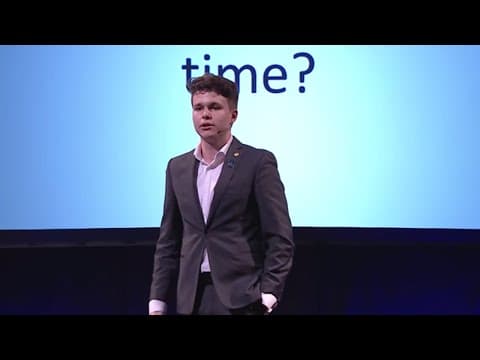
HOW TO LEARN LANGUAGES EFFECTIVELY | Matyáš Pilin | TEDxYouth@ECP
TEDx Talks
13m 40s2,505 words~13 min read
YouTube auto captions
Transcript source
YouTube auto captions
This transcript was extracted from YouTube's auto-generated caption track. The transcript below is server-rendered so it can be read, searched, cited, and shared without opening the original YouTube player.
Pull quotes
[0:04]So, and I was in the same situation as you are right now back in last summer, because I never spoke Estonian.
[0:04]Never read an Estonian book, never watched an Estonian movie, never actually listened to an Estonian song or met anybody from Estonia.
[0:04]I had to be able to at that one single spot, be able to understand what the barista was saying when I was ordering my coffee.
[0:04]Be able to understand what the passport security person was asking me at the airport when I was coming to Estonia and when I was leaving Tallinn.
Use this transcript
Related transcript hubs
Watch on YouTube
Share
MORE TRANSCRIPTS


