[0:02]Mother of six Shahzadi uses as little water as possible to do her chores. The only way she gets water is by filling up heavy buckets from a neighborhood spicket and lugging them home. And she worries what she brings home isn't safe to drink. We get sick two or three times per month, she says. I can't afford bottled water. Her seven-year-old daughter Moazmine isn't feeling good now. My stomach aches and gurgles, she says. Just next to this filthy water filled with trash and sewage is where the neighborhood queues up every single day. And they do so because this is a tap that the government turns on three times a day. Without it, they wouldn't have access to clean drinking water. This neighborhood just on the edge of the capital has never had water piped to its homes. Besides this spicket, people here get water from illegal ground water pumps installed by those who can afford them. And this guy, who exhausts himself every day running his water supply business. There is no sanitation here, just so many complaints, he says. So I thought, let me get a water filter and supply clean water to these people in order to help them and make some money. He charges about 18 cents per bucket, a price business owners can afford to pay each day, but few others here. When many make less than $2 a day. India has struggled to maintain enough clean drinking water for the masses. The country has 17% of the world's population, but only 4% of the world's renewable water sources. Demand is growing, while issues such as leaks and pollution further strip away the supply. TM Vijay Bashkar is an official with India's Department of Drinking Water and Sanitation. He says rural India has a whole range of issues depleting us water. Because we are rural drinking water is dependent on ground water. Ground water levels are going down because of exploitation by irrigation by farmers and by industries. We are forced to drill deeper and deeper for drinking water. And as you go deeper and deeper, you find more and more contaminants. It may be arsenic, it may be fluoride, it may be other different types of. Now we are finding nitrates, iron,ity. Now uranium is also being found in some places. While the government implements programs to combat some of the problems, its biggest cities are struggling too. This year an acute water shortage has hit the capital. New Delhi relies on other states for much of its water supply, but has found itself in a tug of war to get it. There are still entire neighborhoods where these trucks bring in the only water supply. As soon as the truck is visible, thirsty crowds emerge. Demla fills as large a bucket as possible because the truck only comes to her neighborhood three times a week. At times there are scuffles and we have to return empty-handed, she says. When every drop of water matters, the fight is ultimately for survival. Sarah Sidner, CNN, New Delhi.
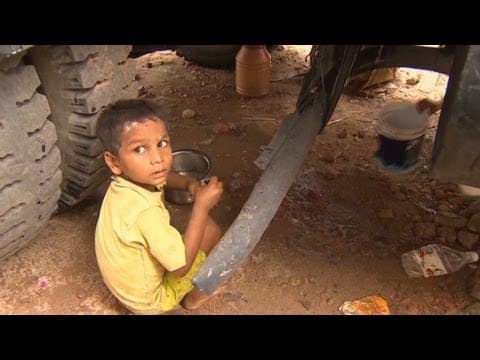
India - A daily struggle for clean water
CNN
3m 11s515 words~3 min read
YouTube auto captions
Transcript source
YouTube auto captions
This transcript was extracted from YouTube's auto-generated caption track. The transcript below is server-rendered so it can be read, searched, cited, and shared without opening the original YouTube player.
Pull quotes
[0:02]The only way she gets water is by filling up heavy buckets from a neighborhood spicket and lugging them home.
[0:02]Just next to this filthy water filled with trash and sewage is where the neighborhood queues up every single day.
[0:02]And they do so because this is a tap that the government turns on three times a day.
[0:02]This neighborhood just on the edge of the capital has never had water piped to its homes.
Use this transcript
Related transcript hubs
Watch on YouTube
Share
MORE TRANSCRIPTS


