[0:00]So to spending too much time on social media like Facebook, Instagram, Snapchat, actually increase loneliness and depression. That's the new finding of a brand new study by researchers at the University of Pennsylvania.
[0:15]To be published in the peer-reviewed Journal of Social and Clinical Psychology, and it marks the first time there's been a causal connection established between time spent on social media and depression and loneliness.
[0:25]The lead author, Melissa Hunt told me on my Sirius XM radio program that the undergraduate subjects who limited their time on Facebook, Instagram, and Snapchat to 30 minutes or less daily,
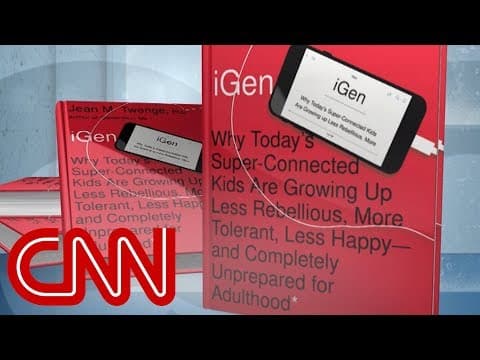
[0:39]saw a marked decline in rates of loneliness and depression. I wanted to immediately analyze these results with Dr. Jean Twangy, who studied generational differences for 25 years and then wrote this book, IGEN.
[0:48]Why today's super connected kids are growing up less rebellious, more tolerant, less happy and completely unprepared for adulthood, and what that means for the rest of us.
[0:59]In the book, Dr. Twangy noted that teens are not hanging out as much with friends, in no rush to drive, dating less, having less sex, and getting less sleep.
[1:08]Most alarming despite their continued connectivity, they're lonely, and rates of teen depression and suicide have skyrocketed since 2011.
[1:17]And she observed that it was in 2012 that the proportion of Americans who own cell phones passed 50% for the first time.
[1:27]But Dr. Twangy was careful to say she was noting a correlation, not necessarily causation. Well, now there's some proof that it's the actual cause.
[1:34]Joining me now, Dr. Jean Twangy, a San Diego State University professor in personality psychology. My hunch is, Dr. Twangy, you were not surprised by these new findings.
[1:45]I was not. It certainly looked from the other data that we had that there certainly might be a causal relationship here because teen loneliness and depression spiked right at the time that smartphones became common.
[2:01]And we knew from other research that teens and adults who spend more time on social media sites are more likely to be lonely and depressed.
[2:13]So this study is a crucial piece of the puzzle showing that it's not just say that the unhappy kids are spending more time on social media.
[2:23]that social media may actually cause loneliness and depression. And what then specifically do you think drives it?
[2:30]Is it the inherent social comparison that they go through when they're participating in Snapchat and Instagram and Facebook. You're you're being held up to be assessed in comparison to your peers.
[2:46]There are I think a number of mechanisms. So one is exactly that. Everybody else's life looks so much more glamorous on Instagram than yours, because you know all the things that happen in your life, but your friends are only posting about the positive things.
[3:00]It's also so easy to see all the things that we're missing out on. So we feel left out much more often. It's especially true for teens, you know, past years they might have heard about the party.
[3:10]um, whispered about in the high school hallway, and now they see it in living color in real time online.
[3:20]So, to parents who are watching, to teens who are watching, what's your advice?
[3:27]My advice is pretty simple. It's two things. First your phone should not be in your bedroom at night, so you get a good night's sleep.
[3:36]And second, that nope, you don't have to give up your phone or being online or social media, but you should limit your use.
[3:43]So for social media in particular, limited to an hour a day or less, and try to keep total screen time below about two hours a day of leisure time or less.
[3:52]That seems to be what is best for mental health and happiness.
[3:57]Dr. Twangy, when I spoke to the lead author of this new data, this new research, something that I found very interesting is she said to me that the undergraduates who were part of the the examination group,
[4:09]they clamored to be in that group that had a limit put on them of 10 minutes per day for each of the three, and she said it occurred to her, you know, you can limit yourself.
[4:19]There's nothing, there's nothing that says you need to be in my control group in order to be so limited. But I thought that that spoke to the larger issue of how we all seem to know that this is what's best for us and yet we have a difficult time putting those parameters on our own conduct.
[4:37]It's not all that surprising because these sites are designed to keep us coming back and designed to keep us on for as long as possible.
[4:50]Some people have gone as far as saying that they're designed to be addictive, which makes sense because that's how they make more money. So even though we know what's best for us, it is really difficult to put those limits on yourself.
[5:01]But you can do it. And there are controls that parents can put on kids' phones and adults can put on their own phones too, to limit your use or at least give you a reminder. Hey, you've been on Instagram for 30 minutes, you probably want to put the phone down and do something else.
[5:14]One other aspect that I think folks should know who are watching, dating sites were not a part of this study.
[5:21]This was limited to Snapchat, Instagram and Facebook, and I can't help but wonder what we would learn if we were able to study some of the implications of those who are heavy users of of dating apps.
[5:34]Absolutely. So, you know, those apps place so much emphasis on appearance. They're really tough on people's self-esteem and they're yet another thing where you can spend hours and hours looking at that screen,
[5:50]when maybe you should be out interacting with your friends face-to-face or trying to meet potential partners face-to-face it might be a better strategy for happiness.
[6:00]And I'm not convinced it's limited to teens. I read your book, you know I was really taken with it. I'm I'm convinced there's there's a lot we adults can learn from it as well, Dr. Twangy.
[6:10]I agree completely. These rules about um, keeping the phone out of the bedroom and limiting their use, absolutely apply to people of all ages.
[6:20]I think these trends have had a bigger effect on teens and young adults just because this is the only world that they have ever known and they're still building their social worlds.
[6:29]But it certainly has an effect on older people as well. Thank you for coming back. I appreciate your work. Thank you very much.


