[0:02]This video is going to be about the threats to biodiversity. So one threat is habitat loss, and habitat loss is actually the greatest threat to biodiversity, and it can happen through a variety of different ways. So we can have agriculture, urban development, forestry, mining, pollution, just to name a few. Um, over in this picture on the right hand side, we can see um this residential development and how it's really impacted the surrounding environment and now habitat that was previously available to the species living in that area has become either entirely unavailable or greatly reduced um in size, and so you're going to result in something called habitat fragmentation. And so habitat fragmentation uh is something we'll talk about more extensively in another video, but really quickly, it's basically taking a large habitat and breaking it into smaller pieces. And when you do that, you're also breaking up what was one large population into several smaller populations. And that becomes dangerous for biodiversity because smaller populations tend to have a higher probability of extinction than large populations do. And so habitat loss is also a major threat to aquatic ecosystems, and that's mainly going to be in in ecosystems like coral reefs or wetland ecosystems or stream ecosystems and things of that nature.
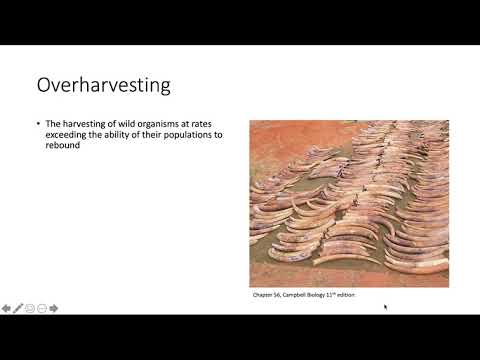
[1:25]So we also have introduced species. And so introduced species are species that humans have moved either intentionally or accidentally into new geographic regions. And so they're going to gain a foothold in these new um ecosystems because they have no natural predators and they're able to prey on native organisms and outcompete native organisms because of that. And so in this picture we can see something called the Kudzu vine, which was introduced into the United States, and because it had no natural predators, it was able to really efficiently outcompete the native plant species and spread really rapidly and kind of take over the surrounding environment. So to get an understanding of kind of how detrimental introduced species can be to an ecosystem, uh introduced species have contributed to 40% of extinctions since 1750. And so even in the United States alone, we have more than 50,000 introduced species, and so this is something that we're still dealing with the consequences of right here in the United States. So we also have over harvesting. So over harvesting is the going to be the harvesting of wild organisms at rates exceeding the ability of their populations to rebound, uh which is, you know, reproducing and uh increasing in number. And so species that are uh found in restricted habitats are particularly vulnerable and so are species that are large with uh low reproductive rates such as elephants. And so all over on the right hand side of the screen, you can see a picture of elephant tusks. And so um elephant tusks are super popular for the ivory trade, and so because these organisms have such low reproductive rates, when they're targeted for their tusks at such high rates, they're not able to keep up with the um how quickly individuals are being removed, and so that results in an ultimate reduction in uh their population numbers. And so the last threat to biodiversity is global change. So global change is going to alter the Earth's ecosystems at either a regional or all the way up to a global scale. And the way that's done is going to be through changes in things like climate, atmospheric composition and ecological systems. So over on the right, we can see um a graph of the atmospheric concentration of carbon dioxide over the past several years, as well as uh the uh rate that the temperature has been changing or the global average temperatures. And so what we can see is that as we're changing our carbon dioxide, putting more of it into the atmosphere, we're changing our atmospheric composition, which ultimately relates to a change in temperature, so we'll be changing our climate as well. And so a lot of these things kind of play off of one another and act synergistically to kind of uh worsen the situation. And so something else that's uh really impactful particularly on aquatic ecosystems is acid precipitation, and that's mostly because aquatic ecosystems tend to be more sensitive than uh terrestrial ecosystems. I hope you found this video really helpful. The concepts and information presented in this video will be true no matter what biology class you are taking. However, the concepts presented in this video are referencing material currently covered in Baylor University's coursework. Remember, if you are a currently enrolled Baylor student, we offer free tutoring services in our tutoring center, which is located on the first floor of the Sid Richardson building. You will find all the details you need about these services on our website, which is www.baylor.edu/tutoring. You can schedule a free 30-minute one-on-one tutoring session online or just drop in during any of our business hours. For more information about our current services, please visit our website. Thank you.