[0:00]Clavicular is what Nietzsche warned us about. Friedrich Nietzsche was a 19th century German philosopher who had a chilling warning about the future. If you gaze long enough into an abyss, the abyss also gazes into you. Some people see Clavicular or Braden Peters as a self-help creator or an influencer to help you increase your looks. Other people see him as entertainment, but I see something much darker. I see the exact cultural sickness that Friedrich Nietzsche diagnosed over 100 years ago. Fully optimized for the internet age. I see Nietzsche's worst fear, living, breathing and streaming, contaminating the youth and future generations. Is he dead? Hopefully. Friedrich Nietzsche famously said, God is dead. And a lot of people misinterpret what he meant by that. He wasn't making a religious argument. He was giving a warning. You see, for much of human history, people believed that their lives pointed to something higher, God, truth, virtue, being a good person, something that was beyond themselves. And that higher meaning, it gave life direction. It made people share with others when they had little. It made people forgive each other when they wanted to seek revenge. It made people restrain themselves when anger would have felt better. It made sacrifice and living unselfishly make sense. But Friedrich Nietzsche believed that in modern times people stopped believing in that higher source. And when the reason to believe in something higher fades, so does the reason to act beyond yourself. This is the birth of nihilism. Nihilism is the belief that life has no higher meaning or purpose. Nietzsche warned that if there is nothing higher to aim at, then where does our energy go? He feared that instead of rising to create deep new inner values, people would turn inward. He feared that the self would become the new focus, the new project, the new thing to perfect. And with clavicular, we can see this clearly. When there is no shared sense of purpose, when we are not striving to become better internally, we strive to become better externally. Looks maxing or obsessively optimizing your image or status replaces the harder work of transcending yourself, of trying to become a better person. It begins to look like a kind of self-worship, building and polishing the image of the self as if it were something sacred, as if it were a God. Where do you rank male beauty and like the kind of scale of what's important? Like the highest. Like higher than like uh, like kindness or something. Yeah. Instead of asking how to grow in character, how to grow in depth, how to grow in truth, the focus shifts on how to look better, how to gain more followers, how to achieve more status, how to mog more people. And when meaning collapses, when nihilism grows, anyone or anything that stands in the way of the self can feel unimportant. This is evident in the viral clip where Clavicular runs over someone in a Tesla Cybertruck. On Christmas Eve 2025, he was live streaming while driving in Miami. A man whom Clavicular claimed had been stalking and harassing him, jumped onto the back of his truck. Someone in the car told him to drive. Clavicular accelerated and the man slid off the hood and went under the truck. On stream, Clavicular said, Is he dead? No. Hopefully. The man survived. No serious injuries were reported and police investigated and ruled that there was no crime. Clavicular claimed that it was self-defense and the clip went viral. The moment is shocking, but more revealing than shocking. If Clavicular was truly trying to ascend, to grow on the inside, his first instinct wouldn't have been to run someone else over. Instead, his first instinct was the stream. Instead, his first instinct was himself. For Nietzsche, nihilism is when there's no higher value guiding your actions. When there's nothing above you, no moral anchor, no deeper purpose, the self becomes the higher thing. And when the self becomes the highest thing, everything else becomes secondary. Other people become in the background, obstacles become disposable, interruptions become threats. In that moment, the stream, the image, the performance mattered more than the person underneath the truck. That is nihilism in its purest form, that nothing is higher than the self. That is what Nietzsche feared, not some dramatic evil, but a quiet shrinking of moral concern. Where striving for something greater than ourselves is replaced by protecting and promoting ourselves. In one of Friedrich Nietzsche's books, Thus Spake Zarathustra, Nietzsche describes the last man. The last man is a type of person, not a villain, but a comfortable, self-focused figure that avoids true transformation. Friedrich Nietzsche describes the last man as someone who doesn't strive for true greatness. He optimizes within the world that he lives in. At first glance, Clavicular preaching about looks maxing seems to be like true transformation. It looks like discipline. It looks like self-improvement. It looks like climbing upward. But Friedrich Nietzsche's idea of rising was never about ranking higher inside of a system. It was about overcoming yourself, creating new values, risking change and confronting difficult truths. Looks maxing is different. It's about adjusting the surface. It's about fine tuning an image. It's about competing for status inside an already existing hierarchy. With Clavicular, this distinction becomes clear. He preaches about wearing lifts to get taller, wearing colored contacts if your eyes are brown. He preaches about using testosterone to gain more muscles. And for him, everything is framed as improvement, but the aim is really external validation, not internal transformation. Clavicular is what Nietzsche warned us about. Clavicular is the last man, a man who doesn't destroy the system, but optimizes to score better inside of it. Friedrich Nietzsche also warned that he who fights monsters should see it that he himself does not become a monster. And if you gaze long enough into the abyss, the abyss also gazes into you. Here, Friedrich Nietzsche meant that in trying to conquer something dark, you can slowly become shaped by it. Clavicular appears to be trying to transcend through self-improvement. He builds his identity around looks, status and dominance. He talks about mogging others or looking better than others, ranking higher and winning visually. And on the surface, it looks like rising, it looks like transformation. But when everything becomes about superficial metrics, you don't escape the system, you bind yourself to it. The culture that he's creating through his followers shows this clearly. His followers obsess over who mogs who or who looks better than who. In a recent extremely viral clip, an Arizona State University fraternity leader mogged Clavicular. It went extremely viral because looking better than Clavicular is apparently rare. In that moment, Clavicular who built his whole brand on looking better than everyone else, was mogged or less visually appealing than this other guy. The same metric that he used to assert dominance by rating other people's looks, became the metric that was used against him. This is the abyss that Friedrich Nietzsche warned us about. When identity is built on surface value, you must constantly defend it. Every interaction becomes a ranking. Every room becomes a threat. And there's something so tragic about that, in trying never to be the one who gets judged or overlooked. He entered into a contract with the very culture that he wanted to be. A culture of comparison, of constant measurement, of endless competition. And the people who are drawn to him, his followers reflect this back to him. Many of his followers are just as obsessed with hierarchy, appearance and status as he is. They do not free him from the system. They push him further into it. The audience demands the same game that he performs. And in trying to defeat the monster of insecurity through looks maxing, he becomes dependent on it. In trying to transcend weakness, he built an identity that cannot survive without comparison. Have you been logged by another by another man? I've definitely been modded, yeah. Yeah, yeah. How does it feel to get modded? It's not a great feeling. It feels bad. Yeah, it feels bad. It's just that a guy's more beautiful than you or just, uh, And honestly, I feel sympathy for him in some way because the social contract that he made is painful. Because the more you base your worth on being superior, the more fragile your worth becomes. Every new room holds a new threat. Every taller man becomes a rival. Every viral clip becomes a test. You see, Friedrich Nietzsche's warning wasn't just about evil. It was about becoming shaped by what you fight. And staring into the abyss of superficial value, Clavicular did not escape it. He became a part of it. Ultimately, Clavicular is not the disease. He's the symptom of the disease. He did not create a culture that's obsessed with appearance, ranking or visibility. He operates inside of it. A culture where worth is measured by height, and status, dominance, virality, a culture where optimization replaces transcendence. Friedrich Nietzsche warned us that when the highest values collapse, humanity doesn't immediately fall into chaos. Something quieter happens. Meaning erodes, depth it shrinks, striving thins. In the absence of having something higher to aim at, in the absence of becoming a better person within ourselves, the self becomes the highest reference point. Clavicular reflects this condition. His world is structured around surface value. Who mogs who, who ranks higher than who, who appears superior. Even moments of real moral weight are absorbed into his performance. Not because he is uniquely corrupt, but because he operates inside of a system that rewards visibility over virtue. The danger Friedrich Nietzsche believed was not that humanity would become monstrous in a dramatic sense. It was that it would become small. That humanity would reduce greatness to caliberation, transcendence to aesthetics, character to branding. To treat Clavicular like the sole problem would be missing the deeper issue. He's amplified because the culture is ready for him. He resonates because the values he already reflects are already widespread. If there's a crisis here, it's not one man's obsession with image. The crisis is in a society that no longer looks beyond itself and mistakes appearance for virtue. Thank you so much for watching. I super, super appreciate you sticking all the way around to the end of the video. If you liked watching this video, I would really, really appreciate it if you hit the like and the sub button. I make a video literally every single week. And if you want to go one step even further, if you put your number into my website, I have a huge project that's coming out that I'm really, really excited about. Uh and I will just text you personally, um when the website is open. Uh I super, super appreciate you. I will see you next week. Thank you so much.
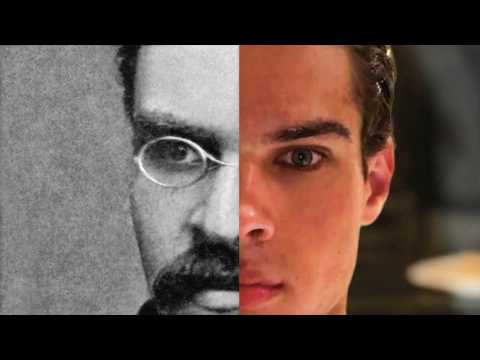
Clavicular Is What Nietzsche Warned Us About
Henry Grey Earls
9m 56s1,842 words~10 min read
YouTube auto captions
Transcript source
YouTube auto captions
This transcript was extracted from YouTube's auto-generated caption track. The transcript below is server-rendered so it can be read, searched, cited, and shared without opening the original YouTube player.
Pull quotes
[0:00]Friedrich Nietzsche was a 19th century German philosopher who had a chilling warning about the future.
[0:00]Some people see Clavicular or Braden Peters as a self-help creator or an influencer to help you increase your looks.
[0:00]I see the exact cultural sickness that Friedrich Nietzsche diagnosed over 100 years ago.
[0:00]I see Nietzsche's worst fear, living, breathing and streaming, contaminating the youth and future generations.
Use this transcript
Related transcript hubs
Watch on YouTube
Share
MORE TRANSCRIPTS


