[0:00]Your business plan is one of the most important documents in your business. You could look on it as the road map for your business. It sets out where you want to go, your key objectives for the next two or three years. It shows you your plan to get there, the strategies you're going to use to achieve your objectives. And it shows you where you are so you can measure performance and make any adjustments necessary to achieve your goals. Your business plan isn't something you do and then put away in a drawer. It's a working document that you can refer to and make sure you're going in the right direction and following the right path. It's also a great way to give other people an overview of your business and to demonstrate how you're performing. That's why banks and investors ask for a business plan. In this video, I'm going to give you an idea of how you might put your business plan together and take you through each section. However, you ought to know that the plan is often not written in the same order as in the final document. For example, although the executive summary appears as the first section, it's usually written last when everything else is done. We'll come back to the executive summary at the end of the video. The first section we'll look at is the introduction and company overview. You need to include the basic details of your business, your business name, address, website address, if you have one, and your contact details. You should also give your legal status, whether you are operating as a sole trader, a partnership, or a limited company. In this section, you also need to explain what your business is about, what you want to achieve, and how you plan to measure your success. Make sure you describe the product or service you are offering and who you are selling it to. The care here is to keep your focus on the benefits your customers get from your product or service, rather than just the features of what it is or what it does. You also want to explain what it is that makes you different and what makes you stand out from your competitors. This is known as your USP, your unique selling proposition. There's much more detail about how to uncover your USP and identify the benefits of your product or service in the module about winning and keeping customers. The next section in your business plan is about markets and competitors. This is where you demonstrate that you've researched your market and understand the environment you're working in. You may want to include a pest analysis here to show which market factors are likely to have an impact on your business. and a SWOT analysis too to show what's important to your business. How to do both of these is covered in detail in the creating new products module. So I won't say any more about them right now. A significant part of this section is about identifying your target markets, showing who and where your customers are and how you can satisfy their needs. This is covered in more detail in the module about winning and keeping customers, but make sure you think as widely as possible so that you develop a diverse client base. You should also include a competitor analysis and explain how you plan to compete in this market. The next section of your business plan is your sales and marketing strategy. This focuses on your target market, where your customers are and how you plan to promote your business and reach your customers. Again, take into account their differences. You'll also want to include details of your pricing strategy and a detailed sales forecast. Be specific about what you want to achieve and include a timeline and budgets. It's important you explain how you'll track results and measure your performance. And what about if you don't achieve the sales you'd hoped for? Explain what you plan to do to minimize the risk. A key section of your business plan is operations. This is where you explain how you plan to conduct your business. It includes information about your location, premises and equipment, and explains how you plan to produce, store and deliver your products and services. You should also include an overview of your suppliers, your approach, and how you deal with them, as well as your distribution strategies. This is also where you'll include details of the staff you employ, your systems and procedures, and what IT support you have. If it's relevant, you could also cover specific information about health and safety, equality and diversity, quality control and note any compliance requirements. It's also useful to outline your future plans and explain how the way your business operates may change over time. Now we come to the financial information section. This is one of the most critical sections, and also one that many people find quite daunting. It's a good idea to ask your accountant or business adviser to help you out. The aim is to demonstrate that the business has sufficient cash flow to cover its costs and make a profit. You'll need to show a detailed month-by-month cash flow for the first year and a profit and loss statement for the years two and three. Make sure both your sales forecast and predicted expenses are as realistic as possible. Again, it's helpful to include your contingency plans, that what if situation, what if sales are higher than expected, how does that affect the figures? And what if sales are lower than expected? What happens then? The final section is an appendix. This is where you put all the documents and evidence to support your business plan. This may be market research information, any letters you have from potential customers, or firm orders already in the bag. You could include references or examples of previous work, price lists, legal documents, policies and procedures, job and person specifications and CVs for key members of your team, and examples of promotional and marketing material. Make sure you cross-reference this information to the appropriate section. You don't want people to get confused, do you? So that's all the information. Now you're in a position to do the executive summary. Present it clearly, keep it brief and to the point. It should provide an overview of your business and cover the most important points of your business plan. Make sure you are positive. After all, you want to impress and persuade others. And it can be very useful to tailor this section to your audience. For example, if you are presenting the business plan to your bank to secure a loan, the executive summary should focus on how important that loan is to you and how will help your business to succeed. Once you've finished your executive summary, your business plan is complete. Make sure you use it, keep it up to date, and have it available in a format that everyone in the business can access. After all, as the roadmap for your business, it really is a very useful tool.
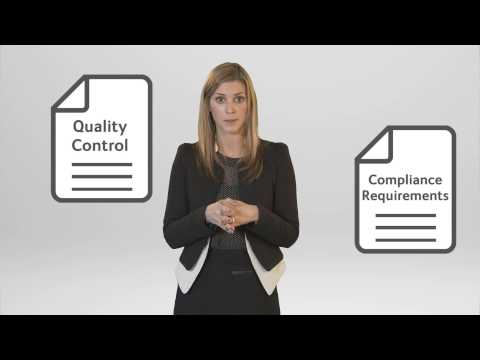
Your business plan step-by-step
Business Wales/Busnes Cymru
6m 45s1,206 words~7 min read
YouTube auto captions
Transcript source
YouTube auto captions
This transcript was extracted from YouTube's auto-generated caption track. The transcript below is server-rendered so it can be read, searched, cited, and shared without opening the original YouTube player.
Pull quotes
[0:00]It sets out where you want to go, your key objectives for the next two or three years.
[0:00]It shows you your plan to get there, the strategies you're going to use to achieve your objectives.
[0:00]And it shows you where you are so you can measure performance and make any adjustments necessary to achieve your goals.
[0:00]It's a working document that you can refer to and make sure you're going in the right direction and following the right path.
Use this transcript
Related transcript hubs
Watch on YouTube
Share
MORE TRANSCRIPTS


