[0:05]Stanley Kubrick's long-time assistant Anthony Frewin once said, "When I started work for Stanley in September 1965, he told me that I couldn't really understand what cinema was capable of without seeing The Battle of Algiers." Look how the organization deals with traitors.
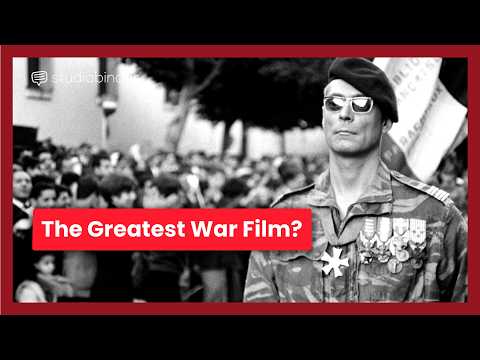
[0:27]What makes this relatively low budget docu style film so powerful? And why does some of the most celebrated directors of all time keep returning to it for inspiration? Good. Beautiful. This is your favorite filmmaker's favorite film, The Battle of Algiers. The Battle of Algiers is a 1966 Italian Algerian film directed by Italian filmmaker Gillo Pontecorvo. It was written by Franco Solinas along with Pontecorvo. Based on a book by Saadi Yacef, who also acted in the film. What if you were a traitor? We had to be sure. The movie depicts the lives of guerrilla fighters during the Algerian War of Independence, and was released just four years after the conclusion of the war.
[1:20]Pontecorvo used many non-actors, many of whom actually fought in the war. The result is a film with a rawness and intensity that affects audiences to this day. Name a filmmaker, and there's a good chance they've cited it as an inspiration. Werner Herzog made it required viewing in film courses he taught. Paul Thomas Anderson noted, "It's always a good idea to watch The Battle of Algiers again, just as a cinematic exercise to get you excited." Viva la revolution! According to Freewin, Stanley Kubrick talked about the movie up until his death. Steven Soderbergh admits, Battle of Algiers was a movie that I stole stuff and made it ours, and that to me is just, you know, you're standing on the shoulders of people who came before you, and that's just part of the process. I wasn't embarrassed about it or secretive about it. Part of what makes Battle of Algiers so affecting is that it is simultaneously hyper specific to the Algerian experience, while also being representative of a larger common struggle. Roger Ebert noted, "It is about the Algerian war, but those not interested in Algeria may substitute another war; The Battle of Algiers has a universal frame of reference." Oliver Stone explains, to make the history live is great. You can take what is a divided collective memory and try to make something dramatic. But perhaps what stands out most is the film's deep commitment to realism. Pontecorvo came from the Italian Neo-Realist tradition, heavily influenced by the works of Roberto Rossellini. Francesco! The Germans! The Fascists!
[3:20]We'll always be together.
[3:25]Pontecorvo and cinematographer Marcello Gatti wanted to emulate the visuals of a newsreel, shooting in black and white, and often times handheld. The film's gritty black and white cinematography paired with its use of real locations and practical effects resulted in sequences which felt so real. The American cut of the film included a disclaimer that no newsreel footage was used. Alfonso Cuarón notes, "The amazing thing about The Battle of Algiers is the social reconstruction. It's meticulous, and the sense of reality is so unique. I remember, the first time I saw it, I swore they were lying when they said that everything was fictional." Kubrick felt similarly, remarking, "All films are, in a sense, false documentaries. One tries to approach reality as much as possible, only it's not reality. There are people who do very clever things, which have completely fascinated and fooled me. For example, The Battle of Algiers." Spike Lee elaborates, It seemed like somebody in handheld, eight ton or A-Clair. It was just 60 mm, just right in the middle of stuff, shooting. At the end of the film where they show the, the various uprises, I still don't, I mean all that stuff is staged, but I don't know how they did that.
[5:00]The realism is not without a purpose. Mira Nair explains, He doesn't make anything feel precious. And because nothing is treated preciously, it's actually completely captures the fire of the moment. The realism helps add depth to the characters the film follows. Christopher Nolan argues the movie forces empathy with its characters in the least theatrical manner imaginable. We care about the people in the film simply because we feel immersed in their reality and the odds they face."
[5:37]Soderbergh notes, Pontecorvo is so good in this film at sort of sketching people. Even the people that appear on screen for a couple of minutes really make an impression.
[5:50]Of course, this is also in large part because of the strength of the performances in the film. What would armed insurrection mean now? What it always means: An inevitable phase in revolutionary warfare. Film scholar Peter Matthews writes that for The Battle of Algiers, Neo-realism with its democratic ideal, of placing non-actors in their vernacular setting, was the indispensable compass."
[6:20]Saadi Yacef and Samia Kerbash were both active in the FLN, the Algerian rebel group during the war, and Pontecorvo credited their stories as heavily influencing the film. Even the one trained actor in the film, Jean Martin, who plays the French colonel, came from a military background, and was chosen by Pontecorvo because he had a theater background, and so wouldn't be recognized as an actor. Prepare the explosives. Get as close as possible, but don't take risks. Use a long fuse, then cut it. Give them cover while they work. The film centers around the performance of Brahim Haggiag, who plays the famed militant Ali La Pointe. Ali La Pointe. Haggiag's work has gone down as one of the greatest debut performances of all time. Nair explains the power of his acting. He is so in control of his environment. His centeredness and his innate confidence and his quietness and his, the power that amplified itself because of his quietness is stunning.
[7:39]The film's intensity is further heightened by its score, devised by legendary composer Ennio Morricone, along with Pontecorvo. The soundtrack works in concert with the sounds of war and protest, interwoven with gunfire, helicopters, and the distinctive yelling of the Algerian militants.
[8:08]Matthews writes, "Ennio Morricone's score isn't the symphonic flattening by which Hollywood dependably celebrates momentous occasions. Its themes, percussive and elegiac, appear sparingly, but with a ritual inevitability that suggests hidden, antithetical forces sweeping the characters along."
[8:32]Or, as Hans Zimmer puts it, Battle of Algiers, hugely influential film. Ennio Morricone's first score, but that's all beside the point because the film is so incredibly good. It's an extraordinary film.
[8:53]Even Quentin Tarantino paid homage to Morricone's score in Inglourious Basterds.
[9:03]Hugo Stiglitz?
[9:08]Aldo Rain. You know, the Bastards. Ever heard of us?
[9:15]Even nearly 60 years later, The Battle of Algiers feels as timely and riveting as at the time it was released. The film is a testament to the power of realism, shooting real people in real locations to immerse an audience in a real story.
[9:37]Are you yet another filmmaker inspired by Battle of Algiers? Get started on your own movie with Studio Binder's pre-production services, including everything from scheduling to storyboarding software. That's all for now. Don't give up, no matter how insurmountable the odds might feel.