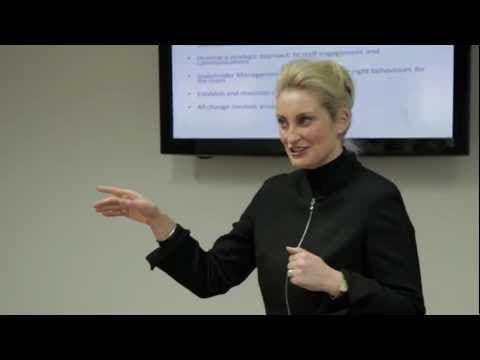
[0:20]It's a real pleasure to be here this morning to talk about a topic that I guess is a real passion of mine. Um business transformation is really what rocks my boat. It's what gets me up in the morning. It's what I love doing. Okay, so first things first, you really need to make sure that you define the reality. Defining reality is about letting people know what the case for change is. They need to understand why it is that we're embarking on whatever transitional journey that you're about to involve them in. And just remember, um as is the focus of our discussion today, it's it's not actually machines doing the work. It's not actually robots doing the work and it's not the processes doing the work. We've got humans doing the work, people do our work for us. Um and so that's where we need to invest all of our energy and all of our efforts. We need to get those people on board and we need to make sure those folks are the ones telling us where where we need to fix the processes. One of the key measures I think is often overlooked is is around the cultural KPIs. So understanding how engaged, I guess from a staff satisfaction and a staff engagement level, where we are at the start. It's establishing that above and the below the line behavior and we really need to establish that up front so people know where we are. And of course we need to role model that behavior, your leaders in the business, your supervisors, need to be role modeling that. And I think if you invest in people in that way right in the beginning and set the foundation to let people know that this is something that we see as business critical. And this is something that we intend to measure all the way through our program and see at the other end how we've performed, they actually take note of it. Laying the foundations for change, we need to get this buy in up front, but what I'm talking to you about today is being very strategic in your communications. Communications shouldn't just happen, they and they shouldn't just evolve. You actually need a communication strategy, you need a stakeholder management map. All of this needs to be very, very deliberate, very consistent and very well managed and managed by you. You need to be reporting on this in every meeting, every update meeting you have on that project, you need to know where your stakeholders are at. People need to know what you look like. You can't just be a name on a piece of paper who sends newsletters out to people. They actually need to know your face. As uncomfortable as it might be, stick a photo of your head on the newsletter that you send out, so if they ever catch you in the corridor in the elevator, they actually know. Hi Sharon, I'd like to have a chat to you about this. Okay, so actually be human yourself if you're expecting to undertake this transformation for your business from a human element. Um these feedback loops are critically important and I can't emphasize that enough. Um don't rely on them from just one source though. Actively go out and solicit that information and act on the feedback. You're always going to get some suggestions that come back without the most respectful language as well. Right, so they're not there people take the opportunity to tell management what they really think. If you've asked for it, you really want to know, well, I'll tell you what I really think. That's okay. Um just really quickly on this, it's your job to create the emotional permission for everybody's value everybody's contributions to be valued within the team. So when I say that, you need to solicit the information. You need to be open to hearing that information and you need to be respectful of the people giving you that information. You actually set the benchmark there and it's your job as the leader of the business or the leader of the change transformation program to create that emotional permission for people. So just a few things that I always work through in terms of gaining that emotional investment. We need to be educating. Um sharing knowledge in a non threatening and easily accessible format. Non-threatening be be careful of your language. This isn't the term the time to introduce jargonistic terms. This isn't the time to impress people with your immaculate range of vocabulary and how clever you are in in how expert you are in particular business transformation methodologies, be it Agile or Lean or Six Sigma. That's not how to engage the people, tailor your message to your audience. Okay, give everybody a voice, obviously, you need to make sure that everybody has an opportunity to give their feedback and their opinions at every stage of the project. Promote, you actually need to catch people in the act of doing something really well. I it never ceases to amaze me how someone on a six figure salary can be so easily motivated by gold class movie tickets. It's always important to recognize when someone's doing a good job and showcase this. Make sure everybody knows about it. Um it's not about embarrassing the person for the sake of the project though, make sure you know the person, again, tailoring your message. Be visible, make yourself available for questions, change programs involving less than 50 people, you should know every single person's name, they should all know you. And just finally, people don't like surprises when it comes to big change programs. They don't like to get partway through the process and all of a sudden, this is now thrust upon them. It's now going to affect your bonus. We've now got 36 people who are going to lose their jobs. We've now got a major of structural change that this business is going to undertake. If you know that out the at the start, communicate that early. Okay. I just wanted to talk about some of the aspects of how destabilizing certain negative group dynamics can be in in a forum. It can definitely change the outcomes and when there are allegiances within the groups, that can work for you and against you. Um it can work for you if you're able to couple those folks together to to have many hands make light work and actually get some work done more proactively and more efficiently. Um it can also be very, very dangerous and detrimental to the group. If they bring in some of the external agendas and play that out in the meeting room. So whenever you sit around a meeting room, try and disengage yourself emotionally from it. You need to sort of sit there and not get caught up in any of these group dynamics that are going on. Overconfidence and underconfidence, I'll focus more on the first one. Um the more senior you are, the more you tend to be or you feel you need to be overconfident.
[7:05]Don't anchor the decision in the past, come up to the future, step up to the plate with where we are right now in today's information and don't be overly optimistic about it.
[7:22]Framing the issue, so this happens where um we tend to give the context that we need to get the decision over the line. Okay, I'm sure you've all seen examples of this. You're not creating the broader context, you're not brainstorming more you know, more strategically. You're looking at quite a short-termist view and you need to be looking at what's best for the business in the longer term. Um again, this comes back to how your performance is measured though, and you we all tend to be measured, you know, in in six monthly, 12 monthly and at the best case scenario, three yearly cycles. Um most change transformation programs have benefits over a period of time. They have an immediate benefit when the project is ultimately delivered, but those benefits tend to improve. That's where you need to work really, really closely with your finance partners to make sure that those benefits and those forecasting and forward estimates are going to accurately reflect where you believe you can take the business. Um it's also really important for your professional development and your professional remuneration and how your brand is viewed and assessed as a change agent, not just in your organization but in the broader industry. Creating false consensus. This is where we get the vocal people in the room who do a lot of talking. They're very articulate, they're very sure of their facts, they've got a lot of political sway and, right, so that's I've had the final word and we're all in a in a grain there. Everybody, show of hands, I great. Okay, tick that box. That's false consensus. Unless you really know what every person in the room is thinking, and unless every person in the room has the confidence to express that viewpoint, um again as leader, it's up to you to create that safe environment for that happen, again the emotional permission. You you're not going to have an absolute consensus in the room. And just finally, the escalating commitment. You come in and you say we've gone so far down this project, we've invested so much money, so much time, so many resources, we can't turn back now. Sometimes it is best to bite the bullet, it's best for the business. It's best in terms of your ROI, um to just cut your losses. And say this actually isn't going to achieve what we need it to. We're going to spend more money and waste more money and it's still it's still not going to get there. In terms of your strategic readiness, this is just how we get that alignment. Um we need to understand where the business is at now, so I've spoken a lot about baselining that reality. You need to understand what your organization capability is as well and you need to make decisions based on that and based on how much, how quickly you can ready those resources. And of course, in terms of the three components of success, talking about getting our strategic resources mobilized. There's always internal competition for resources, so you're always going to have a bit of a bun fight on your hand to to make sure you get the right people, particularly when it comes to project staff. Okay, and just finally, I talked about your first responsibility being um baselining the reality for folks. Your last responsibility is to say thank you and this is sometimes overlooked and it's something that shouldn't wait until the end of the project. If you don't say thank you, anytime somebody does something that you have gratitude for, you've missed an opportunity. You've missed an opportunity to engage with them, connect with them emotionally and show respect. And so make sure that you've always got that there. [Clapping]


