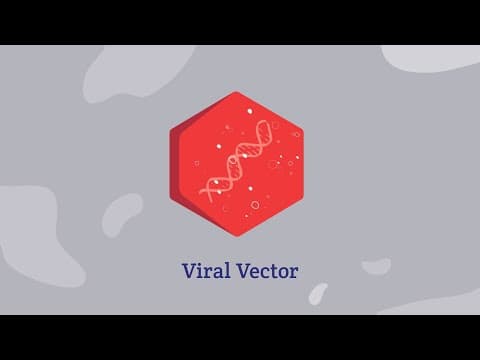
[0:00]Gene therapy aims to treat a specific disease by introducing, removing, or modifying genetic material, DNA or RNA, in a person's cells. A common way to accomplish this is by using a vector, a vehicle designed to deliver therapeutic genetic material, such as a working gene, directly into a cell. Typically, vectors are derived from viruses, because viruses are very efficient at getting into cells. For safety, all of the viral genes are removed and the vector is modified to only deliver therapeutic genes. These viral vectors use the shell or capsid of the virus to transport the working genes into the target cell. Think of them like envelopes used to deliver a specific message. Researchers only use vectors that are extensively studied, determined to be safe to use in humans and have the ability to target specific cells. There are four main types of viral vectors, each with their own unique characteristics, uses and limitations. First, let's talk about adno-associated viral vectors, or AAVs. AAVs are typically used to deliver smaller DNA packages or genes, so the size capacity of this vector may determine which rare disease it can target. They're safe and efficient for in vivo gene therapy approaches, in which the therapy is injected into the body, delivering new instructions directly to the cells. They're non-integrating, meaning the DNA they carry doesn't typically insert itself into the cell's genome. So, if it's taken up by a cell that divides, the therapeutic gene won't be copied with each cell division and may be lost over time, thereby diluting the treatment effect. That's why they're typically used in non-dividing target cells, such as cells in the liver, nervous system, eyes, and skeletal muscles. The advantage of using these vectors is that once delivered, DNA can persist in the patient for a prolonged time, possibly even a lifetime. One limitation is that many people may have had prior exposure to AAVs through natural infections, giving them immunity, as Dr. R. Jude Samulski explains. If a patient has been exposed to an AAV already, their body will recognize the AAV vector capsid as a threat. The immune system may then attack or destroy the vector before it can deliver its therapeutic package, rendering it useless. This type of reaction also means limiting patients to a single administration, because they may develop antibodies following the first administration. Scientists are working on a variety of strategies to combat this challenge. Adenoviral vectors are similar to AAV vectors in some ways, like being able to deliver DNA packages into non-dividing cells. But they can deliver vector genomes that are almost eight times the size of AAV. The first generation of adenoviral vectors caused a strong immune response, which results in potentially harmful inflammation throughout the body and decreased effectiveness of the therapy. In recent years, scientists have worked to develop adenoviral vectors that result in milder immune responses, so they can deliver larger packages with less risk. Now, let's talk about lentiviral and retroviral vectors. These vectors can carry larger genetic packages of RNA, which is then converted into DNA. During this process, the vectors integrate into the genome of the target cell, unlike adenoviral and AAV vectors. That makes lentiviral and retroviral vectors best suited for ex vivo treatment in dividing cells, such as T-cells, which are a type of immune cells, and stem cells, which are special cells that can develop into many cell types. Ex vivo treatment involves removing cells from the body, modifying them using a gene therapy, and then returning them to the body. From there, the treated cells will begin to divide and generate new cells. The new genetic material is then copied into all those new cells. Gene therapy using viral vectors is already treating some rare inherited diseases and certain forms of cancer, with many other potential uses being studied in clinical trials. For more information and resources about gene therapy, cells, and vectors, head to asgct.org.
Viral Vectors Overview
ASGCT
4m 30s661 words~4 min read
Auto-Generated
Watch on YouTube
Share
MORE TRANSCRIPTS