[0:00]This meat didn't come from an animal raised on a farm, but from a bioreactor. It is known as a lab grown meat, which is cultivated in a lab from animal cells, eliminating the need to raise and slaughter animals. Here, identical stem cells are cloned, increasing the number every two to three days by a factor of two to five. This pulp of cells is then transferred into even larger tanks, adding what everybody needs to grow: minerals, vitamins, fats, proteins and carbohydrates, all plant-based. The cells still have to be shaped to become meat. They grow into a plant-based frame where they get their meaty texture. Inside of this, you have hundreds of millions of cells. This this is the foundation of the chicken. This is what it is, basically. This is our entire chicken product. We did not genetically modify these cells. They're what's called spontaneously immortalized. So they're able to grow indefinitely.
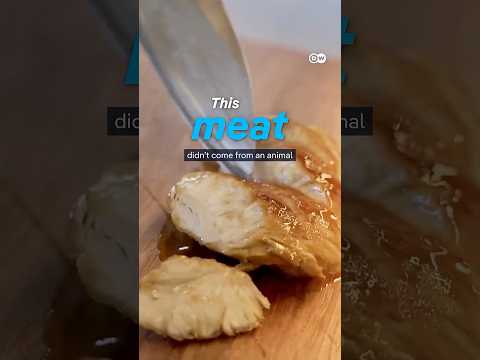
Is lab-grown meat the future of food? | DW Documentary
DW Documentary
55s156 words~1 min read
YouTube auto captions
Transcript source
YouTube auto captions
This transcript was extracted from YouTube's auto-generated caption track. The transcript below is server-rendered so it can be read, searched, cited, and shared without opening the original YouTube player.
Pull quotes
[0:00]It is known as a lab grown meat, which is cultivated in a lab from animal cells, eliminating the need to raise and slaughter animals.
[0:00]Here, identical stem cells are cloned, increasing the number every two to three days by a factor of two to five.
[0:00]This pulp of cells is then transferred into even larger tanks, adding what everybody needs to grow: minerals, vitamins, fats, proteins and carbohydrates, all plant-based.
Use this transcript
Related transcript hubs
Watch on YouTube
Share
MORE TRANSCRIPTS


