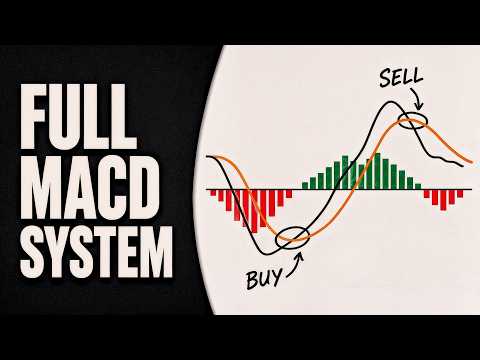
[0:00]There are only three ways to use MACD indicator that actually make money. I call it the Mac money map. So forget all the other junk you've seen. I'm about to give you years of my work in the next 15 minutes. Let me show you something painful. See all these MACD crossovers? I took every single one when I started trading. Lost money on eight out of 10. The problem wasn't the indicator; it was that I was using it like everyone else uses it. You probably do the same thing right now. You see the lines cross and you enter, you spot divergence and you guess the reversal. You look at one timeframe and ignore the bigger picture. Been there, done that, lost money doing it. Here's what changed everything for me. I stopped seeing MACD as seven different random strategies and started seeing it as three complete systems. Each system has one specific job. System one catches trends, system two catches reversals, system three confirms both. That's it, three systems. Together, they're absolutely unstoppable. Real quick, MACD has two lines and a histogram. The fast line, the slow line and the bars. When the lines cross, that's a signal. When the bars flip color, that's momentum changing. That's all you need to know to understand everything I'm about to show you. The first system is the Trend System. This catches the big moves that run for days or weeks. The zero line is your trend compass. Everything starts here. Here's what most traders see. MACD above zero, so they think maybe bullish. MACD below zero, so they think probably bearish. They're wishy-washy about it. They take sells above zero, they take buys below zero, they fight the trend constantly. But here's what I do instead. Above zero equals I only look for buys. Below zero equals I only look for sells. No exceptions. The zero line is absolute law. Watch this chart with me. Every time I ignored the zero line and bought below it, I lost money. See this buy signal below zero? Lost trade. This one, another loser. Now look at this buy signal above zero. Winner, another winner. My win rate jumped to 60% just by following this one rule. The market is telling you it's bias with the zero line. When MACD is above zero, buyers are in control. When it's below zero, sellers run the show. So stop fighting what the market is literally showing you. Check this out. Pull up any chart right now, look where MACD is compared to zero. That tells you everything. Is it above? Only look for longs today. Is it below? Only look for shorts. This alone will transform your trading. Now that the zero line gives us direction, crossovers give us exact timing. But first, here's the mistake everyone makes. You take every crossover. You see the lines cross and jump in immediately. But 80% of crossovers happen in what I call the chop zone. That area right around zero, where the market can't decide what it wants to do. What's really happening in that zone is the market is ranging, not trending. MACD is flipping back and forth with zero conviction. You're buying and selling noise. You're trading chop, you're donating money to the market. The solution is stupidly simple. The distance rule. Only take crossovers that happen far from the zero line. Above 0.5 or below minus 0.5 on most charts. That distance proves the trend has actual power behind it. Here's the exact technique I use. When MACD is above zero and you get a bullish crossover above this line, that's a continuation entry. The trend is strong and getting stronger. When it's below zero and you get a bearish crossover below minus 0.5 line, that's your short. The downtrend is accelerating. Look at this chart with me. See this crossover near zero? It's a bad signal. And this crossover just above the line. Another fake signal. But check this crossover. That's a valid 50-pip move. The distance from zero is literally everything. And here's what separates beginners from people who actually make money. Wait two or three candles after the crossover before entering. Just wait. This one rule eliminated maybe half of my false signals. The market needs time to prove the crossover is real, not just a fake move. This trend system prints money in trending markets, but the reversal system I'm about to show you catches the turns before they happen. This is where it gets really interesting. Now, the second system is the Reversal System. This catches the major turning points. Let me show you a situation that happens literally every single day in every market. Price makes a new high. Everyone's buying. The chart looks incredibly bullish, but there's a hidden warning signal that the move is about to completely reverse. The problem is price is lying to you. It's making new highs, but it's running out of steam internally. Most traders can't see this exhaustion until it's way too late. They buy the top and then wonder why they always lose. What you want is to catch the reversal before it happens, not after you've already lost money. Here's how divergence works. When price makes a higher high, but MACD makes a lower high, that's bearish divergence. The reversal is coming. Draw a line connecting the price tops, draw another line connecting the MACD tops. When they disagree, when price goes up, but MACD goes down, get ready for the reversal. Watch this example. Price making new highs here, here and here. But look at MACD. Lower high, lower high, lower high. The engine is dying while the car is still moving forward. Two days later, massive reversal, 200-point drop. The opposite works for bullish divergence. Price makes a lower low, but MACD makes a higher low. That's a bottom forming. The selling is exhausted, even though price is still falling. But wait, divergence alone isn't enough. I lost so much money entering on divergence alone. You need confirmation. That's where the histogram comes in. The histogram is your momentum reader. These bars tell you exactly when momentum is shifting. Let me show you the three patterns that actually matter. First pattern, the flip. See this first green bar after five red bars? That's momentum shifting from bearish to bullish. You might think it's just one random bar, but watch what happens next. Complete reversal. The histogram saw it coming. Second pattern, the shrinking tower. Look at these bars getting smaller and smaller. Red bars shrinking means selling is dying. Green bars shrinking shows that buying is exhausted. The move is running out of gas. Third pattern, the zero bounce. Watch the histogram approach the zero line, then bounce away. The trend just proved it still has power. It's continuing, not reversing. Here's how you combine them. You spot divergence first, that's your alert. Then you wait for a histogram pattern, that's your trigger. Divergence plus histogram pattern equals reversal trade. Look at this trade. Bearish divergence on the four-hour chart. Histogram showing shrinking green bars. Then boom, first red bar. That was my entry signal, caught a 100 pip reversal. These two MACD strategies will bring you a lot of good trades. But strategy number three filters out the losers that would have destroyed your account. So the third system is the confirmation system. This is your final filter that keeps you out of trouble. One timeframe shows you a signal, three timeframes show you the truth. Most traders do this completely wrong. You see a signal on the one-hour chart and take it immediately. You don't check what the daily is doing. You're flying blind, you're gambling. Here's what I do instead. I stack three timeframes in a specific order. Daily tells me the trend. Which side of zero is MACD on? That's my bias. Four-hour shows me the setup. Is there a crossover or divergence happening? That's my signal. One hour gives me the entry. Is the histogram confirming with a flip? That's my trigger. Real quick, watch this trade setup. Daily MACD above zero. That means I'm bullish. Four-hour showing a bullish crossover above. That's my signal forming. One-hour histogram just flipped from red to green. That's my entry trigger. That's a 200-point winner. The magic is that all three timeframes must agree. If the daily is bullish, but the four-hour is bearish, I pass. If the four-hour has a signal, but the one-hour doesn't confirm, I wait. You don't need to overcomplicate this. Pick your three timeframes, using a 4x multiplier. If you trade the 15-minute, check the one-hour and four-hour. If you trade the one-hour, check the four-hour and daily. Simple. The final piece is confirming with actual price structure. Check this out. MACD crossover happening right at major support. You might think any crossover is the same, but crossovers at support and resistance levels have a much higher win rate. The key levels matter more than the signal itself. Now watch this. MACD divergence plus a hammer candle at support. That's not just a reversal signal, that's a gift from the market. The indicator and price action are both screaming the same thing. One more example. See this trend line break? Most traders enter immediately on the break, but I wait for MACD to confirm with a crossover after the break, not before. That patience saves you from false breakouts that trap everyone else. The confirmation system is what separates gambling from trading. You're not hoping anymore, you have multiple forms of evidence all pointing the same direction. Now let me show you exactly how I use all three systems every single morning. Step one is to check the trend. I look at daily MACD first thing. Which side of zero? That's my bias for the entire day. If it's above zero, I'm only looking for buy trades. Below zero, only sell trades. This takes five seconds. Step two is to find the setup. I scan for system one or system two signals. Are there any crossovers far from zero? That's a trend trade. Any divergence forming? That's a reversal trade. I mark the best three setups on my charts. Step three must confirm everything. So before I take any trade, system three must confirm it. Are all three timeframes aligned? Is price at a key level?
[13:12]Is the histogram confirming? If anything is missing, I pass. Entry happens at candle close, never mid-candle. Stop goes at the recent swing high or low. Target is always two times my risk. These rules never change. When price hits my target, I take half off, move my stop to breakeven, on the rest, trail the remaining position with the opposite MACD cross. No emotions, just rules. Here's a trade. Daily MACD is above zero. I'm only looking for buys today. That's my bias locked in. There's a crossover on the four-hour chart happening. And that's far enough from zero. System one is giving me a trend signal. Checking the one-hour histogram just flipped green. That's my entry confirmation. Price is sitting right at support. That's perfect. Everything confirms. I'm entering here at the close of this candle. Stop goes below this level. Target at 2R, which is 80 points from here. This is the kind of A+ setup this three MACD strategies find every single day. You just learned what most traders never figure out. While they're taking every random MACD signal and losing money, you now have three complete MACD strategies. The trend system for riding big moves. The reversal system for catching major turns. The confirmation system for filtering out the garbage. You don't need 20 different strategies. You don't need more indicators. You just need these three strategies working together. And if you're ready to fit this into a full A to Z trading system, that's what our academy is for. Link is in the description.


