[0:09]Welcome to the Rutgers Eco complex. It is important to understand the dynamic relationship between food, energy and water systems. This video will focus on the efficient utilization of one of the technologies that addresses this balance. Hydroponics.
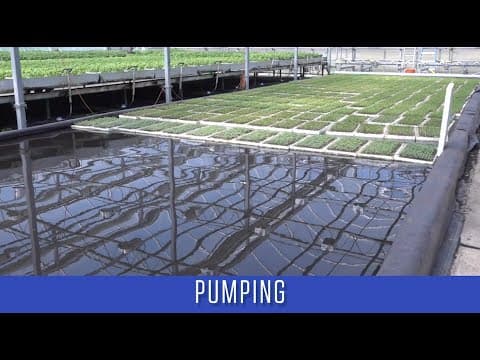
[0:34]Hydroponics may be defined as the science of growing plants without soil. A nutrient solution that contains all the essential elements needed for optimum growth and development is delivered directly to the plant. Hydroponic crop production is used widely throughout the U.S. and the entire world. It has some advantages over other indoor crop production systems. There are typically lower upfront costs and setup times, greater water use efficiency, and a higher level of control over the crop nutrient program. There are many ways to set up a hydroponic system, but they can be categorized in a general way into two groups depending on how the plants are supported. Solid media-based systems use a variety of inert materials to give the plants means to support themselves. Water only-based systems use mechanical means to support the plant. Some of the more common types of systems that use mechanical support include nutrient film technique or NFT, Ebb and Flood benches and trays, and raft or floating systems. Energy efficiency is a key parameter when selecting and designing a hydroponic system that will meet your needs. However, you could build the most energy-efficient hydroponic system on the planet, but if it doesn't provide a healthy plant environment and good growth, it won't succeed. So, a good hydroponic system is one that takes a holistic approach and optimizes crop production with water conservation and energy efficiency. This video will explain some of the components of a hydroponic system designed for energy efficiency. We'll cover pumping, aeration, filtering, and space utilization. Lighting and temperature control will be covered in another video. Because hydroponic systems are water-based, some amount of water movement or delivery to the plant roots is required. It is important to minimize the number of pumping stations you need for the system to operate properly. Ideally, pumping the water once and allowing gravity to move it through the system leads to a higher efficiency and an added bonus of minimizing failure points in the system. Hydroponic water holding tanks should be the lowest point in the system and pumped from there to the plants. In a recirculating system, the return water should be allowed to flow by gravity back to the holding tank. Keep the operating pressure as low as possible without sacrificing watering uniformity by using large supply mains and submains. Also keep the orifice size from the submain to the crop as large as possible to minimize pressure loss. Another benefit of this type of design is that the amount of clogging will be reduced, which will promote crop yields and reduce maintenance cost. With NFT systems, consider putting the pump on a cycle timer so that it will turn on and off several times per hour, thereby reducing the pumping time by as much as 50%. With a raft or floating systems, the water stays in the shallow pond. But it should be recirculating within the pond at a slow rate under low pressure.
[3:39]Plant roots need oxygen to respire and grow strong. Almost every hydroponic design has to aerate the water or allow the roots to be exposed to air for short periods of time. If using a solid media-based system, good root aeration is achieved by watering intermittently, with adjustments being made for the size of the crop, relative humidity, temperature and light level. Allowing the media to dry down slightly so air can fill the pore spaces is important for good aeration. Managing the irrigation cycles properly, so that only 5 to 10% of the water being applied eventually leaches through the block or pot will also save energy, water and nutrients. With water-based hydroponic system, this is accomplished by allowing it to spill over a filter, spillway, or flowing quickly past the roots as with NFT. With raft systems, supplying air via air stones in the water is important to maintain oxygen levels. Designing the aeration system to take advantage of stirring that will occur when flowing back to the holding tank is a good way to minimize energy use for aeration. Hydroponic solutions, especially in recirculating systems, need filtration to remove solid particles suspended in the water. For a non-recirculating system, the amount of filtration needed is dependent on how clean the water supply is. Large size filters require less energy and reduce the water pressure less than smaller size filters that process the same amount of water. Also disc filters and sand filters require less frequent cleanings than screen filters. For recirculating systems, the amount of suspended solids can be significant and can contribute to the spread of root pathogens, so good filtration is important. Low energy filtration techniques include spillway screens, settling basins, and sand filters. Maximizing the use of available growing space conserves energy because the yields are higher per square foot without increasing the energy input. This is especially important for locations where heating and cooling requirements are high. There are several hydroponic systems where a high ratio of growing space to floor space can be achieved. Ebb and Flow benches and raft systems can occupy over 95% of the floor space because the crop can easily be moved out of a production row and into a section of the greenhouse where the planting and harvesting can occur. Spacing the crop out as it grows can also maximize space utilization.
[6:13]So I hope this instructional video provided you with information you will find useful for your hydroponic system selection and design. Growing food in ways that use less energy, water and fertilizer per unit of food produced is a way to help everyone with sustainability. And since there's a cost to all these things as well, it can only help your bottom line to consider ways to use less and grow more.


