[0:00]Qué pasaría si abrieras un Zara en la antigua Grecia? Día 1, inauguras una tienda de cristal y acero en medio del Ágora de Atenas. Tocan la tela como si fuera un regalo de los dioses. Los hoplitas dejan sus escudos en la entrada para probarse pantalones de pinzas. Día 2, la fila para entrar llega hasta las faldas de la Acrópolis. Las mujeres atenienses tiran sus túnicas viejas, quieren el vestido de flores de la nueva temporada. Cobras en dracmas de plata. Día 3, tus telas sintéticas no respiran, los clientes sudan como si estuvieran en el Hades. Te quedas sin stock, los barcos de carga no existen y la demanda es brutal. Tienes que improvisar, contratas a 50 costureras locales para coser a mano. De pronto, entra él, Sócrates. Está descalzo y huele a vino barato. Se queda mirando un maniquí, te pregunta si la belleza es una idea o una prenda. Decides que necesita un cambio, le eliges un outfit completo. Te lanza otra pregunta existencial sobre la vanidad. Le dices que es un pesado y que se vaya. Se va sin pagar. Mes 6, eres el hombre más influyente de la ciudad. Pericles te pide un traje a medida para su próximo discurso en el Partenón. No les diste moda, les diste el deseo de estrenar algo nuevo cada martes.
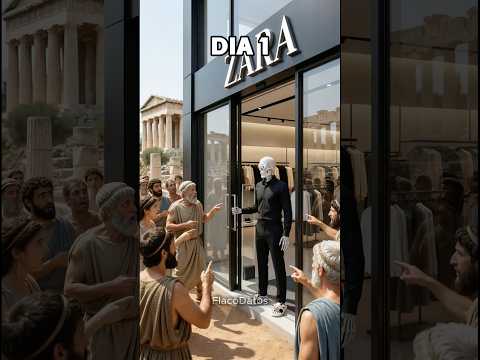
Que pasaría si ABRIERAS UN ZARA EN LA ANTIGUA GRECIA?
FlacoDatos
YouTube auto captions
This transcript was extracted from YouTube's auto-generated caption track. The transcript below is server-rendered so it can be read, searched, cited, and shared without opening the original YouTube player.
This hypothetical scenario explores the impact of opening a modern Zara store in ancient Greece. On day one, the store, a stark contrast with its glass and steel, captivates the Athenians in the Agora, who marvel at the fabrics and even hoplites try on modern trousers. By day two, the demand is immense, with queues stretching to the Acropolis and women discarding traditional tunics for contemporary dresses, paying with silver drachmas.
The venture quickly faces challenges: the synthetic fabrics are ill-suited for the climate, causing discomfort, and the lack of a modern supply chain leads to immediate stock depletion. The owner adapts by hiring 50 local seamstresses to meet demand. The narrative takes a philosophical turn with the appearance of Socrates, who, despite his disheveled state, poses existential questions about beauty and vanity. The owner, frustrated, eventually dismisses him. Six months later, the Zara owner has become incredibly influential, even dressing Pericles, having introduced not just fashion but the concept of novelty and constant newness to the ancient world.
Key Takeaways
- A modern Zara store in ancient Athens initially creates a sensation, attracting diverse customers including hoplites and Athenian women.
- The store quickly faces logistical challenges due to modern fabrics unsuited for the climate and a lack of supply chain for replenishment.
- The owner adapts to demand by hiring local seamstresses, integrating with local production methods.
- Socrates appears, engaging the owner in philosophical debates about beauty and vanity, highlighting the clash between modern consumerism and ancient thought.
- Despite initial friction, the store's owner becomes highly influential, even dressing prominent figures like Pericles.
- The success of the store is attributed to introducing the desire for newness and constant change, rather than just fashion itself.
Topics Covered
[0:00]Los hoplitas dejan sus escudos en la entrada para probarse pantalones de pinzas.
[0:00]Las mujeres atenienses tiran sus túnicas viejas, quieren el vestido de flores de la nueva temporada.
[0:00]Día 3, tus telas sintéticas no respiran, los clientes sudan como si estuvieran en el Hades.
[0:00]Se queda mirando un maniquí, te pregunta si la belleza es una idea o una prenda.


