[0:00]We, humans, members of the genus Homo, have come remarkably far in the 2.8 million years of our existence. And a lot of progress has especially been made within the last 200. And today we enjoy unprecedented levels of technology that has helped the worldwide lifespan reach roughly 73 years at birth. However, the journey to get here has not been an easy one, and we have had to endure many hardships, sometimes caused by our own doing. And this is reflected by the shockingly low life spans seen across time. For example, in 18th century France, it was between 27 and 30 years old. In classical Greece, 25, the Bronze Age 26, and during the Neolithic period, it got as low as 20. Yet, this being said, Homo sapiens or modern humans have had a relatively easy compared to other human species. This is something you should be eternally grateful for, as life as an early human was sometimes downright bull. And it's not too uncommon for paleontologists to unearth an early human specimen who died under very grizzly circumstances. Now, based on research, it seems that many homo species suffered such lives. But one study in particular found that a certain group, the 2 million-year-old Homo Habilis, had it almost comically bad. And died so often so young that the majority of individuals didn't even live long enough to see their teen years. With the average lifespan having been estimated at about just 12 years old. So more than six times less than the current average. And what's crazy is that chances are that it was even lower. As the study looked at 26 random specimens and noted a lack of neonate and infantile individuals, heavily suggesting that the mortality rate was in reality much higher and thus the life expectancy even lower than 12 years old. Such a fast and short life makes the Homo Habilis the last human species you'd want to wake up as. And represents possibly the worst time to have ever been a human overall. Which thus begs the question, why were their lives so utterly brutal? Well, unfortunately for them, the answer is that virtually everything was stacked against them. Including their very own bodies, as Homo Habilis was one of the smallest humans to have ever lived. Possibly averaging under 4 feet or 1.2 meters, making them 32% shorter than ourselves, and in the best case, weighing just 60% of what we do. Such a small body obviously made them quite vulnerable to injuries. And to add fuel to the fire, they didn't even have any notable robustness to their skeletal structure, that would have at least helped them compensate for their lack of size. And it's likely that they experienced at least one serious fall throughout their life because they were partially arboreal, meaning they spent a good chunk of their lives in trees. And given that chimps often experience at least one major fall throughout their lives, the same can reasonably be said for Homo Habilis. Especially since they weren't as well adapted for climbing compared to chimpanzees. Although, relative to other humans, they were more ape-like overall. A result of them having been one of the first of our kind to enter the scene, with an existence that spanned from 2.3 to 1.65 million years ago. Some of these ape-like features included longer limbs and slightly apish extremities that allowed them to better grip while climbing and swing from branch to branch. Now, possessing the ability to climb with ease is of course very useful, especially when surrounded by predators. And in most cases, it lets animals easily avoid danger, therefore prolonging their life. However, in the case of the Habilis, the benefits of this ability were largely negated, as it was paired with the worst possible diet, carnivorism. Now, you think that a human living on a planet would be strictly vegetarian. But the Habilis actually exhibited one of the higher levels of meat eating seen in humans, reflected by their very large incisors that helped them cut through meat, and their proportionally giant mandibles that were thicker than those of any living ape or human, which allowed them to generate more torsion and stress while biting, and thus helping to rip meat off of a body. This being said, they did also eat a lot of fruit and vegetables. But their meat-rich diet ultimately forced them to leave the safety of trees routinely. A problem exacerbated by their fondness for fish, which brought them close to water and thus the dangers within. And it wasn't just meat that was the problem, but also how they got it. As for some reason, Homo Habilis decided to specialize in scavenging of all things, which is almost funny considering their small size, lack of large muscles, and limited technology that consisted of simple stone tools. In other words, they did not have much to help them secure kills. And one group of paleontologists found that at best, they would only be able to reliably defend carcasses from jackals and cheetahs. This meant basically nothing though. As Homo Habilis, who lived in East and South Africa, was surrounded by not one, but multiple large carnivores that would frequently show up to contest carrion. And to make matters worse, these same predators also routinely preyed on the Habilis themselves. As these early humans were, for lack of a better term, easy pickings. And so, if you were a Homo Habilis, you can be sure that on the daily, you lived under the constant threat of being picked off by a very diverse range of different carnivores, that mind you, each had their own unique terrible way to dispatch you. So I guess at least there's some variety. For now, direct evidence of interactions between predators and Habilis are quite rare. But when looking at time in general vicinity, over 30 potential predators have been identified. With large cats in particular, having had a profound impact on destroying their life spans. One of the most prevalent ones lurking around would have been the Megantereon. A jaguar-sized saber-toothed cat that lived throughout Africa for the entire span of the Habilis's existence. And despite being jaguar-shaped, it was more heavily built. And alarmingly had lower limbs that were actually lion-sized. These limbs possessed giant paws at the ends of them were razor sharp recurved claws set. Just waiting to dig into the flesh of any unsuspecting Homo Habilis. Once pinned, the Habilis would then get to experience an array of sharp and serrated teeth, including two enlarged canines that would sink into their throat, severing major arteries and nerves. And fortunately leading to unconsciousness within seconds. However, unfortunately, there's also the chance that an unlucky victim would have had to experience the more rare, but much more terrifying killing method. Of having its entire head virtually covered by the attacking saber-toothed cat. And miraculously, this actually happened to a known human specimen, who had puncture marks to its occipital bone. In other words, the back of its head. But what's crazy is that the angle of the bite confirmed that the attack did not come from the back, but rather the front. Which basically means the Megantereon put the entire human's head in its mouth. And the idea is that on top of causing skull and brain damage, such an attack could kill by completely smothering the victim's nose and mouth with a saber-toothed jaw, leading to suffocation. And in a case of more bad news for our distant relatives, the Megantereon had a very healthy appetite for Homo Habilis. So much so, in fact, that it literally altered their carbon isotopic levels, which directly shows us that it was even more of a human killer than other animals that are associated with hunting primitive humans, such as the Dinofelis. Which I should also mention coexisted with Homo Habilis and presumably hunted it as well. And to add fuel to the fire, there was also Homotherium and Machairodus lurking around too. Which is very unfortunate, as the latter happened to be one of the largest felids to have ever existed, with some species reaching 405 kg or 893 pounds, comparable to both the Smilodon and male polar bears. At this size, it's not hard to imagine that even a well-placed paw swipe could take out an individual. Especially since many victims seem to be targeted while young. And avoiding death by Machairodus would have been surprisingly difficult, because despite its great size, the Machairodus was a better jumper than many of the smaller, more agile cats. As its legs were too short to pursue long chases, which indicates that it relied on powerful jumps in order to catch prey. Which is all to say that escape by climbing a tree was pretty much out of the question. Meanwhile, while smaller, the Homotherium still stuck out as a notoriously bad animal for a Habilis to get caught by. As its canines and incisors were shortened but broader than what's seen in other saber-toothed cats, transforming them into powerful puncturing weapons that also benefited from crenulations. In other words, irregular serrations that were wavy, creating a one of a kind bite that both sliced and punctured simultaneously. And now, while these cats were definitely a menace to Habilis society, they were not the only group notorious for shortening our lives. As another family of predators that love to snack on our ancestors were hyenas. Like the cats, there were also multiple different hyenas that went after hominins. But there were two that really stuck out, those being the Chasmaporthetes and Pachycrocuta. Now, in typical unlucky Habilis fashion, the Pachycrocuta happened to be one of the largest hyenas of all time. With specimens not only averaging the size of a lioness, but also possessing a bone-crushing bite that is likely one of the strongest pound-for-pound bites of any terrestrial mammal. This unusually powerful bite was also problematic not just because it would absolutely destroy you, but also because the ability to crack bones meant easy access to bone marrow. And thus it's likely that Pachycrocuta showed up to a lot of carcasses, not a great thing for our scavenging ancestor. And then when you add in the fact that Pachycrocuta likely hunted in packs, you suddenly have a whole serving and a half of death. And if caught, you'd also have to worry about the fact that in many situations, hyenas will literally eat their prey alive, which is something that I at least personally would want to avoid. And this problem would have actually been worse with the Chasmaporthetes, a smaller, yet in some ways scarier kind of hyena. This was a member of an informal group of hyenas who are touted as being dog-like, meaning they're more gracile and nimble, likely prowling around in large packs. This more fragile size might sound like good news, but it really isn't. A small, but giant packs of dog-like hyenas eating you is definitely vastly more painful than getting one and done by a giant one. But the real issue wasn't this aspect of the Chasmaporthetes, but rather its limb construction, which reflected adaptations designed for extreme speed, bearing a strong resemblance to the legs seen in cheetahs, and thus leading to it being nicknamed the running or hunting hyena. The major problem with this is that Homo Habilis, on the other hand, was not a very good runner. And at best could achieve a certain degree of endurance running. And to add to their misery, these hyenas were also hypercarnivores, meaning that over 70% of their calories came from meat alone. And diet they enacted through their razor sharp teeth that strangely had edges shaped like those of a big cat. But as bad as these guys sound, they were nothing compared to what lurked in the waters of the Homo Habilis's environment. Giant crocs. In other words, a nightmare for our ancestors, considering that as mentioned, they had a fondness for fishing. And not with a fishing rod or spear, but rather with their hands, which almost makes it seem like they wanted to be hunted down by crocodiles. And let's just say, these crocs were more than happy to oblige. The most notable kinds back then happened to have belonged to the same genus of crocodile alive today, the Crocodilus. That being said, you would not have to worry about confusing them for any living species. As these ones were utterly giant. With the two largest having been the Crocodilus thorbjarnarsoni and the Anthropophagus. Now, you may be wondering about the anthro part of the latter's name. And the reason for it is because this croc loved to eat people, leading to a name which literally means human eater. And of course, as such, we have direct evidence for its humanly diet. As in one formation alone, two juvenile Habilis were found with severe damage to their legs and feet that match the teeth of this crocodile. And thus showcasing how they would seemingly target the legs while springing ambushes, and then proceed to kill them by either drowning them or using a death roll to literally rip their limbs off, which apparently happened in both of these two cases. In other words, not a pleasant way to go out. And fighting back was not an option. As Anthropophagus was covered in very sturdy armor, and was even larger than your normal saltwater crocodile. With adults reaching a length of 7.5 meters or 25 feet, and weighing around 1.5 tons. To just put that into perspective, the longest recorded extent croc, an individual named Lolong, only reached 20 feet or 6 meters, and weighed just 1.1 tons. So as you can imagine, at this gargantuan size, Anthropophagus surely had one killer bite. Which along with its human diet, makes it come off as one pretty devilish creature, which is why it's perfectly fitting that it also possessed two prominent ridges or horns above its eyes. That made it not just lethal, but also visually terrifying. However, while it seems to have definitely been the most problematic croc for humans, it wasn't actually the largest. As that title went to the Thorbjarnarsoni, a slightly older crocodile that also coexisted with the Habilis, and preyed on them during the earlier days of our ancestor's existence. Thankfully, it wasn't that much bigger than its younger counterpart, having been about 8 meters or 26.2 feet long. But it's not that much of an upside, as that of course still makes it the largest crocodilian species ever discovered. Which in turn also makes it one of the biggest true crocodiles to have ever lived. And because its remains are so few and far between, there's a very good chance that it got even bigger. What was really unique about this predator though, was its skull. As in addition to being gargantuan, it was also much broader than what's seen in other living crocodiles, perhaps being an adaptation to help better grip and crush armored prey, such as large turtles. Despite this specialization, it was still likely an opportunistic feeder, who no doubt fed on the occasional poor sod. In fact, the holotype for Homo Habilis, a specimen dubbed OH7, may have been a victim itself, as its foot and leg bones bore large, broad, and deep puncture wounds that matched the teeth of a giant croc. And like the other fellas I mentioned earlier, it seems that OH7 lost its limb in this violent attack and also lost its life. But what's crazy is that things for this specimen were even more unfair than just this. As a certain group of researchers believe that it wasn't just attacked by a croc, but a mammalian carnivore as well. Because while analyzing the upper body, paleontologists noticed that on its parietal bone, the holotype had shallow groove marks that did not match any bite seen in crocodiles. But rather the damage bore an uncanny resemblance to the bite of large cats, and thus leading to the idea that a leopard-sized mammal had taken a chunk out of OH7's head. Ouch, to say the least. Although, it's not known for certain if this attack had been carried out after the specimen had already died, or if this had been an earlier attack that it managed to survive. While this question remains, it's clear that these guys had many predators to watch out for. And of course, prehistoric cats, hyenas, and giant crocs were just the tip of the iceberg. As you also had many predators around that are still alive today, including various Panthera, canids, birds of prey, and snakes. Snakes especially were likely another major component in explaining Homo Habilis's short lifespan. Because despite no direct evidence of attacks being known of, we do know that in general, snakes and hominins have a dicey relationship at best. And to this day, snakes cause tens of thousands of deaths within Africa alone, with venomous snakes being the worst perpetrators. While in uncontacted tribes, attacks by constricting snakes remain the highest source of mortality for specific groups. And some scientists believe that snakes were so problematic for early man, that they essentially created an evolutionary arms race between the two, with enhanced visual detection possibly being an adaptation designed to better help us detect camouflaged snakes. Not to mention that primates in general may be literally hardwired to fear snakes, at least according to a few studies. So in other words, it's pretty much guaranteed that Homo Habilis were also victims of serpents. Now, the amount of predators that the Habilis's diet forced them to confront was no doubt a travesty for them. Yet, it wasn't just predators that descending the trees brought them into contact with, as many territorial herbivores and omnivores were also found in great numbers, and included a variety of prehistoric rhinos, hippos, giant warthogs, Elephantidae, giraffes, and bovids. Needless to say, these animals did not kill humans as often as predators. But deaths still happened. And despite being lesser in numbers and diversity, herbivores and omnivores in present-day Africa cause a few thousand deaths per year across the board. And if forcing them to confront vicious animals wasn't enough, then it's a good thing that their diet's drawbacks went even further than this. As it possibly also led to health problems, namely, to the teeth. As of the 26 individuals studied, only about 40% had decent teeth, while the rest had severe wear and tear to their enamels, and chipped and cracked teeth. And while this may not sound all that gloomy, it really is when you consider that the oldest specimen was only 25 years old. And there were even multiple examples of specimens who were under 10 that already had major dental problems. And to really exemplify this, one individual, who was 17 years old, was found with dentistry so poor that it was about two times as bad as what you would expect to see in a modern elderly human who also had bad dental hygiene. This remarkable widespread level of damage was 100% caused by the diet of Homo Habilis. But it was not necessarily a result of the scavenged meat. It could have been instead a combination of flesh, bone, and tough plant material that caused a lot of wear and tear. Plus, given their lack of offense, the Habilis likely did not get the first pick when it came to food, which would have resulted in it having a limited choice and forcing people to eat whatever was available, even if it was no good for their dental hygiene. Another factor in this lack of choice, which in itself likely also contributed to even more deaths, was their environment and climate. As during the Pleistocene, Africa experienced a period of intense fluctuations in the climate, that resulted in coldness and increased aridity that made food options very scarce. And even leading to systematic starvation. And it's believed that as the climate worsened, populations had to rely more and more on scavenging meat to supplement their caloric intake, which in turn led to again, more deaths. As it brought them into contact with more predators, who also would have been more violent as they too felt the strains of a dying ecosystem. And interestingly, but perhaps not that surprising, the competition that was created from these climatic changes may have also led the Habilis to experience more fatalities at the hands of an animal it was very close to, itself. And I don't actually mean other Habilis's. Although this was definitely a possibility. But rather, other humans. As Habilis remains had been found in the same area of not just one, but three other homo species, as well as another hominin. With these specifically being Homo Ergaster, Erectus, and Rudolfensis, and the Paranthropus Boisei, respectively. We are aware that interactions with these close relatives at least sometimes ended violently. As there is at least one known Paranthropus specimen who was definitely killed by a Habilis. Possibly even becoming food for it. Now, in this particular instance, the Habilis managed to secure the dub. Yet with the other homo species, it was likely at a severe disadvantage for a few reasons. Firstly, it was the smallest homo species at the time, and the least adapted for a terrestrial life. So any confrontation on the ground would have been the home field for the others. Secondly, the Habilis unfortunately had the second smallest brain seen in any human, with an average brain size between 500 and 687 centimeters cubed. Making it 25% smaller than the next smallest brain homo species it coexisted with, the Ergaster, while the Erectus could sometimes have a brain literally double the size. This large difference likely led to an intelligence gap between the Habilis and its competitors. A notion partially reflected by the varying technologies that each species achieved. As for example, the Erectus had access to controlled fires, picks, knives, and cleavers, which would have given them a huge edge during any fight, to say the least. And to make matters worse, despite not being a hominin, I will also mention that the ape Dinopithecus was likely a part of the fray as well. And in some ways, this creature was even more unsettling than multiple homo species. As it was a giant primate that was closely related to baboons. And thus had giant fangs and would have been roped with large amounts of muscles. And when considering the fact that it could have been three times the size of Homo Habilis, we should probably add this guy to the already very long list of potential predators. Ultimately, it was a very tough and unfair world to the Homo Habilis. And according to the original study, the worst part of an individual's life would have started at around age 10, when they entered a phase associated with maximum mortality. Though ironically, reaching 10 in the first place would have already made you one of the luckier ones. As based on another study, it's presumed that 40% of everyone died before reaching double digits. And if we factor in juveniles and infants, then it's believed that this number increases to 60%. This in turn would mean that the average age of death given the study would actually be lower than 12 years. Which then of course raises a whole other question on how in the world did the Habilis even manage to exist for such a long time? Perhaps the answer lies in their technology, that did in fact allow them to access bone marrow and tough plant material. Additionally, there is an off-hand chance that a 1.7 million-year-old windbreak or rough hut was built by a group of Homo Habilis. Which if accurate, implies that they had a way to deal with the worsening climate of their times. The number game also seems to have played a big part in their miraculous extended survival. As paleontologists estimate that group sizes may have reached up to 85 different members. And thus allowing for more protection, and a lower chance that any given individual would have been picked off by a carnivore. Though honestly, based on everything, that didn't seem to work out too great for them. And who knows, perhaps the extremely high mortality rate was what finally broke them. But whatever the case, one thing is clear. Being a Homo Habilis sucked.
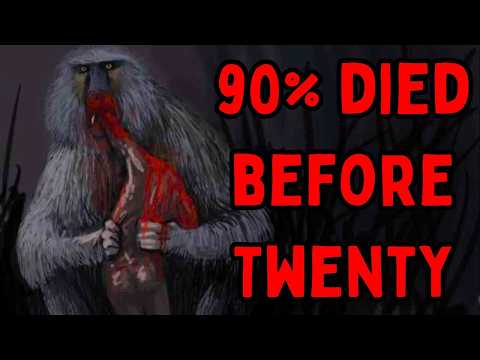
The Worst Time To Have Ever Been A Human
ExtinctZoo
22m 34s4,102 words~21 min read
YouTube auto captions
Transcript source
YouTube auto captions
This transcript was extracted from YouTube's auto-generated caption track. The transcript below is server-rendered so it can be read, searched, cited, and shared without opening the original YouTube player.
Pull quotes
[0:00]We, humans, members of the genus Homo, have come remarkably far in the 2.8 million years of our existence.
[0:00]And today we enjoy unprecedented levels of technology that has helped the worldwide lifespan reach roughly 73 years at birth.
[0:00]However, the journey to get here has not been an easy one, and we have had to endure many hardships, sometimes caused by our own doing.
[0:00]In classical Greece, 25, the Bronze Age 26, and during the Neolithic period, it got as low as 20.
Use this transcript
Related transcript hubs
Watch on YouTube
Share
MORE TRANSCRIPTS


