[0:09]Athens 2400 years ago. It's a compact place, only about a quarter of a million people live here. There are fine baths, theaters, temples, shopping arcades and gymnasiums. It's warm for more than half the year. This is also home to the world's first true and probably greatest philosopher, Plato. Born into a prominent and wealthy family in the city, Plato devoted his life to one goal. Helping people to reach a state of what he termed Eudaimonia or fulfillment. Plato is often confused with Socrates. Socrates was an older friend who taught Plato a lot but didn't write any books. Plato wrote lots of them, 36, all dialogues, beautifully crafted scripts of imaginary discussions in which Socrates is always allotted a starring role. Among them, The Republic, The Symposium, The Laws, The Meno and The Apology. Plato had four big ideas for making life more fulfilled. First big idea, think more. We rarely give ourselves time to think carefully and logically about our lives and how to lead them. Sometimes we just go along with what the Greeks called Doxa or popular opinions. In the 36 books he wrote, Plato showed this common sense to be riddled with errors, prejudice and superstition. Fame is great, follow your heart, money is the key to a good life. The problem is popular opinions edges towards the wrong values, careers and relationships. Plato's answer is know yourself. It means doing a special kind of therapy, philosophy. Subjecting your ideas to examination rather than acting on impulse. If you strengthen your self knowledge, you don't get so pulled around by feelings. Plato compared the role of our feelings to being dragged dangerously along by a group of wild horses. In honor of his mentor and friend Socrates, this kind of examination is called a Socratic discussion. You can have it with yourself or ideally with another person who isn't trying to catch you out, but wants to help you clarify your own ideas. Second big idea, let your lover change you. That sounds weird if you think that love means finding someone who wants you just the way you are. In the symposium, Plato's play about a dinner party where a group of friends drink too much and get talking about love, sex and relationships. Plato says, true love is admiration. In other words, the person you need to get together with should have very good qualities which you yourself lack. Let's say they should be really brave or organized or warm and sincere. By getting close to this person, you can become a little like they are. The right person for us helps us grow to our full potential. For Plato, in a good relationship, a couple shouldn't love each other exactly as they are right now. They should be committed to educating each other and to enduring the stormy passages this inevitably involves. Each person should want to seduce the other into becoming a better version of themselves. Three, decode the message of beauty. Everyone pretty much likes beautiful things, but Plato was the first to ask, why do we like them? He found a fascinating reason. Beautiful objects are whispering important truths to us about the good life. We find things beautiful when we unconsciously sense in them qualities we need but are missing in our lives. Gentleness, harmony, balance, peace, strength. Beautiful objects therefore have a really important function. They help to educate our souls. Ugliness is a serious matter too. It parades dangerous and damaged characteristics in front of us. It makes it harder to be wise, kind and calm. Plato sees art as therapeutic. It's the duty of poets and painters and nowadays novelists, TV producers and designers, to help us to live good lives. Four, reform society. Plato spent a lot of time thinking how the government and society should ideally be. He was the world's first utopian thinker. In this, he was inspired by Athens's great rival, Sparta. This was a city-sized machine for turning out great soldiers. Everything the Spartans did, how they raised their children, how their economy was organized, whom they admired, how they had sex, what they ate, was tailored to that one goal. And Sparta was hugely successful from a military point of view. But that wasn't Plato's concern. He wanted to know how could a society get better at producing not military power, but fulfilled people? In his book, The Republic, Plato identifies a number of changes that should be made. Athenian society was very focused on the rich, like the lush aristocrat Alcibiades and sports celebrities like the boxer Milo of Croton. Plato wasn't impressed. It really matters who we admire because celebrities influence our outlook, ideas and conduct, and bad heroes give glamour to flaws of character. Plato therefore wanted to give Athens new celebrities, replacing the current crop with ideally wise and good people he called guardians. Models for everyone's good development. These people would be distinguished by their record of public service, their modesty and simple habits, their dislike of the limelight, and their wide and deep experience. They would be the most honored and admired people in society. He also wanted to end democracy in Athens. He wasn't crazy, he just observed how few people think properly before they vote, and therefore, we get very substandard rulers. He didn't want to replace democracy with a horrid dictatorship, but he wanted to prevent people from voting until they'd started to think rationally. That is, until they'd become philosophers, otherwise, government would just be a kind of mob rule. To help the process, Plato started a school, the Academy in Athens, which lasted a good 300 years. There, pupils learned not just maths and spelling, but also how to be good and kind. His ultimate goal was that politicians should become philosophers. The world will not be right, he said, until kings become philosophers or philosophers kings.
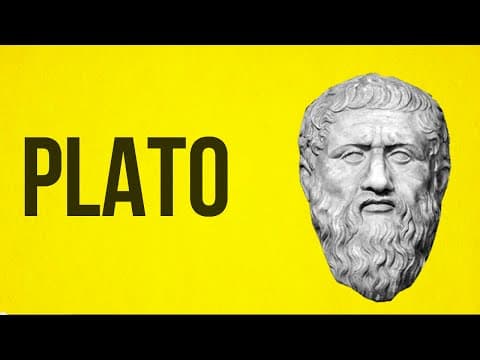
PHILOSOPHY - Plato
The School of Life
6m 28s991 words~5 min read
YouTube auto captions
Transcript source
YouTube auto captions
This transcript was extracted from YouTube's auto-generated caption track. The transcript below is server-rendered so it can be read, searched, cited, and shared without opening the original YouTube player.
Pull quotes
[0:09]This is also home to the world's first true and probably greatest philosopher, Plato.
[0:09]Born into a prominent and wealthy family in the city, Plato devoted his life to one goal.
[0:09]Plato wrote lots of them, 36, all dialogues, beautifully crafted scripts of imaginary discussions in which Socrates is always allotted a starring role.
[0:09]We rarely give ourselves time to think carefully and logically about our lives and how to lead them.
Use this transcript
Related transcript hubs
Watch on YouTube
Share
MORE TRANSCRIPTS


