[0:00]In 2018, 42.4% of US adults had the disease of obesity. Of course, this has continued to rise during the COVID-19 pandemic. Obesity has emerged as the most prevalent chronic disease of our time. Hello, my name is Dr. Fatima Cody Stanford. I'm an obesity medicine physician and scientist for children, adolescents, and adults at the Massachusetts General Hospital and the Massachusetts General Hospital Weight Center. I'm the director of equity for the endocrine division in the Department of Medicine at MGH, and I serve as director of diversity for the Nutrition Obesity Research Center here at Harvard. This is understanding obesity. Obesity is a disease characterized by different signaling in the brain that tells your body how much to eat and also how much to store. There is a particular part of the brain that's really responsible for weight regulation, and that part of the brain is called the hypothalamus. It gets signals and tells your body what to do and how to store. So if you've struggled with your weight and wondering why do I struggle with my weight compared to my mom, my dad, my spouse, my children? What is it about me? It's about how your brain signals and how that differs for someone else. So how do we measure this disease of obesity? We use something called BMI, which stands for body mass index. There are three classes of obesity, mild, moderate and severe. A BMI of 30 to 34.9 being classified as someone having mild obesity, a BMI of 35 to 39.9, someone with moderate obesity, and those with BMIs greater than or equal to 40, having the disease of severe obesity. Now, I told you it's an indirect measure, so BMI is not the end all be all. And when the BMI charts and tables were developed, they were based upon metropolitan life insurance tables from the 1930s that didn't include racial and ethnic minorities like myself, for example. So I do want to say that we use that with a grain of salt. In addition to looking at BMI, we might measure waist circumference, and we do look at this differently based upon gender. So for females, we measure waist circumference at the umbilicus, which is a fancy word for belly button, and we would use a tape measure and we would measure and if you are 35 inches or less, we're in a healthy zone. For men, the same area measuring at the belly button and around the circumference and our goal is to have a waist circumference of 40 inches or less. So, what causes obesity? Is it just about how much you eat and how much you exercise? Absolutely not, but for so many years we have supported this idea and this myth that it's all about calories in and calories out and I'm here to dispel that myth today. It's so complex. There are different factors that play a role in how the body regulates weight. Some of the contributors to obesity include disordered eating, age-related changes, genetic and epigenetic factors, smoking cessation, sleep deficits, the gut microbiota, physical disabilities, maternal and paternal obesity, increased sedentary time. These are just a few of the factors that contribute to individuals having the disease of obesity. So some of the different factors that may be related to why you struggle with obesity are age-related changes which happen in women's life. There are three major time during a woman's life where we see major weight shifts, when she gets her menstrual cycle as an adolescent, if she gets pregnant, whether or not that carries to full term or not, and at the time of menopause, major weight shifts that we see there. Believe it or not, trauma, a history of trauma causes an increase in stress, which causes storage of fat tissue. So that's another factor. If you're eating away from home a lot, that can cause major shifts in weight and weight status. There are over 200 diseases that are related to obesity. Let's talk about a few of the diseases that are common that you would know about that are related to obesity. Diabetes, high blood pressure, obstructive sleep apnea, polycystic ovarian syndrome, gastroesophageal reflux disease, osteoarthritis, hip pain that's associated with osteoarthritis can be associated with obesity. We know over 15 cancers related to having the disease of obesity that are triggered by having obesity. So there are four potential treatment strategies for obesity, lifestyle and behavioral, device, pharmacotherapy or medications, and surgery. Lifestyle and behavioral therapy really looks at a few key factors: diet, diet quality, physical activity, the duration and quality of one's physical activity, but it also gets into someone's mental health as it relates to their obesity. So they're tendency to overeat secondary to emotional issues or stress, for example. These are factors that fall under that big umbrella of lifestyle and behavioral therapy. Whether you're a child, adolescent or adult, we want to optimize diet quality. We want to look at lean proteins, whole grains, fruits and vegetables as the premiere makeup of one's diet. There is a device that is approved by the FDA that is actually capsules that one takes that expands a jelly-like substance in your abdomen. Other things to consider are things like medications for the treatment of obesity. There are several medications that are approved by the Federal and Drug Administration for obesity. These range from pills that one may take to injections that people may take on either a daily or a weekly basis for the treatment of obesity. One thing to note with the treatment of obesity with medications is that the medication does need to be used long-term. As soon as we take away the medication, any weight that you may have lost will return as soon as that agent is removed. And then finally, metabolic and bariatric surgery, which is utilized for those that have moderate obesity, which is a BMI of 35 to 39.9 with an obesity-related disease like obstructive sleep apnea, type two diabetes or heart disease or those that have severe obesity. What many people are unaware of is that metabolic and bariatric surgery leads to an 89% improvement in life expectancy within the course of five years. 89%, that is something that we have to acknowledge. And 95% of patients report that their quality of life improves within just three to six months after surgery. Some of the many diseases that can resolve with metabolic and bariatric surgery include sleep apnea, high cholesterol, asthma, high blood pressure, fatty liver disease, metabolic syndrome, reflux, type 2 diabetes, polycystic ovarian syndrome, hirsutism, and menstrual dysfunction. If you or any of your family members have struggled with your weight, please know that you are not alone. We've already talked about the high prevalence of obesity, the most prevalent chronic disease of our time and there is help out there. There are those of us, particularly in obesity medicine, that are here to help you conquer and treat this disease that is often caused numerous other diseases. Recognize this is not your fault. We are here and we care. If you want more health-related videos at mass journal Brigham, please be sure to like and subscribe.
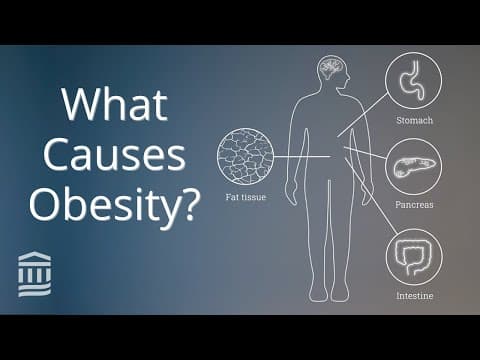
Obesity: Causes, Health Conditions, and Treatment | Mass General Brigham
Mass General Brigham
7m 22s1,212 words~7 min read
YouTube auto captions
Transcript source
YouTube auto captions
This transcript was extracted from YouTube's auto-generated caption track. The transcript below is server-rendered so it can be read, searched, cited, and shared without opening the original YouTube player.
Pull quotes
[0:00]I'm an obesity medicine physician and scientist for children, adolescents, and adults at the Massachusetts General Hospital and the Massachusetts General Hospital Weight Center.
[0:00]I'm the director of equity for the endocrine division in the Department of Medicine at MGH, and I serve as director of diversity for the Nutrition Obesity Research Center here at Harvard.
[0:00]Obesity is a disease characterized by different signaling in the brain that tells your body how much to eat and also how much to store.
[0:00]There is a particular part of the brain that's really responsible for weight regulation, and that part of the brain is called the hypothalamus.
Use this transcript
Related transcript hubs
Watch on YouTube
Share
MORE TRANSCRIPTS


