[0:00]It feels as if we are losing an important part of ourselves and our connections to our ancestors, for the culture is evolved around the nature and therefore losing it would be a great loss for all of our identities. The temperature, you know, in Iraq and especially in Southern Iraq in the marshes, the temperature over than 40. We are depending only on the nature, only on the water. If the marsh disappeared, the fishermen they start to immigrate. And I think the city it's will becomes like a ghost town. What happens to cultural traditions when the climate changes? Rising seas are swallowing up land and historic sites. Communities and wildlife are being forced to relocate. Around the world, cultures and traditions are being eroded by climate change. And today, you're going to hear about some of the traditions that are at risk, and what people are doing to try to preserve their heritage. This is what in the world from the BBC World Service, I'm Hannah Gelbart.
[0:59]And joining us to tell us more is Abiona Boyer from the World team. Hi, Abiona. Hi, Hannah. So, Abiona, you're from Albania. Tell me a bit about what it was like for you growing up with Albanian parents. Well, there's always been a big emphasis on music, dance, and language. So, in Albania, we have an instrument called the Chifteli. So, it's like a banjo like instrument, it's really, really hard to play and really, really hard to make, so a lot of young people aren't particularly taking it up. My personal favorite is the dancing that we do, so at weddings, we like to do our traditional cultural dance. And we have a lot of them. There's over 200 distinct regions in Albania, so there's over 200 types of dance. But unfortunately, we've become increasingly globalized, so now we just have one dance that we mainly do. It's kind of like a universal merging of all of the different dances. What's that dance like? You're going to have to show me later. Well, it's called it's called Valela. So, you basically hold hands and it's kind of similar to Dabke, like the Arab dance. So, you just run around and kick your legs and shout and you have a little napkin in your hand and twirl around. A little bit of sort of belly dancing involved. Sounds a lot of fun. It is a lot of fun. And we're talking about this because you've been looking into how different cultural practices, traditions are changing as the climate changes. Nearly every community has its own traditions, but some of these are now at risk because of climate change. Well, when we talk about climate change, typically we talk about rising sea levels, global temperatures, you know, species declining, things like that. But cultural heritage is something that is also at risk as well. So, the United Nation scientific, educational and cultural organization, or UNESCO, they actually identified this as intangible heritage. So, they've currently identified 733 different bits of cultural heritage that are at risk. Um, so there's an example of a Himalayan village called Daya. Um, they typically grow yaks on the mountains. But unfortunately, because of temperatures rising, the ice has been melting, so the land is just too dry to do that. So, they actually relocated, but where they've relocated to, they don't actually have permission to farm. So, they can't produce the yak, which makes their traditional milk, and they use the wool to spin a really nice yarn for their clothes. So, they just had to abandon that particular practice. And you've been speaking to some climate activists about this as well? Yeah, so I've been speaking to Muntadar Abdul Ali. He's a young Iraqi belonging to the Madan or Marsh Arabs. Now, these marshes are located in Southern Iraq. It's even reputed to be the biblical Garden of Eden. So, in this particular area, they raise buffaloes. So, these buffaloes create a specific type of milk that Iraqis used to create Gamar cream. Now, this is a delicacy that's an iconic part of the culture. They have it for breakfast every morning with honey. But this milk can't be mass-produced, and if the marshes are drying up, there's no water to feed the buffaloes. And Mutada has been telling me more about what he's doing to try and help. I was born in the city called Chubaish. This city called Chubaish because of the island it was exists in the marshes, floating islands, and my family, they were live on this island. When I was young, like I go to the small island on my father's boat and explore this area. Small wetland and it has a like beautiful nature, beautiful ecosystem. When I discover it, I was really proud that my parents they were marsh Arabs. What else are the typical practices of the marsh Arabs? For example, they have a reed houses, okay? And this is like only from the nature. If you want to build it, it takes just one day or two days with your family if they if they help you. And the the floating island, right now, it doesn't exist, this is floating island. We call it Chibaisha. Which means like reeds and mud and little woods. This is like floating islands. When the water gets high, the island gets with the water very high, and when the water gets low, also the island back with the water. This is really amazing. Like system. And unfortunately, right now, because of the water, the shorts of the water, this floating island doesn't exist anymore. You know, the marsh Arabs only they are raising buffaloes in the marshes. So, the buffaloes depend only on the water. If there is a a lot of water and marsh is a good a good marsh, a good like a grass, papyrus for the buffaloes, the buffaloes like can gives a milk for them, and they they can sell it. They can make it as a cream. But right now we have a like a short uh of uh, you know, lack of the water. And unfortunately, the marsh Arabs right now in the marshes, they are buying the filter water to their buffaloes. The buffaloes cannot like drink the water in the marshes because of the salinity. If if it drinks, it's it's going to die. The drought started in 2022, and till now, it it's drought years. And this is really hard on them. I know I know some area it was like over then 130 families in the marshes. Right now, when you when you go to this area, to the waste of Hamar marshes, it's only only like 30 families. And what would it mean for yourself and for other Marsh Arabs if the marshes were to completely dry up? We are depending only on the nature, only on the water. If the marsh disappeared, the fishermen they start to immigrate. And I think the city it's will becomes like a ghost town.
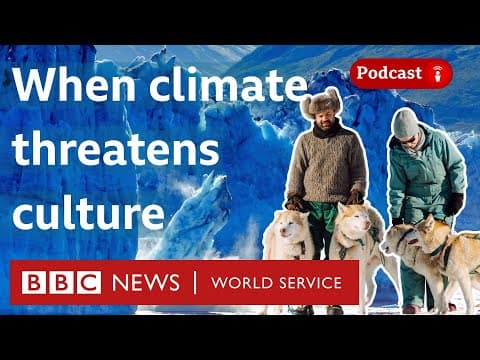
[6:16]Ghost town, and the marshes it will becomes uh desert and all of the marsh Arabs uh move to the northern city and to the northern areas, and we lost all had all our economy and we lost so many people, they are indigenous people. And I'm really afraid to happen that. So, that's how the heat and rising temperatures have been affecting Iraqi traditions. But over on the other side of the world, you've also got things like melting ice caps, rising sea levels, other effects of climate change. Yeah, so over in Greenland I've been speaking to 19-year-old Maya Natuk. She comes from a native Inuit background, and we've been speaking about the different traditions that there are in Greenland. So, they have these ice highways that connect remote villages to the main towns. The communities use these to travel to in order to sell their produce, they go hunting, but they just can't do that anymore because the ice is just completely melted. They also dog sled, but the warmer weather means that there's a rise in diseases, so the dogs are actually dying out and they can't use them. It's just no longer safe to use them. The land is absolutely crucial for understanding my culture and how it like it links to my identity as a person. Our culture and morals uh are actually created around the nature and its principles. We actually have a myth, um or a story about the mother of the sea. Um, which explains that if you are not good to one another, um, or to yourself and especially Mother Nature, then the mother of the sea would actually captivate the the animals, um, with her long hair. And you wouldn't get any food, or you get wouldn't get the nutrients that you needed if you did not respect the, um, the the nature. Then we have, of course, the national costume, which is with the women, we have pearls and and uh uh skin boots. Um then you have your hair up, it's very much made out of everything you can get from the nature. And then we have the man's costume, which is a white top, um that's made out of um seal skin as well. If there's just no animals left, all the caribou and the seals have migrated elsewhere. What would that mean? People live of off hunting and of selling what they what they hunt and what they get and what they fish. So, if young people can't do that and get the uh get the future that they might have thought that they could be able to have, that's also impacts them on being like what do I then have left? And you mentioned that you find comfort in the nature. If the ice were to continue melting as rapidly as it is, what would that mean for you and your identity if you can't access it anymore? I've always talked about how the climate change and the if the ice melting, how it would have an economical effect, um, on on the people, but it has also changed the point of view and mindset so drastically because it scares so many people. Um, if we are losing the ice, it almost feels like if we're losing a part of ourselves and our connections to our ancestors and the principle that they lived after, we will not be able to to go about the nature as we used to and we see nature as a comfort. Um, so that means that the native community community would lose a piece of ourselves, but also a piece of each other. So, what are people like Muntadar and Maya trying to do to solve this issue and help preserve their traditions? Well, they say that the emphasis should be on education. Even if climate change can't be reversed or stopped, if young people are aware of their heritage and their identity, at least they can hold on to that even if they are forced to relocate. I've always encouraged people to stay strong and be proud of who they are, for who they are. They they should not be ashamed to be because they don't because they're not used to what other people used to because they say that what they do is weird or they don't speak properly Danish or English and those sorts of things. You should be proud that you are from a place that's so beautiful and there's so few of us. It's almost sort of rare to be at this time. I show people and especially my community that our marsh is it's really special. I took a lot of people from Europe, around the world, to show them our culture, our marshes and that's how much special. Right now, I can see some guys, they are start to like, they are start to studying about the marshes, studying about our history. And also I I want to make a part of national park in the marshes that support the generation and gives ideas to the student who wants to learn about marshes more and more. And do you see yourself staying in the marshes for a long time or do you plan to maybe migrate to a city in the future? I will not leave the marshes uh ever even if the if the if if I will see like the how can I say if I will see all the marshes died? No, I can't I cannot leave it. Because uh I am original from the marshes and my parents they are also original from the marshes. I will speak about this issue, about the drought in the marshes, about what's happened to the marshes recently. I'm going to speak it because if I leave the marshes, who's going to support who's who's going to have a voice for the marshes. And as well as climate change, which is one of the big issues of our times, how else are these traditions being threatened? Well, globalization is one thing. People have access to other cultures and other identities, so they're learning more about other people and they're kind of giving up their own identity, especially with the rise of American culture, Netflix, TikTok, all of these things are having an influence on people. So, they're just not really interested in taking up traditions from their own cultures. Are there any examples of uh cultures that have been successfully preserved? Yes, so the bandonion is a concertina instrument. It's native to Uruguay and Argentina and it's a huge part of the tango dance culture. Now, this is quite a niche instrument. Typically the people that play it are older, over 60. So, the instrument and how to make the instrument actually is kind of dying out with that older generation. So, to counteract this, UNESCO's intangible cultural heritage scheme actually set up free classes for people in the area, for young people in particular. So, they can learn how to play the instrument, make it, and also how to dance along to the music too. Abiona, we're going to go out dancing. Yes, absolutely. Thank you so much for coming on the podcast. And that is it for today. This is what in the world from the BBC World Service. I'm Hannah Gelbart, and we'll see you next time.


