[0:00]Hello, this is Dr. Carlo Ojeda for EDEXITvideo.com. In this video, we're going to talk about cellulitis. Cellulitis is a very common skin and soft tissue infection caused by bacteria. Staphylococcus and Streptococcus are the most common pathogens. These bugs normally live in the skin, but for whatever reason, they find a way to get in subcutaneously and create infection and trouble. Risk factors for cellulitis include the following: cracks or peeling skin between the toes, history of peripheral vascular disease. History of trauma or injury with a break in the skin like skin wounds, insect bites and stings, animal bites, and human bites. Ulcers from certain diseases, including diabetes and vascular disease, use of corticosteroid medications or medications that suppress the immune system. Symptoms of cellulitis include the following: fever, pain or tenderness in the affected area, skin redness or inflammation that gets bigger as the infection spreads. Skin sore or rash that starts suddenly, and grows quickly in the first 24 hours. Swollen glands, or lymphadenopathy, proximal to the area of infection. Tight, glossy, even stretched skin appearance, warm skin in the area of the redness. Signs of infection include chills or shaking, fatigue, general ill feeling, muscle aches and pains, warm skin, and sweating. Tests that the doctor will do include blood cultures, a complete blood count or CBC, and cultures of any fluid or material inside the affected area. Treatment. Most of the time, treatment involves antibiotics taken by mouth and close follow-up by your doctor. You may be given painkillers. You should raise the infected area higher than your heart to reduce swelling. Rest until your symptoms improve. You may need to stay in the hospital if you're very sick, for example, if you have a very high temperature. If your blood pressure is low or there's nausea and vomiting that's stopping you from keeping the antibiotics down. If you have been on antibiotics and the infection is still getting worse, if your immune system is not working well due to cancer or HIV. If you have infection around your eyes, and if you require antibiotics by a vein. Cellulitis usually goes away with 7 to 10 days of antibiotics. Longer treatment may be needed if cellulitis is more severe. This may occur if you have a chronic diseases or your immune system is not working properly. People with fungal infections of the feet may have cellulitis that keeps coming back. It's recurrent. The cracks in the skin from the fungal infection allow the bacteria to enter the skin. So, you should be treated for fungal infections in addition to the bacterial infection. Complications include blood infection or sepsis, bone infection or osteomyelitis, inflammation of lymph vessels which is called lymphangitis. Inflammation of the heart or endocarditis, meningitis, shock, and tissue death which is gangrene. Follow up. Make sure you follow up with your primary care provider. He or she can make sure that the treatment is progressing well and make the appropriate referrals or admission to the hospital if it's not. Return to the emergency department if you have developed new or worsening symptoms since your initial evaluation. If the area of redness is spreading despite being on antibiotics, or in any reason, you are deteriorating. For this and many other videos like this for patient education, please go to EDEXITvideo.com and do a search for whatever subject you're searching for. Thanks for watching.
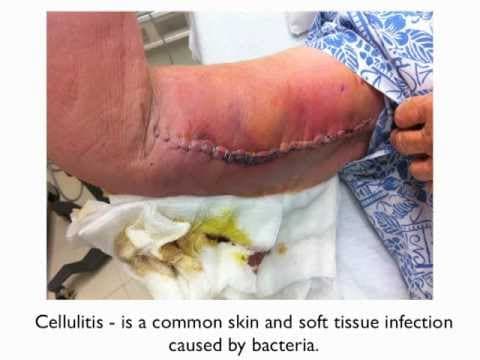
Cellulitis - a patient education video
DrER.tv
4m 14s570 words~3 min read
YouTube auto captions
Transcript source
YouTube auto captions
This transcript was extracted from YouTube's auto-generated caption track. The transcript below is server-rendered so it can be read, searched, cited, and shared without opening the original YouTube player.
Pull quotes
[0:00]These bugs normally live in the skin, but for whatever reason, they find a way to get in subcutaneously and create infection and trouble.
[0:00]Risk factors for cellulitis include the following: cracks or peeling skin between the toes, history of peripheral vascular disease.
[0:00]History of trauma or injury with a break in the skin like skin wounds, insect bites and stings, animal bites, and human bites.
[0:00]Ulcers from certain diseases, including diabetes and vascular disease, use of corticosteroid medications or medications that suppress the immune system.
Use this transcript
Related transcript hubs
Watch on YouTube
Share
MORE TRANSCRIPTS


