[0:00]Volleyball is a complex sport with a lot of depth in its strategy. Each position has its own unique responsibilities and skill requirements. Today, in this video, I'm going to break down all the volleyball positions. So, if you've curious how a team play together to make those spectacular saves and smash back-to-back hits. Then, watch till end. In volleyball, each team has six players, divided into the front row and back row. In the front row, there are outside hitter, middle blocker, and opposite hitter. However, in the back row, there are setter, libero, and defensive specialist. The outside hitter or left side hitter is usually the primary offensive player. This player attacks from the left side of the net and often receives the majority of sets from the setter. They must excel at a range of skills including passing, hitting, blocking, and digging. Agility and consistency are crucial for this position as they often face the most challenging serves and attacks. Next is the middle blocker, often the tallest players on the team, tasked with guarding the net. They aim to block the opponent's hits and disrupt their plays. The middle blocker also conducts quick attacks, called quick sets to surprise the opposing team's blockers. They require excellent timing, powerful jumping ability, and swift lateral movement. The opposite hitter, also known as the right side hitter, is typically one of the most dynamic players on the team, situated on the right side of the court in the front row. Their primary role is to be a dominant force offensively. The opposite hitter frequently attacks against the opposing team's outside hitters, making blocking skills vital. This player is usually responsible for many of the back row attacks and often serves as a secondary setter. The setter is the strategist of the team. Their role is setting up attacks by providing accurate sets to the hitters. Setters require exceptional ball handling skills and must be able to make split-second decisions to choose the best attack strategy. They often serve as the leaders on the court and require excellent communication skills. The libero, positioned in the back row, is the cornerstone of the team's defensive strategy. This player is an expert in digs and passes, required to have excellent reflexes and court awareness. The libero can replace any back row player without counting as a substitution to provide a defensive boost. However, they have limitations. They cannot serve, spike, or block, and they cannot rotate to the front row. In addition to the libero, teams may also include a defensive specialist, another player focusing primarily on back row skills like digging and passing. Unlike the libero, the defensive specialist can serve and is not restricted by the same substitution rules. I hope this video helped you to understand each volleyball position's role and responsibility. If so, then don't forget to subscribe this channel and like this video.
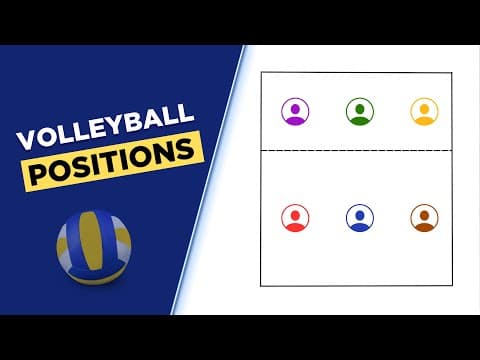
Volleyball Positions: Explained with Animations
Set Explainer
3m 4s486 words~3 min read
YouTube auto captions
Transcript source
YouTube auto captions
This transcript was extracted from YouTube's auto-generated caption track. The transcript below is server-rendered so it can be read, searched, cited, and shared without opening the original YouTube player.
Pull quotes
[0:00]So, if you've curious how a team play together to make those spectacular saves and smash back-to-back hits.
[0:00]In volleyball, each team has six players, divided into the front row and back row.
[0:00]In the front row, there are outside hitter, middle blocker, and opposite hitter.
[0:00]This player attacks from the left side of the net and often receives the majority of sets from the setter.
Use this transcript
Related transcript hubs
Watch on YouTube
Share
MORE TRANSCRIPTS