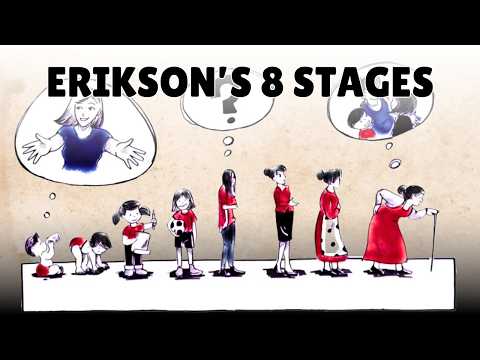
[0:00]Erikson's theory of psychosocial development identifies eight stages which a healthy individual should pass through from birth to death. At each stage we encounter different needs, ask new questions, and meet people who influence our behavior and learning. Stage one, basic trust versus mistrust. As infants, we ask ourselves if we can trust the world and we wonder if it's safe. We learn that if we can trust someone now, we can also trust others in the future. If we experience fear, we develop doubt and mistrust. The key to our development is our mother. Stage two, autonomy versus shame and doubt. In our early childhood, we experience ourselves and discover our body. We ask, is it okay to be me? If we are allowed to discover ourselves, then we develop self-confidence. If we are not, we can develop shame and self-doubt. Both parents now play a major role. Stage three, initiative versus guilt. In preschool, we take initiative, try out new things and learn basic principles like how round things roll. We ask, is it okay for me to do what I do? If we are encouraged, we can follow our interests. If we are held back or told that what we do is silly, we can develop guilt. We are now learning from the entire family. Stage four, industry versus inferiority. Now we discover our own interests and realize that we are different from others. We want to show that we can do things right. We ask if we can make it in this world. If we receive recognition from our teachers or peers, we become industrious, which is another word for hard working. If we get too much negative feedback, we start to feel inferior and lose motivation. Our neighbors and schools now influence us the most. Stage five, identity versus role confusion. During adolescence, we learn that we have different social roles. We are friends, students, children, and citizens. Many experience an identity crisis. If our parents now allow us to go out and explore, we can find identity. If they push us to conform to their views, we can face role confusion and feel lost. Key to our learning are our peers and role models.
[2:42]Stage six, intimacy versus isolation. As young adults, we slowly understand who we are, and we start to let go of the relationships we had built earlier in order to fit in. We ask ourselves if we can love. If we can make a long-term commitment, we are confident and happy. If we cannot form intimate relationships, we might end up feeling isolated and lonely. Our friends and partners are now who influences the most. Stage seven, generativity versus stagnation. When we reach our 40s, we become comfortable, use our leisure time creatively, and maybe begin contributing to society. Our concern is generativity. If we think that we are able to lead the next generation into this world, we are happy. If we did not resolve some conflicts earlier, we can become pessimistic and experience stagnation. People at home and at work are now who influences the most. Stage eight, ego integrity versus despair. As we grow older, we tend to slow down and begin to look back over our lives. We ask, how have I done? If we think we did well, we develop feelings of contentment and integrity. If not, we can experience despair and become grumpy and bitter. Time to compare us with mankind. Eric Erikson was a German-American psychologist who, together with his wife Joan, became known for his work on psychosocial development. He was influenced by Sigmund and Anna Freud and became famous for coining the phrase identity crisis. Although Erikson lacked even a bachelor's degree, he served as a professor at Harvard and Yale.
[4:37]This video was made for us by minutevideos.com, who are doing everything to make awesome videos affordable. So, if you want to make your own video, please check out their website. If you tell them you came from Sprouts, they'll give you a 10% discount and they'll donate $50 for our next video, which would really help our channel. If you work in a company, why not use them for internal training. If you're a teacher or school, you can make your own lessons. Just go to minutevideos.com and order your video for as little as $600. Thank you for watching.


