[0:00]There is one trading strategy that I use every single day. It's stupid simple, incredibly reliable, and the reason why I'm able to make consistent profits in the market. The strategy I'm about to share with you today is so simple that even a beginner can't mess this up. I'm going to show you the full strategy along with three simple steps on exactly how you can execute this strategy, and then I'm going to show you real trading examples that you can use in real time. So with that being said, let's not waste any time, and let's get straight into the video. So as you can see right here, in the past month trading I've made over $65,000, and right below it here is my P&L graph spanning from June the 15th all the way to July the 15th as the time I'm recording this video. So this is the past month's P&L that I have. So you guys see my results, but the real question is how can you guys do the same? And this is exactly what I'm about to share with you guys in today's video. In today's video, the goal of the video is to show you guys how you can make consistent profits trading using a simple and proven strategy within the first two hours of market open. What you'll learn in today's video is one trading strategy that is repeatable and mechanical. And the best part is, it doesn't require daily bias, fancy indicators, and it sets up every single day. So what this strategy will do is take the guesswork out of your trading and all you're focused on is executing the setup every single day. So what is this strategy? And this strategy can be broken up into three simple steps. First, what we're going to take a look at is the first candle and why that first candle is very important when it comes to trading. The different types of time frames that we can use when trading the strategy, the one, five or 15 minute time frame, the different types of entry models that we can use, potential breakouts, break and retests, or reversal setups. Different types of confluences that we can use to make it more high probability when looking to trade the strategy. Then we're going to take a look at entries, stops, and targets. And finally, we're going to take a look at some examples and exactly how to execute this strategy in real time. What this strategy consist of is trading ranges. So as you can see right here, what I have marked out is the top of the range along with the bottom of the range. And this is what I consider the range high and the range low. And these are going to be our external levels. So as you can see, in this case, what we have here is a very large range. And when trading these ranges, it can be very difficult, especially if the range is very big. So what do we want to be focusing on? What we want to focus on here is the first candle of a new market session. So instead of focusing on that very large range that we had, all we're going to be doing is looking for the high and low of the first candle of a new market session. And in this case, what we have is our opening candle high, and we also have our opening candle low. And this is what's called our opening range. And this is going to be very important because the opening range of a new market session has a lot of liquidity. So these are going to be the areas that we're going to be looking for for potential trading opportunities around. So the next question I get asked is what different session should I be looking for? The London session, the New York session, or the Asia session? And these are the three major sessions that always occur. I consider the London session the after hour session or the pre-market, the New York session, which is during market hours, and then the Asia session is going to be your after hours. So the main session that I'm going to be focusing on is going to be the New York session. The New York session opens up at 9:30 AM Eastern Standard Time. And the reason why we're going to be focusing on the New York session is because this session has the most volatility and liquidity. So this is the session that we're going to prefer to be looking for the opening range. You can use the other sessions like London and Asia session as well, but in my experience, the New York session is going to be your go-to session to mark out that opening range and that first candle. So once we have identified the market sessions, what we want to do is mark out the first candle at 9:30 AM Eastern Standard Time. All we're going to do is mark out the high and low of the first candle that forms at 9:30 AM Eastern Standard Time. The next question we have is which time frame should we choose? We have the 15 minute, the five minute, and the one minute time. These are the best opening ranges that you can choose when it comes to trading. Anything above the 15 minute time frame is going to be too big of a range. So what we have on the left hand side is our 15 minute high and low. In the middle, we have our five minute high and low. And then on the right hand side, what we can have marked out is your one minute high and low, which is going to be the opening ranges in correspondent to the different time frames that we use. So depending on the time frame that you're on, is going to be the opening range that you choose. And there's different criteria that you should be looking for when you're trading the one minute versus the 15 minute time frame. And the best bet that most beginner traders should use is the 15 minute opening range. Because this is the one with the most liquidity, and it's also the one where you use every single time frame in combination with one another, which gives you the highest probability opening range. So, step number one. What you want to do is mark out the high and low of the first 15 minute candle of New York session open. So as you can see, what we have here is your opening range high, along with your opening range low on the 15 minute time frame. Step number two, what we want to do is wait for a five minute candle close above or below the 15 minute range. So as you can see right here, we have our 15 minute range high and our 15 minute range low. Currently, we're on the five minute time frame. So as you can see right here, what we have is your five minute candle close above your 15 minute range high. If we're looking for this towards the downside, it would be the complete opposite. And we'd be waiting for a five minute candle close below your 15 minute range low. Step number three is we're then going to go onto the one minute time frame and look for entries for continuation. So as you can see, what we have marked out here is your 15 minute range high along with your 15 minute range low. Now, once we're able to break above your 15 minute range high with a five minute candle close, you can see on the one minute time frame, we can be looking for entries now for this continue push towards the upside. And as for entries, there's actually three different type of entries that we could be looking for. So the first entry that we have in this case is what's called our breakout, our opening range break. Once we get that five minute candle close, now we can be looking for entries on the lower time frame. So once we have a strong candle close above our opening range, we can be looking for long positions once we have a strong candle close below, stops a break below and we can be looking for continuation towards the upside. This is scenario number one. Scenario number two is we have a retest. So instead of looking for that opening range break, we're looking for the break, retest, and now we have that continue push towards the upside. This is my personal favorite and the entry model that I use on a consistent basis. And then our third entry model is a reversal setup. This is something we can keep an eye on because normally, if the opening range fails, and price breaks back underneath the opening range, what we'll have is the retest for actually a push towards the downside. So if you guys want a full in-depth video on exactly how to trade reversals, make sure to drop it in the comments below, and we'll talk about reversal setups when it comes to trading the opening range. So now, with this being said, we just went over the three different entry models that we can be looking for, along with the three steps on how to trade the opening range. Let's go onto real examples and exactly what this will look like in real time and how we can use this to enter and manage our positions. Let's get into it. So as you can see here, we're on my first example on the day. What I'm going to do now is mark out our high and low of the first 15 minute candle. Currently, we're fairly bullish because now we are above your previous day highs, but we can mark out this, and now we can go onto the lower time frames. So now, what we want to do is wait for a five minute candle close above or a five minute candle close below our 15 minute opening range. Let's play out the tape. So, as you can see right here, we are now breaking above your 15 minute range here on the five minute time frame. We can now go into the one minute chart. So, as you can see, we're here on the one minute time frame on Tesla. We just recently broke above your 15 minute range high. You can see we're having a nice impulsive move towards the upside, leaving behind what I call a bullish gap. So, whenever price leaves behind a bullish gap, this is a strong signal that price is going to continue towards the upside. In this case, there's two different entry models, we can be looking for the breakout, or we can be looking for the retest. In this case, let's look for the breakout. What we'll do is wait for this candle to form that bullish gap. We can go long on this candle close with a stop at the break below your second candle that formed the gap. And now what we can be looking for is a fixed one to two risk reward towards the upside. So, as you can see right there on Tesla, we end up having a super nice breakout of its 15 minute range. And we end up having continuation towards the upside. In this case, the retest entry would have worked very nice here as well. When you're trading the breakout of the opening range, what you want to see is a form of displacement shown on the chart by a bullish gap. This is one of the best forms and one of the best ways to trade the opening range because sometimes, as you'll see, it doesn't always come down for the retest, especially if something is very bullish and you have a higher time frame draw that you're looking for price to gravitate towards. So what I want you guys to do is go back and back test the three different entry models that I've shown in this video. Now let's go on to the next example that we have. So as you can see, we're on my next example here on Nvidia, and what we're going to do as always is mark out our opening range high, and we're going to mark out our opening range candle here on the 15 minute time frame. Now, what we can do is go onto the five minute chart. So now here on Nvidia, what I like to see is a five minute candle close above your 15 minute range high, or the five minute close below your 15 minute range low for continuation towards the downside. Let's play out the tape. So now you can see on Nvidia, we're pushing back towards the upside, breaking above your 15 minute opening range high here on the five minute time frame with the strong five minute candle close. Now, let's go onto the one minute chart. So, as you can see here for Nvidia, we're having this nice push towards the upside. We're now above your 15 minute range here on the one minute time frame. You can see that buyers are stepping in here based off of this candle low as well. Now what we can do is look for the retest with a stop loss at this break of structure low. And now what we can be looking for is a fixed one to two back towards the upside. Now, let's play out the tape. And as you can see right there on Nvidia, we end up having this super solid retest of your 15 minute range hold. You can see that we ended up holding this level nicely for this continue push towards the upside. And one thing to note, as you can see right here, the reason why we opted in for the retest, and we're waiting for strong price action in this case, is because there was no bullish gap. So, there wasn't a breakout opportunity. So what we're going to do in this case if we're not looking for the breakout, we're going to look for the retest and we're going to wait for the strong price action, and you can see the buyers essentially stepped in right off our key level for this nice continuation back up and towards our high of day and above. Now, let's go on to the final example that we have today. So, as you can see, we're on my final example here. This is on the QQQ. What we're going to do as always, is mark out our opening range high, and we're going to mark out our opening range candle here on the 15 minute time frame. Now what we can do is go onto the five minute chart. Now we're on the five minute chart. What we're going to do is wait for the strong five minute candle close above the top of the range, or a five minute candle close below the bottom of the range. Now let's play out the tape. So, right here, you can see we just went from the top of the range all the way down towards the bottom of the range here. You'll see a lot of the times here, if you're trading the major indices and there's not a clear trend on the higher time frames, what you'll usually see is a lot of mean reversions. So, let's go on to the lower time frame. If we're now on the one minute time frame, as you can see here, what we'll now be looking for is essentially the retest underneath your 62660s for this potential continue push towards the downside. So, as you can see here for the QQQ, we were originally looking for continuation towards the downside. We ended up having an immediate retest. We're looking for this potential 15 minute range low once again to look for more continuation lower. But immediately, you can see the buyers are stepping in and now we're pushing price back towards the upside. So based off of today's price action, there's most likely going to be no continuation. Just based off the range we have established, going from the top of the range down and towards the bottom of the range. We know that it's most likely going to be a range day. So what we want to do is not look for any trading opportunities when it comes to continuation. But what we do have in this case is what's called the reversal setup. And the reversal setup is something that you can be looking for, especially if the markets are ranging. So let's play out the tape here to see if there's a potential opportunity where we can be looking for a mean reversion setup. So, as you can see right here, we finally have broken structure as well. So this was the lower high that formed here in the markets. Once we're able to break back above this lower high here with displacement, now this is going to be our key level for potential reversal back towards the upside. So what we can have marked out is this candle high down in towards the body. And what we'll be looking for is the potential reversal setup, risking off of your swing low for this continue push where back up and towards high of day and above. Let's see if price comes down into our order block. As you can see right here, price is coming back down into our order block. We have our confirmation candle here as well. This is where we can go long with a stop just a break below at the bottom of this level. And now what we can be looking for is a take profit all the way back up and towards hive day. Now, let's play out the tape. And as you can see right there, it took a while, but we finally hit our high of day key level perfectly, and that's exactly where you can see the market had a little bit of reaction off of. So, as you can see, this was a good example of a reversal setup. If you guys want a more in-depth video on exactly how to trade reversals, let me know in the comments below, and I'll do an in-depth guide on exactly how to trade reversal setups using the opening range. I personally prefer the continuation setups, but I know a lot of people, if you trade indices primarily and forex, there's going to be a lot more mean reversions. So you're going to be looking for the reversal setup more often, whereas I'm going to be looking for the continuation setup along with the higher time frames. And with that being said, I hope you guys enjoyed the video. If you did, I'd appreciate if you guys drop me a like and sub. And with that being said, I'll see you guys next week for a brand new video. Peace.
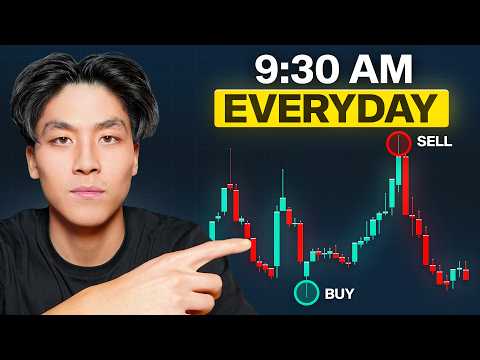
This 1 Minute Scalping Strategy Works Everyday (Stupid Simple and Proven)
Jdub Trades
14m 47s3,219 words~17 min read
Auto-Generated
Watch on YouTube
Share
MORE TRANSCRIPTS