[0:09]I've missed more than 9,000 shots in my career. I've lost almost 300 games. 26 times, I've been trusted to take the game winning shot and missed. I've failed over and over and over again in my life. And that is why I succeed. 9,000 missed shots. Who here has failed before? More than once? Who here does not like failing? Well, no, no buzzword gets more attention or is more widely desired than the word success. People are spending hours, months, years in the search for success. The reality is not all achieve it, or at least not all persist long enough to achieve it. Because of one fundamental element of success, failure. All of you has raised your hands. All of you have failed before. I have failed many times before. And that is a fundamental part of success. The question then is, which one is greater, my desire to succeed or my fear to fail? I wish to discuss three principles today that if applied will impact our lives now and forever. Number one, don't quit too early. Most obstacles we face are here to test our character, not to stop us. Who here has heard of NCAA coach John Wooden before? John Wooden is perhaps the greatest college basketball coach in the history of the world. He has won 12 championships, 11 of which were consecutive titles. The true personification of success both on and off the court. But most people don't spend any time trying to understand what happened to John Wooden in his career before all that success. He went 16 years without winning anything. Now, think about that. 16 years and no titles, then 12 years and 11 titles. Many people would call phase one of his career a failure, but he called it preparation. A common excuse that I think all of you will be able to relate to, that we often use is, when something goes wrong is, well, it didn't work out, thus it's just not meant to be, right? And we usually stop right there. But that's not how life works most of the time. I remember learning a lesson from a professor in California. He said, get in line and stay in line. Don't quit too early. Number two, there's no such thing as failure. If you learn the lesson and gave your best, you succeeded. Have you thought of that before? Because we usually measure failure or success by the outcome, not by the effort. But if you've given your best, you succeeded. Robert Kiyosaki put it well when he said, sometimes we win, sometimes we learn. And we usually, when we win, we tend to party. Right? But when we lose, we tend to ponder. I have a professor at BYU who has taught me a principle that at first sounds very uncomfortable. He said, and I hope my boss is not here to hear this. He said, Eduardo, go out there, get a job, get paid to make mistakes, and then go do your own thing. Right? So in his perspective, failure is a vehicle, a friend, not an enemy. It's a connecting point leading us to success. In other words, the faster I fail, the faster I learn, the faster I learn, the faster I succeed. So maybe the lesson here is, go and fail as as fast as you can. Just don't quote me on this. Right? Just last year, during the recruiting season, I was trying to find an internship. It's a big battle finding an internship. I had 16 interviews locked in. I was sure I was going to get an offer. But after all those 16 interviews, I got no offers. I was frustrated and super discouraged. But then my father, who is in the audience today, was wise enough to come up to me and lift my vision and said, son, you've lost a few battles, but the war is still on. This is part of the process. All the 16 interviews are going to help you find what's best for you. Just keep giving your best effort. Two days later, I had my 17th interview and got the offer. There's no such thing as failure. Number three, the past does not equal the future. Who here has been rejected by a girl or a guy before? And if you don't raise your hands, I'm calling you a liar. Well, a lot of people have not raised their hands, I'm surprised. I'll raise both. Well, all of us have, but the tragedy of this experience is not the experience itself. It's the meaning that we usually take home with us, because I was rejected then, I'll be rejected again. The past will equal the future, perfect formula for misery. The past does not equal the future. Tony Robbins, one of the greatest teachers that I know, has taught this principle in a marvelous way. He said, and if you're going to take anything home from my talk, take this principle. The only thing that keeps us from getting what we want, is the story we keep telling ourselves about why we can't have it. The only thing that keeps us from getting what we want is the story we keep telling ourselves about why we can't have it. Reality is, now is our reality. We can create our own story. We're all great storytellers. We have a blank page in front of us every day to create a story based on our now truth, not on our past truth. I hope these three principles have been beneficial to you today. Don't quit too early. There's no such thing as failure. The past is not equal to the future. And next time, when you're facing challenges, all of us, which will surely come to test our character, may we remember the words of Michael Jordan, greatest basketball player of all history. I failed over and over and over in my life, but that's why I succeed.
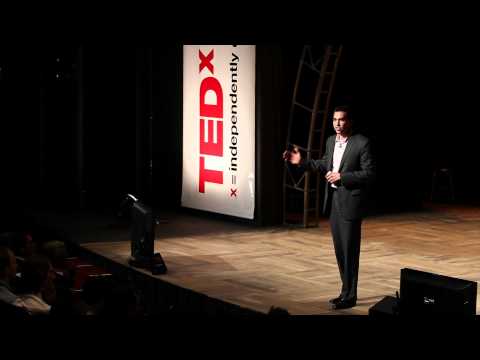
Failure Is Part of Success: Eduardo Zanatta at TEDxBYU
TEDx Talks
6m 45s1,006 words~6 min read
YouTube auto captions
Transcript source
YouTube auto captions
This transcript was extracted from YouTube's auto-generated caption track. The transcript below is server-rendered so it can be read, searched, cited, and shared without opening the original YouTube player.
Pull quotes
[0:09]Well, no, no buzzword gets more attention or is more widely desired than the word success.
[0:09]The reality is not all achieve it, or at least not all persist long enough to achieve it.
[0:09]The question then is, which one is greater, my desire to succeed or my fear to fail?
[0:09]I wish to discuss three principles today that if applied will impact our lives now and forever.
Use this transcript
Related transcript hubs
Watch on YouTube
Share
MORE TRANSCRIPTS


