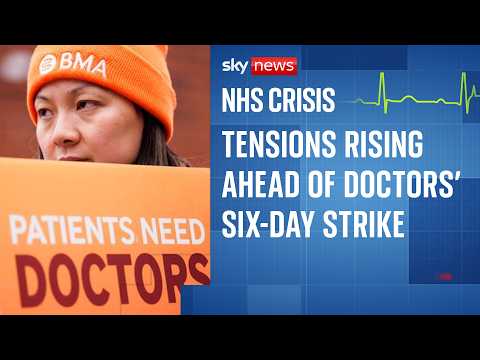
[0:00]So hospitals in England are once again preparing themselves for almost a week of disruption. It looked like a deal was there to be struck with the resident doctors. So why are they back on the picket line?
[0:17]Resident doctors, formally known as junior doctors, last went on strike the week before Christmas, and that was the 15th round of action. It's part of a long-running fight with the government over pay, working conditions, and jobs. Although constructive talks had taken place, the British Medical Association, that's the doctors union, now says the government moved the goal posts at the last minute. We feel like we had the foundations of something to potentially resolve both the pay as well as the jobs dispute. But sadly at the last minute, particularly around pay, that investment was reduced and then it was stretched over a number of years. We've asked the government several times to reconsider this before calling industrial action and there was a reluctance to do so. The BMA says doctors pay is more than 20% down compared with 2008, but it does say other issues are resolvable. Doctors, it argues, are facing rising costs and with a war in Iran, inflation looks set to rise again this year. They want their pay deal to reflect this. The union also says it's shocked by the government's tone after the Prime Minister withdrew an earlier offer of 1,000 training places that the BMA had requested. It's bad for patients. Ultimately, in February there were 54,000 patients treated in A&E for more than 12 hours. They waited in A&E for more than 12 hours. And yet at the same time, we turned away 13 fully qualified resident doctors from every one A&E training job last year. I don't think that cutting resident doctors jobs by a thousand goes to make any progress towards fixing that problem. But here's the thing, at the same time, resident doctors walk out, BMA Union staff will also go on strike and they're the ones who are actually helping to organize the doctors strikes. Union staff say their pay is significantly down and the BMA is offering its own workers less than inflation. BMA BMJ Group in the last declared uh company accounts to um companies house showed something like 15.4 million pounds of profit. That sounds like a very healthy financial position. We can't understand why such an approach is being taken. Um the BMA seems to be, as I say, through both the CEO and the board taking a line of a kind of self-imposed um budget reduction. We don't think that's the direction to move in. The Health Secretary Wes Streeting says he feels he has been more than reasonable by offering resident doctors a 28.9% pay rise. NHS England boss Sir Jim Mackey says the health service will now focus on ways of working that are less reliant on resident doctors. We might see what that exactly means when the government publishes its long-term workforce plan in May.