[0:03]How aircraft leasing works and why airlines do it. We're used to assuming that if an airline paints an aircraft using its livery and operates it, it must also own it. The topic of aircraft leasing does not get the attention it deserves, given its vitality and prevalence to the airline industry. The incredible financial burden of obtaining brand new aircraft is so significant that virtually all airlines decide to lease at least some of their aircraft. Let's dive into the functionality of aircraft leasing. If an airline wants to obtain a new plane, they can either buy it or lease it. Let's imagine that Qatar Airways is willing to expand its operations and needs a new fleet of 10 Boeing 787s to do so. If they have enough cash or can obtain bank loans, they can purchase the aircraft directly from Boeing. A list price for one brand new 787-8 is around $240 million. So, assuming Qatar Airways would get a good discount of 35% from Boeing, purchasing 10 brand new 787s would cost them $1.56 billion. The other option that Qatar Airways has is to lease those 787s, for which the lease rate average sits at around $1 million a month. If Qatar Airways decides to retain cash and chooses to lease, they can reach out to firms that specialize in commercial aircraft leasings such as Avalon or GECAS. Assuming that Qatar Airways will also receive a discount of 35% from GECAS, they now only have to pay $78 million per year for all 10 of the 787s. If we imagine that the leasing contract will last for around 20 years, its total value would be around $2.34 billion. In that way, GECAS can make a profit by leasing their airplanes while Qatar Airways manages to reduce its cash expenditures and retain liquidity in its business. There's a huge variety with regards to types of leases and deals that airlines can make with the lessers. Firstly, we should distinguish between wet, dry, and damp leases. An example of a dry lease where a commercial airline takes aircraft from the leasing company for a set period of time. In most cases, the aircraft remains with the leasing company and the airline operates it using its own crew. It's the most commonly known type of lease. Wet leases, also known as ACMI, occur more ad hoc when an airline demands additional aircraft to fill the gaps in their network. The name ACMI stands for Aircraft, Crew, Maintenance, Insurance as all are provided by the lessor. Demand for ACMI deals was particularly strong once a portion of the global 787 fleet became grounded due to their Trent engine issues. These are usually short-term and total contract values are much less significant than those of dry leases. Damp leases, particularly popular in the UK, are when the lesser, like Air Belgium, provides the aircraft, flight crew, and maintenance while the lessee provides the cabin crew. Other deals can take place between airlines and aircraft lessors, a famous example is a sale and lease back deal. Those occur subsequently through aircraft purchase by the airline, when said carrier sells its planes to a leasing firm and leases them back. The most common reason for such transaction is to free up capital and obtain cash. Agreements as such happen quite regularly historically. One such instance saw Qatar Airways make a sale and lease back deal for seven brand new A350s with GECAS in 2017. We also saw Cathay Pacific and BOK Aviation make a sale and lease back deal covering six Boeing 777-300 ER jets just last month. Financially troubled carriers are more likely to do such deals as cash becomes more valuable for their short-term survival. Over the coming months, we could see a significant amount of such deals taking place. Their size will only be constrained by the financial stability of the leasing companies. With airlines desperately grasping for cash, leasing firms with strong books can score some very beneficial contracts. Under normal circumstances, leasing allows airlines to reduce their indebtedness, helps with cash retention and greater financial agility. Paying a small fraction of the aircraft's value each month is a vital part of many airline's strategies. It's the only fleet financing solution that allows dynamic expansion without huge capital expenditures, which many airlines have recently benefited from. Wizz Air wouldn't have achieved its impressive 253% growth in passenger numbers over the last eight years if it hadn't leased 100% of its fleet. Recent dynamic growth of LOT Polish Airlines, Indigo, Go, or Vueling was also fueled by aircraft leases. These carriers now have over 70% of their planes leased. If leasing provides airlines with so many benefits, why would any airline even consider purchasing aircraft on their own? Well, actually, owning aircraft makes sense too. Firstly, once the airplane gets grounded, either due to a network planning issue or a global pandemic, the airline doesn't have to continuously pay for its lease as it owns it outright. Additionally, purchasing aircraft directly from manufacturers usually results in a lower total cost per aircraft obtained. In times like today, airlines such as Lufthansa, which owns 80% of its fleet, can encumber their aircraft, that is to obtain loans using their aircraft as collateral. This option is so vital given current circumstances, but many carriers globally currently do not have such an option.
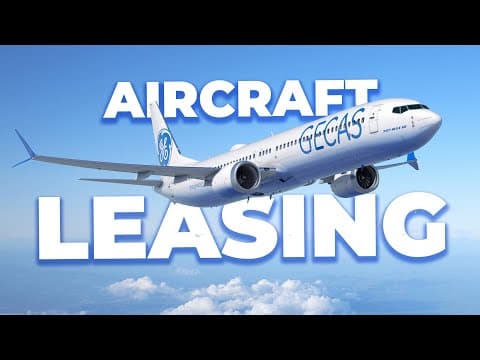
How Aircraft Leasing Works & Why Airlines Do It
Simple Flying
5m 37s899 words~5 min read
YouTube auto captions
Transcript source
YouTube auto captions
This transcript was extracted from YouTube's auto-generated caption track. The transcript below is server-rendered so it can be read, searched, cited, and shared without opening the original YouTube player.
Pull quotes
[0:03]We're used to assuming that if an airline paints an aircraft using its livery and operates it, it must also own it.
[0:03]The topic of aircraft leasing does not get the attention it deserves, given its vitality and prevalence to the airline industry.
[0:03]The incredible financial burden of obtaining brand new aircraft is so significant that virtually all airlines decide to lease at least some of their aircraft.
[0:03]Let's imagine that Qatar Airways is willing to expand its operations and needs a new fleet of 10 Boeing 787s to do so.
Use this transcript
Related transcript hubs
Watch on YouTube
Share
MORE TRANSCRIPTS


