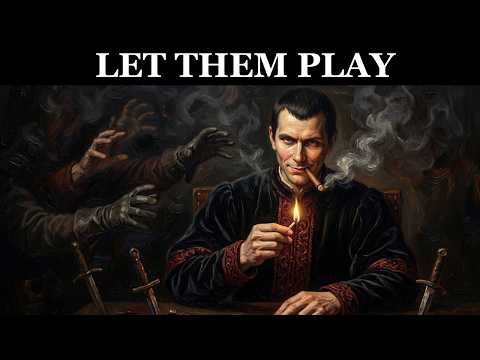
[0:00]What do you do when someone stops playing fair? When the smiles are fake, the moves are calculated and the attacks are subtle. Most people react emotionally and lose, but Niccolo Machiavelli never played clean when the battlefield was dirty. In this video, you'll learn the 10 ruthless psychological rules that shift power back into your hands, not through noise, not through anger, but through strategy. By the end, you won't just know how to defend yourself, you'll know how to make sure they never try again. The Moment You Realize They're Playing Dirty. There is a moment, and if you've experienced it, you know exactly what I mean, when something shifts, the tone changes. The smile feels forced, the respect disappears, but only slightly. At first, you doubt yourself, maybe you're overthinking, maybe you're being paranoid, but then the pattern repeats. A subtle insult disguised as humor, a misunderstanding that somehow always works against you. Information that was forgotten at the perfect time. That's when you realize they're not careless, they're calculating. Most people make a fatal mistake at this stage. They react emotionally, they confront too early, they expose their awareness. And the moment you expose awareness without strategy, you give your opponent an advantage, because now they know you're watching. Niccolo Machiavelli warned about this exact moment, when deception enters the room. The first rule is not retaliation, it's restraint. You do not strike the second you notice betrayal, you observe. Dirty players thrive on chaos, they want you emotional, they want you defensive, they want you explaining yourself. Because the moment you react emotionally, you step into their frame. The real power move is colder. You say nothing, you change nothing. But internally, everything changes. You stop trusting surface behavior, you start tracking patterns, who benefits, who gains. Who smiles when you lose ground? This is not paranoia, this is strategic awareness. The moment you realize they're playing dirty is the moment you stop playing fair, but you don't announce it. You don't threaten, you don't warn, you adapt. And here's the truth most people never understand. Once someone decides to go low, the relationship has already shifted into warfare. The only question is whether you recognize it in time, and if you do, you don't react, you prepare. Never React First (Why Emotional Responses Make You Lose) The moment they provoke you, the trap is already set, a public jab, a false accusation, a calculated move meant to get under your skin. And your body reacts before your mind does. Heart rate rises, jaw tightens, words rush forward. You feel the urge to correct them, to defend yourself, to set the record straight. That urge is exactly what they're waiting for. The person who reacts first loses first. When you respond emotionally, you hand them three things: your strategy, your weakness, and your level of awareness. You show them what triggers you, you show them where you're insecure, you show them how to control you next time. Niccolo Machiavelli understood that the battlefield is psychological before it is physical. The first man to reveal emotion reveals position, and position is everything. Dirty players don't attack to win immediately, they attack to gather information. Your reaction is their reconnaissance mission. Every defensive word you speak gives them data. So what do you do? Nothing, not because you are weak, not because you are afraid, but because silence denies them intelligence. When you don't react, they don't know if they hit the target, they don't know if you're angry, they don't know if you're planning something. Uncertainty destabilizes them. Let them believe you didn't notice, let them believe it worked, let them grow comfortable. Emotional restraint is not suppression, it is discipline. You are not absorbing the blow, you are storing it, and here's where most people fail. They think strength is loud, it isn't. Strength is control. If this is already shifting the way you see conflict, drop a comment below and subscribe, because the deeper rules get even more ruthless from here. When they play dirty, the man who reacts loses, the man who waits decides how it ends. Control the Frame Before You Control the Outcome When someone plays dirty, they're not just attacking you, they're trying to control the frame. The frame is invisible, it's the story being told, it's the perspective people adopt. It's the emotional atmosphere surrounding the situation, and whoever controls the frame controls the outcome. Dirty players rarely attack directly, they shift perception, they imply, they hint. They position you subtly as incompetent, emotional, unreliable, not with evidence but with tone. And if you rush to defend yourself, you step into their frame. The moment you say that's not true, you've already accepted that their version deserves debate. You become the defendant, they become the judge. Niccolo Machiavelli understood this deeply, power is not about being right, it's about deciding how reality is interpreted. A prince who argues publicly weakens himself. A prince who defines the narrative becomes unchallengeable. So instead of defending, redefine. If they imply you're unstable, respond with calm precision. If they question your competence, demonstrate results, not explanations. If they attempt to corner you emotionally, shift the topic to logic and structure. Never argue inside their emotional battlefield. Drag the conflict into your terrain. The frame is everything. If they frame you as reactive, you lose authority. If you frame them as insecure, strategic, or desperate, the power dynamic flips instantly. Here's the brutal truth. People don't remember arguments, they remember impressions. Your job isn't to win the exchange, it's to control how observers interpret the exchange. Stay composed, speak less than necessary, make them look chaotic without attacking directly. When they attempt to provoke, respond with clarity, not volume. When they try to discredit, respond with competence, not defense. You don't win by shouting louder, you win by deciding what the situation means. Control the frame and the outcome becomes inevitable. Weaponize Their Weakness (Study, Don't Strike Yet) Once you realize they're playing dirty, and once you refuse to react, you enter the most dangerous phase of all: observation. This is where amateurs fail. They feel insulted and want revenge immediately. But Niccolo Machiavelli never advised reckless retaliation, he advised patience. Because information is more valuable than emotion. When someone plays dirty, they reveal something about themselves. No one attacks randomly, they attack from insecurity. So you study. What do they protect too strongly? What makes them defensive? Where do they overcompensate? What do they fear losing? Dirty players always project their weakness through their tactics. A manipulator fears exposure, a liar fears transparency, a gossip fears isolation. An insecure rival fears comparison. Instead of striking back, you collect data. You watch how they speak when relaxed, you watch how they react when challenged, you watch who they depend on. You watch where their status actually comes from, because every person has a structural weakness. Some rely on reputation, some rely on alliances, some rely on charm, some rely on fear. And once you understand what holds their power together, you understand how to dismantle it, but not yet. You don't expose their weakness the moment you discover it. That would warn them, that would trigger defense, and defense makes people cautious. You let them grow comfortable, you let them believe their tactic worked, you let them think you're unaware. Meanwhile, you're mapping the pressure points. Niccolo Machiavelli believed cruelty, when used, must be decisive and calculated, not impulsive. That calculation begins here, in silence, in analysis. When they play dirty, they reveal their flaw. Most people are too emotional to notice it. You won't be, you won't strike from anger, you'll strike from knowledge, and knowledge always hits deeper. Reputation Warfare (Destroy Quietly, Not Loudly) When they play dirty, they often aim at your emotions. That's surface level. The real battlefield is reputation, because in every social structure, business, friendships, hierarchy, influence, reputation is currency. And the man who controls perception controls position. Amateurs try to destroy loudly. They confront, they expose, they threaten, they gossip. That is weakness. Niccolo Machiavelli understood something far more brutal. Destruction is most effective when it looks like coincidence. If someone attacks your name, you don't respond with counter accusations, that creates noise. And noise makes both of you look unstable. Instead, you elevate yourself while isolating them. You strengthen alliances, you become more visible where it matters, you tighten your circle. You deliver results publicly, not to prove anything, but to create contrast. Reputation warfare isn't about attacking them directly, it's about positioning yourself so strongly that their attacks begin to look desperate. Let them speak, but while they speak, you build, and here's where it becomes strategic. You subtly allow their patterns to reveal themselves. You ask questions that expose inconsistency. You give them space to overextend. You let them show their character without interruption. People believe what they observe more than what they're told. If you stay composed while they grow reactive, observers will draw conclusions on their own, and conclusions people arrive at themselves are the most permanent. The key is this, never appear vindictive. You don't destroy them emotionally, you outgrow them socially, you out position them structurally, you outlast them strategically. Niccolo Machiavelli warned that a prince must avoid being hated. Open attacks create enemies. Silent superiority creates inevitability. So when they play dirty, don't scream, refine your image, strengthen your influence, let their insecurity expose them. Because the most devastating victory is the one where they collapse and you never look guilty. Strategic Cruelty (When Mercy Becomes Weakness) There is a dangerous lie most people believe, that being nice will protect them, that mercy earns loyalty, that restraint makes you respected. It doesn't. When someone plays dirty and you respond with endless forgiveness, you are not being noble. You are teaching them that there is no consequence. Niccolo Machiavelli warned that mercy without control becomes weakness. A ruler who forgives every betrayal invites more betrayal, because humans test boundaries, and when boundaries don't hurt, they expand. Strategic cruelty is not rage, it is not revenge, it is not emotional punishment, it is calculated consequence. There comes a moment when silence is no longer enough. When observation is complete, when the weakness has been mapped. And at that moment, you don't argue, you act, but the action must be precise. You don't attack randomly, you don't damage everything, you strike exactly where it teaches a lesson. Maybe you withdraw access permanently, maybe you expose just enough truth to shift perception. Maybe you remove an opportunity they depended on. Not dramatically, not publicly, decisively. The purpose is not to destroy them completely. The purpose is to establish that crossing you has a cost. Most people hesitate here, they fear looking cruel, they fear being judged. But understand this, if someone chose to operate without fairness, they have already accepted conflict. And if you never enforce consequences, you will always be tested again. Strategic cruelty is a signal. It says I am patient, it says I am observant, it says I do not react, but I do respond. And once someone experiences a calm, controlled counterstrike, something shifts, they stop seeing you as a target. They start seeing you as risk. Mercy has value, but mercy must be selective. When used without strength, it invites disrespect. When paired with discipline, it commands order. If they play dirty once and feel nothing, they will play dirty again. But if they feel consequence once, they rarely try twice. Cut Off Supply (Starve Them of What They Want Most) Every manipulator feeds on something, attention, validation, access, information, status. When they play dirty, they are not attacking randomly, they are trying to extract something from you. A reaction, an emotional spike, a public scene, a mistake. That extraction is their supply. And here is the mistake most people make. They try to defeat the person. Wrong target, you don't fight the person, you cut the supply. Niccolo Machiavelli understood this principle. In political warfare, if an enemy grows strong, you don't wrestle him directly. You cut the resources that make him powerful. The same rule applies here. If they crave attention, you give them none. If they thrive on drama, you stay neutral. If they rely on information, you limit access. If they depend on proximity, you create distance. Suddenly, the behavior changes. Why? Because without supply, their tactics stop working. Dirty players are conditioned by reward. If provoking you creates chaos, they continue. If gossip creates reaction, they escalate. If manipulation creates leverage, they refine it. But when nothing happens, confusion sets in. They poke harder, they test more aggressively, they attempt louder moves, and you remain unmoved. That is when desperation begins. A manipulator without reaction is like a fire without oxygen. It doesn't explode, it suffocates. This is not passive avoidance. This is control deprivation. You don't announce it, you don't threaten it, you simply withdraw what they were feeding on. Niccolo Machiavelli believed control comes from understanding incentives. Remove the incentive and behavior collapses. When they realize you are no longer a source of energy, validation, or advantage, they face a choice. Adapt or fade, and most fade, because a player who can't extract supply cannot sustain the game. You don't win by overpowering them, you win by starving them.
[16:51]Use Fear, Not Noise (Why Subtle Intimidation Wins) When people play dirty, most assume they must respond loudly. They think dominance means volume, they think strength means public confrontation, they think intimidation means aggression. That is amateur behavior. Noise attracts resistance, fear creates compliance. Niccolo Machiavelli made this distinction clearly. It is safer to be feared than loved. But fear must be controlled, not chaotic, not emotional, directed, subtle. Intimidation is far more effective than explosive reaction. You don't threaten, you don't shout, you don't announce revenge. You adjust your presence, you become quieter, more deliberate, more watchful. Your tone changes, your responses shorten, your eye contact lingers longer than comfort allows. Nothing aggressive, just different. The human mind is hypersensitive to shifts in energy. When someone senses that you are no longer accessible, no longer predictable, no longer emotionally available, tension builds. They begin to calculate, what do they know? Are they planning something? Did I misjudge them? That uncertainty breeds fear. Real intimidation is psychological. It's not about raising your voice, it's about lowering it, it's about removing warmth. It's about creating the sense that consequences may exist even if you haven't revealed them. When someone doesn't know what you'll do next, they become cautious, and caution reduces aggression. Dirty players rely on your transparency. They rely on knowing how you react. Once you remove that clarity, they hesitate. Hesitation is power. You don't need to destroy them publicly, you just need them to reconsider crossing you again. Niccolo Machiavelli warned that cruelty must be swift and purposeful, but fear must be maintained through reputation. Subtle shifts in behavior build that reputation. You don't become louder, you become colder, and cold presence unsettles more deeply than any outburst ever could. Noise challenges, fear restrains. If they play dirty, don't escalate the volume, shift the temperature. Make the Counterattack Invisible The most dangerous strike is the one no one sees coming. When someone plays dirty, they expect retaliation, they expect confrontation, they expect tension. That expectation is their shield. If you attack directly, they prepare, they defend, they gather allies, they shift the narrative. And suddenly, what should have been a decisive move turns into open conflict. Niccolo Machiavelli warned against this mistake. He understood that open hostility creates open resistance. But silent repositioning that creates inevitability. An invisible counter attack doesn't look like revenge. It looks like coincidence, it looks like opportunity, it looks like timing. You don't announce your move, you adjust the structure around them. If they relied on access, access disappears. If they relied on influence, influence quietly shifts. If they relied on support, alliances realign, and they won't know when it happened. This is the key. You don't strike their pride, you strike their leverage. You don't damage their ego publicly, you weaken the systems that protect them privately. By the time they notice something is wrong, the shift is already complete. Their position feels unstable, their control feels thinner, their confidence feels off, but they can't point to a moment. That is power. An invisible counterattack protects your image while destabilizing theirs. Observers see you calm, they see you steady, they don't associate you with conflict. Meanwhile, the person who played dirty begins losing ground, slowly, quietly, permanently. Niccolo Machiavelli believed that if you must injure, do it in a way that eliminates retaliation. An obvious attack invites revenge. A silent one removes options. The goal is not emotional satisfaction, the goal is irreversible advantage. When they play dirty, don't give them a fight, give them a consequence they can't trace. By the time they understand what happened, it's already too late. Leave No Loose Ends (Finish It So They Never Try Again) Most people make one final mistake. They win and then they relax. They assume the lesson was learned, they assume the message was clear, they assume the other person won't try again. That assumption is weakness. When someone plays dirty and you counter strategically, you cannot leave loose ends. Because unfinished conflict becomes future revenge. Niccolo Machiavelli understood this brutally well. If you injure an opponent, you must do it in a way that removes their ability to retaliate. A half measure creates a future enemy. A complete measure creates silence. This does not mean destruction, it means closure. The goal is psychological finality. They must understand without you announcing it that the version of you they once manipulated no longer exists. No emotional speeches, no dramatic endings, no threats, just structural change. Their influence over you is gone, their ability to provoke you is gone, their opportunity to benefit from you is gone. When people feel that finality, something shifts. They stop testing, they stop probing, they move on. Niccolo Machiavelli believed that fear without instability maintains order. When your response is decisive and controlled, it reshapes future behavior. Loose ends create recurring battles. Clean endings create deterrence. If they played dirty once and survived comfortably, they will return. If they played dirty once and encountered permanent consequence, they rarely repeat it. You don't finish loudly, you finish completely, and when it's done, it stays done. You've just learned what most people never dare to practice. Not reaction, not emotion, not noise, strategy. When they play dirty, you don't panic, you don't explode, you don't defend yourself like everyone else does, you observe. You reposition, you remove their leverage, and when necessary, you finish it. That's the difference between being targeted and being untouchable. Most people will keep losing because they react emotionally. But you, you now understand the structure behind power, and once you see the structure, you can never unsee it. If this changed the way you think about conflict, make sure you like this video. If you've ever dealt with someone who plays dirty, drop a comment below. And if you're serious about mastering ruthless psychological control, hit subscribe because the next rules go even deeper. Power favors the prepared. I'll see you in the next one.


