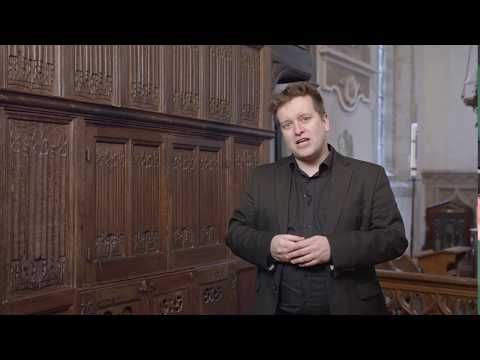
[0:06]What is Englishness? Ancient buildings surrounded by beautiful landscapes tended by human hand. I'm here in Wales in Old Radner, but it's here that our journey begins to discover Englishness in the history of the organ.
[0:29]This is the oldest surviving English organ case. There's very little that we know about it. It might have been built in the middle of the 16th century. It's beautifully executed and beautifully proportioned with a golden rectangle for its main bulk. And there's a surprise. When we open the doors here, inside is an 1872 Walker organ. So this really is a case of Enigmas. And as such, that typifies much of the English organ and its culture.
[1:09]England is full of historic monuments. So it's make come as a surprise that our oldest surviving complete playable church organ dates from 1704, pretty recently compared with your average iron age hill fort. There is very little surviving historic organ fabric for reasons we'll discover. In contrast, an amazing number of instruments survive, even if altered from the 19th and 20th centuries. To tell the story of the English organ then, we have to look around and beyond the physical evidence or lack of it. In doing so, we shall forge a compelling narrative about the development of a musical instrument, while also looking at English history from a fresh perspective. As we shall see, the tumults of English history, Reformation, Civil War, revolutions, wars, democratic and demographic change, all left their mark on the pipe organs built in this country. and all changed the meaning of the word English.


