[0:00]Hello, everyone, and welcome back to English Redo. Yes, welcome back. We are so happy you are here with us today. Today's topic is very special. Very special, very beautiful, and very meaningful. Today, we are talking about this is how you can prepare for Ramadan. Ramadan is not just a month. It is a gift. It is a time of peace, a time of forgiveness, a time to come closer to Allah, and a time to improve ourselves. So today, we will talk step by step how you can prepare your heart, your mind, and your daily routine for Ramadan. And remember, we will speak slowly and clearly. So you can improve your English. And also prepare for Ramadan at the same time. Before we prepare for Ramadan, we need to understand something important. Yes, we must understand what Ramadan really means. Ramadan is the ninth month of the Islamic calendar. It is the month when the Quran was revealed to Prophet Muhammad, peace be upon him. Muslims all around the world fast during this month. From sunrise to sunset. No food. No drink. But Ramadan is not only about food. It is about self-control. It is about self-control. Patience. Kindness. And gratitude. Gratitude means being thankful. Yes, being thankful for what we have. Sometimes we eat every day. We drink water whenever we want. But we forget. We how blessed we are. Ramadan reminds us. Repeat. Ramadan is a month of self-control. Ramadan is a month of self-control. Ramadan teaches patience. Ramadan teaches patience. Ramadan brings me closer to Allah. Ramadan brings me closer to Allah. The first thing we must prepare is our heart. Yes. Yes, not the kitchen. The Not the shopping list. But the heart. What does that mean? It means we must clean our hearts from bad feelings. Like anger. Like anger. Jealousy. Hate. And pride. Ramadan is coming, so we ask ourselves. Is there someone I need to forgive? Is there someone I hurt? Is there someone I stop talking to? Maybe a friend. Maybe a friend. Maybe member. Maybe a neighbor. Ramadan is the best time to fix relationships. Let me tell you a small story. Yes, please. There was a woman who stopped talking to her sister for two years. Two years? That is a long time. Yes. They had a small argument. But they were too proud to say sorry. Then Ramadan came. And? She thought, how can I ask Allah for forgiveness if I cannot forgive my own sister? That is powerful. That is powerful. So she called her sister. Was it difficult? Yes, very difficult. But? But beautiful. They cried. They forgave each other. And their Ramadan became peaceful. Repeat. I forgive you. I forgive you. I am sorry. I am sorry. Let us start again. Let us start again. Now, let's talk about preparing the mind. Yes, because fasting is not only physical. It is mental. Sometimes people feel tired, sleepy, or even angry during fasting. But if your mind is strong, you will stay calm. Number one, start reducing bad habits before Ramadan. Like what? Too much social media. Too much TV. Too much gossip. Too much junk food. If you suddenly stop everything on the first day of Ramadan, it will feel very hard. it will feel very hard. But if you slowly reduce now, Ramadan will feel easier. Do you use your phone a lot? Yes, too much sometimes. How many hours? Maybe five hours a day. What if you reduce it to three hours? That sounds possible. Then in Ramadan, maybe one hour. And use the extra time for Quran. Exactly. Repeat. I control my habits. I control my habits. My mind is strong. My mind is strong. I choose good actions. I choose good actions. Now let's talk about preparing the body. Yes, because fasting changes your daily routine. You wake up early for Suhoor. You sleep late after Taraweeh. You eat at different times. Before Ramadan, start eating healthier food. More fruits. More vegetables. Less sugar. Less fried food. Why? Because your body, your strength. If you eat too much junk, you will feel weak and tired. Also, start drinking more water daily. Yes, many people forget water. In Ramadan, water is very important after Iftar. So, train your body now. Now, this is very important. Very important. Set goals. Set goals. What kind of goals? Spiritual goals. For example, I will read one page of Quran every day. That is simple. That is simple. I will pray all five prayers on time. Very good. Very good. I will give charity every week. Even a small amount. Yes, even small. Don't say, I will become perfect. That is too big. Say, I will improve one thing. That is realistic. Ramadan is about progress. Not progress. Perfection. I set small goals. I set small goals. I improve step by step. I improve step by step. Ramadan is my chance to grow. Ramadan is my chance to grow. Let's talk about something practical. Preparing your home. Yes, cleaning your house before Ramadan helps. Why? Because during Ramadan, you want more time for worship. Not be perfect. You. Exactly. Also, prepare a small prayer corner. That is beautiful. Maybe a clean prayer mat. A Quran on a stand. Soft light. It creates a peaceful feeling. Ramadan feels more beautiful when the whole family prepares together. Yes, Ramadan is not only personal. It is also family time. So, how can families prepare together? One idea is to have a small family meeting before Ramadan. That sounds nice. That sounds nice. Sit together. Maybe after dinner. Turn off the TV. Put the phones away. Put the phones away. And ask a simple question. What do we want this Ramadan to look like? Mother. This Ramadan, I want us to pray Maghrib together. Father, I want us to reduce screen time. Daughter, I want to learn short surahs. Son, I want to fast at least 10 days. You see, everyone can share. Even small children. Repeat. We prepare together. We prepare together. Our family grows together. Our family grows together. Ramadan brings us closer. Ramadan brings us closer. If you have children, start teaching them early. Even if they are small? Yes, even small children can understand simple ideas. Like what? Like what? Explain that Ramadan is a special month. Explain that we fast to please Allah. Explain that we help the poor. You can make a Ramadan calendar. With small daily goals? Yes, for example, Day 1, help your mother. Day 2, say kind words. Day 3, give charity. Children love checklists. And rewards. You can say, Today is kindness day. What does that mean? Everyone must do three kind actions. That builds character. And teaches the real meaning of fasting. Now let's talk about something practical. Work and school during Ramadan. Many people say, I feel tired at work. Yes, especially in the first few days. Before Ramadan starts, slowly change your sleep routine. Sleep earlier. Wake up earlier. Wake up earlier. So your body adjusts. At work, plan important tasks in the morning. Because your energy is higher. Avoid unnecessary arguments. Yes, fasting and arguing do not match. Coworker, why are you not eating lunch? You, I am fasting, it is Ramadan. Coworker, that must be difficult. You, it can be challenging, but it is very rewarding. That is simple and polite. Yes, you represent Islam with good manners. Repeat practice. I stay calm at work. I stay calm at work. I manage my time wisely. I manage my time wisely. I represent my faith with kindness. I represent my faith with kindness. The first few days of Ramadan feel exciting. Yes, high energy. Yes, high energy. But after ten days, sometimes motivation drops. sometimes motivation drops. Number one, remember your intention. Why are you fasting? For Allah. Not for culture. Not for people. Not for social media. Even if you read only one page daily. Be consistent. Consistency is better than big actions once. Talk to Allah every day. In your own language. Ask for strength. Ask for forgiveness. Ask for guidance. Repeat dua sentence. Oh Allah, make this Ramadan better. Better than the last one. Oh Allah, make this Ramadan better than the last one. Now let's talk about something very powerful. The last ten nights of Ramadan. These nights are very special. One of these nights is Lailat al-Qadr. The night of power. It is better than one thousand months. Imagine that. One night equal to more than eighty years of worship. Do not wait until the twentieth day. Prepare early. Reduce social media before that time. Plan lighter dinners. Sleep during the day if possible. So you can pray at night. What if this is our last Ramadan? That thought changes everything. We don't know if we will see next year. So treat this Ramadan special. Ramadan is also the month of generosity. Yes. The Prophet Muhammad, peace be upon him, was very generous in Ramadan. Even small charity counts. A small amount daily becomes big. You can prepare an envelope. Put a small amount inside every day. Or give online weekly. Or buy food for someone. Or support an orphan. Repeat practice. I give what I can. I give what I can. I give what I can. I give what I can. Even small charity matters. Even small charity matters. Ramadan teaches generosity. Ramadan teaches generosity. Sometimes Ramadan brings emotions. Yes, people cry more. They reflect on their life. They remember mistakes. And that is okay. Ask yourself. What habits hurt me? What habits help me? Who do I want to become? Ramadan is a mirror. It shows you yourself. Let's start with Sahur. Sahur is the early morning meal before fasting begins. Many people skip Sahur. Yes, they say, I'm too sleepy. But Sahur is very important. It gives you strength for the day. So what is a healthy Sahur? Not too heavy. Not too oily. Not too sweet. Not too sweet. Choose foods that give slow energy. Like oats. Eggs. Whole wheat bread. Yogurt. Fruits. And very important, drink water. Slowly. Not all at once. Some people drink four glasses in one minute. That is not helpful. Drink slowly and calmly. Repeat practice. I wake up for Sahur. I wake up for Sahur. I choose healthy food. I choose healthy food. My body is an amanah. My body is an amanah. Now let's talk about Iftar. Iftar is the meal when we break our fast. After a long day, we feel very, hungry. Very hungry. Very thirsty. Very thirsty. It is sunnah to break the fast with dates and water. Simple and beautiful. Simple and beautiful. After that, pray Maghrib. Then eat calmly. Many people make a big mistake at Iftar. What mistake? They eat too much. Yes, fried food, sweets, heavy dishes. Then they feel sleepy. Lazy. And cannot pray properly. How do you feel after a very heavy Iftar? Honestly, very tired. Do you feel active for Taraweeh? Not really. So maybe the solution is simple. Eat less. Eat balanced. Leave space in your stomach. Repeat practice. I eat in moderation. I eat in moderation. I control my desires. I control my desires. Ramadan is not a food festival. Ramadan is not a food festival. Now let's talk about common mistakes. This is important. Some people stop eating. But they do not stop lying. But they do not stop lying. They stop drinking. But they do not stop gossiping. Ramadan is not only about hunger. It is about character. It is about character. Another mistake is wasting time. Scrolling social media for hours. Watching unnecessary videos. Arguing online. Ramadan time is precious. Some people make unrealistic goals. Like reading the whole Quran in three days. Then they become tired. And quit completely. And quit completely. Better to be consistent. Repeat practice. I focus on improvement. I focus on improvement. I avoid bad habits. I avoid bad habits. I use my time wisely. I use my time wisely. Let's talk about something serious. Burnout. What is burnout? Burnout means feeling emotionally and physically exhausted. Very tired. physically exhausted. Very tired. Very overwhelmed. You feel irritated easily. You feel unmotivated. You stop enjoying worship. You feel guilty all the time. Number one. Do not compare yourself to others. Yes. Social media shows highlights. Someone may post long prayers. But you do not see their struggles. Number two. Rest is allowed. Islam is balanced. Islam is balanced. Take short naps. Sleep properly when you can. Number three. Focus on quality, not quantity. Pray with presence. Read slowly. Understand meanings. What if I feel I am not doing enough? Ask yourself. Am I sincere? Yes. Then trust that Allah sees your effort. Ramadan should feel peaceful. Not stressful. Simple meals. Simple schedule. Less arguments. More patience. Sometimes Ramadan becomes stressful in the kitchen. Too many dishes. Too much pressure. Remember, simplicity is sunnah. One or two dishes are enough. Now, let's talk about something important. After Ramadan ends. Many people return to old habits. Yes, they pray less. They stop reading Quran. But Ramadan should train us. Maybe you cannot wake up for tahajjud every day. That is OK. That is OK. But maybe once a week. Yes. Maybe you cannot give charity daily. But once a month. But once a month. Ramadan is a starting point, not an ending point. Ramadan changes me. Ramadan changes me. I continue good habits. I continue good habits. I grow every year. I grow every year. Close your eyes for a moment. Imagine your best Ramadan. You feel calm. You feel connected. You forgive people. You control your anger. You help others. You feel close to Allah. That Ramadan is possible. But preparation starts now. Not on the first night. Not after 10 days. Now. Before Ramadan begins, change how you think about it. Yes, mindset is powerful. Some people say, Ramadan is going to be so hard. Ramadan is going to be so hard. I will be tired. I will miss coffee. But what if. we change the sentence. Repeat after me. Ramadan is a gift. Ramadan is a gift. Ramadan is my opportunity. Ramadan is my opportunity. Ramadan is healing. Ramadan is healing. When you see Ramadan as a burden. You feel heavy. You feel heavy. When you see Ramadan as a blessing. You feel grateful. You feel grateful. Ramadan is a mirror. It shows you your reality. It shows you your reality. Before Ramadan begins, Take one quiet hour. Sit alone. With no phone. No noise. No noise. Ask yourself. What are my biggest weaknesses? What sins do I repeat? What sins do I repeat? What habits are destroying my peace? What kind of person do I want to become? What kind of person do I want to become? Write your answers down. Be honest. Even if it hurts. What if I discover things I do not like about myself? That is growth. That is growth. What if I feel guilty? Guilt can lead to change. So guilt is not always bad? No, if it brings you closer to Allah, it is mercy. Ramadan is the month of forgiveness. Allah's mercy is wide. Sometimes the hardest person to forgive. Is yourself. Is yourself. Maybe you made mistakes. Maybe big mistakes. Maybe big mistakes. But Allah's mercy is bigger. Do not let Shaitan tell you that you are hopeless. Do not let Shaitan tell you that you are hopeless. You are not hopeless. You are huge. You are human. Repeat after me. I am not perfect. But I am trying. I am not perfect. But I am trying. Allah sees my effort. But I am trying. Allah sees my effort. How do we build a real connection? Not only routine worship. Not only routine worship. But heartfelt worship? Speak to Allah like you speak to someone who loves you. In your own language. In your own language. Tell him your fears. Tell him your dreams. Tell him your dreams. Tell him your pain. Tell him your pain. Oh Allah, I feel weak. Make me stronger. Oh Allah, I feel lost. Guide me. Oh Allah, I want to change. Help me change. Now, let's bring everything together. Let's create a simple daily Ramadan routine. Wake up for suhoor. Pray Fajr on time. Read one page of Quran. Go to work or school with patience. Avoid gossip. Make short vikr breaks. Break your fast constantly. Pray Maghrib. Eat moderately. Pray Isha and Taraweeh. Make dua before sleeping. Reflect for five minutes. Let's be real. Some days will be hard. Some days will be hard. Maybe you lose patience. Maybe you argue. Maybe you feel spiritually low. Do not quit. Do not say, this Ramadan is ruined. Instead, say, tomorrow is a new chance. I do not give up. I do not give up. Every day. Every is a new beginning. Every day is a new beginning. Ask yourself one powerful question. What is one thing I will change permanently? Maybe stop one sin forever. Maybe start one good habit forever. One small permanent change. Can transform your life. Can transform your life. Imagine the last night of Ramadan. You are making dua. Your heart feels soft. You feel peaceful. You feel different. Stronger. Closer to Allah. More patient. More grateful. That version of you. Is possible. But preparation begins now, not later. not later. In this full series, we talked about preparing your heart. Preparing your mind. Preparing your body. Preparing your family. Balancing work and worship. Healthy eating. Avoiding burnout. Forgiveness. Spiritual growth. Repeat after us. Ramadan is my opportunity. Ramadan is my opportunity. I prepare before it begins. I prepare before it begins. I grow every Ramadan. I grow every Ramadan. This Ramadan will be different. This Ramadan will be different. Thank you for listening to Fresh English. If this episode helped you. Share it with someone you love. And prepare together. May this Ramadan bring peace to your heart, Light to your home. Light to your home. And forgiveness to your soul. Ramadan Mubarak.
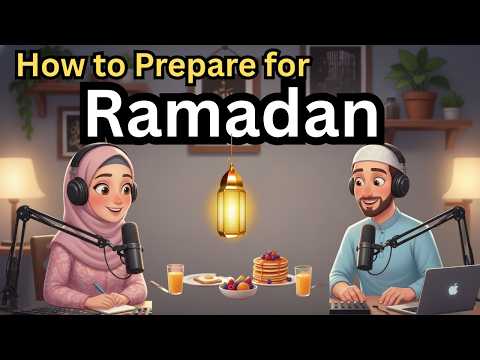
How to Prepare for Ramadan| Beginners Conversation Practice | English Listening & Speaking Practice
Fresh English:Slow English Podcast
23m 26s3,025 words~16 min read
YouTube auto captions
Transcript source
YouTube auto captions
This transcript was extracted from YouTube's auto-generated caption track. The transcript below is server-rendered so it can be read, searched, cited, and shared without opening the original YouTube player.
Pull quotes
[0:00]It is a time of peace, a time of forgiveness, a time to come closer to Allah, and a time to improve ourselves.
[0:00]So today, we will talk step by step how you can prepare your heart, your mind, and your daily routine for Ramadan.
[0:00]It is the month when the Quran was revealed to Prophet Muhammad, peace be upon him.
[0:00]She thought, how can I ask Allah for forgiveness if I cannot forgive my own sister?
Use this transcript
Related transcript hubs
Watch on YouTube
Share
MORE TRANSCRIPTS


