[0:12]I think that at the time, Catwoman had a really cool pair of glasses in the Batman series that was on television, and I wanted to be cool like her.
[0:24]It didn't occur to me that glasses were really a medical device. When light rays reflect off an object and enter the eye through the cornea, your retina converts this light into electrical impulses that are sent to the brain, which interprets the impulses and allows you to understand what you're seeing.
[0:47]Eyeglasses help you see. The earliest forms of eye gear can be traced back 4,000 years. Cultures that needed to adapt to climates that were snowy created eye shields and they were made of bone and animal hides.
[1:03]They had small slits for people to see through, but no lenses. The first vision aid was called a reading stone and was invented over 1,000 years ago.
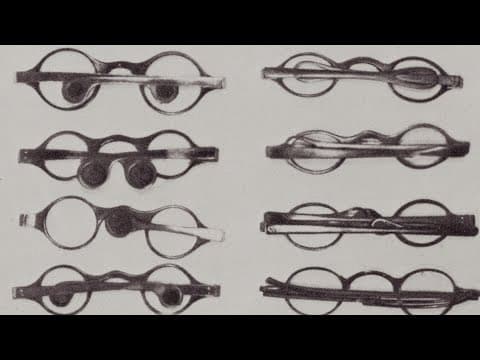
[1:13]It's not exactly clear who invented the first eyeglasses, but many people attributed to the Italians. Early versions of eyeglasses were called rivet spectacles.
[1:24]They were two magnifying glasses that were hinged together at the bridge of the nose. It took some time for eyeglasses to land on the perfect design.
[1:34]They didn't really have sides, which are also called temples or arms, until about the 17th century.
[1:42]Modern day eyeglasses feature a pair of rims that hold corrective lenses, a bridge that connects the rims, sides that slide behind the ears, hinges that connect the sides to the frames, and on some glasses a pair of temple tips for behind the ear comfort.
[2:01]In American culture, 20th century cinema helped popularize eyeglasses. Audiences would see glamorous actresses and actors donning glasses to take on a different persona.
[2:12]Sometimes a pair of glasses became popularized by the actual person that was wearing them and then that personality trait was projected into the actual device.
[2:22]You have the aviator glasses which showed a forward thinking, adventurous type of person. Glasses with heavy frames signified intelligence or nerdiness.
[2:35]Wayfarers signified this kind of nerdy punk, the outlaw, the misfit.
[2:39]Glasses have become so popular as a fashion device that some people actually don glasses without a prescription lens at all because they want to portray a certain attribute about themselves.
[2:52]Glasses are a lifeline to people. People that can't see well enough to drive, well enough to cook, well enough to read, rely on glasses for maintaining their lives.
[3:04]And there's lots of other objects in our society that have been created to help overcome various physical obstacles. And it's only the eyeglasses that have catapulted to that fashion statement.
[3:16]Wouldn't it be wonderful if anything that we use, any device that we've invented to help our humanity could also be elevated in the same way.


