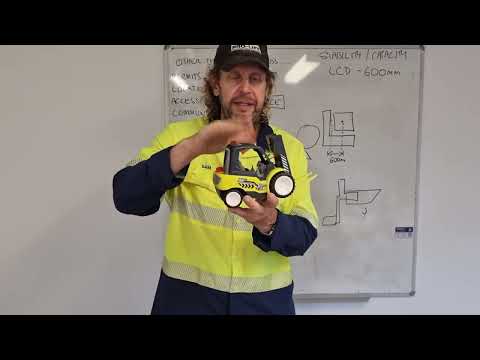
[0:04]Hi guys, Sam's my name. From Prolift training and assessment, made this short video to help people with their study. So basically, you've already done day one at Prolift and then you're going home and you've got a blank student activity book sitting in front of you and you've been asked to do some homework. So I'm going to read through the written uh questions and we're going to uh have a brief discussion on them, but um, it's for people who may need a little bit of assistance when they're at home. They've forgotten a lot of the stuff, they may appear to be a bit daunting all that new material that you've got in front of you. So what we're going to do is, we're going to concentrate on the written stuff, which is the most important stuff, yeah? All right, so question three. If a high risk worker is not working safely under a high risk work license, what can help and safety regulator do? They're like cops. They'll fine you. They can suspend your license, cancel your license, or direct you to reassess. What must an employer provide for you before you can operate a new type of forklift truck? So, you've just been given a license and then they've asked you to jump on a forklift truck, you cannot do that unless you've had supervision, training, instruction, or information, combination of the four. Uh, you cannot just jump on a forklift after you've been issued a license. List three obligations employers have to ensure the health and safety of all workers. So when we come into this facility, uh, the boss has got to provide a few things for us. So you can have uh adequate amenities or adequate facilities as one of your answers because you need to be provided with, you know, first aid kits, water, toilets and all that sort of stuff. So we've got adequate facilities or adequate amenities in this um building here. Uh you must be given safe uh equipment and also a safe environment and safe working instructions. So question six: What is your duty of care as a worker? So to work safe, don't hurt yourself, don't hurt others. Where can I find uh workplace compliance documents for safe operations of forklift trucks? So you've got your workplace safety acts there. You've also got your codes of practice, which is the acts condensed. Uh you've also got a safe work methods statements and you've got uh your safe operating procedures.
[2:44]Before starting work, what else should you plan for other than site hazards? So your acronym here: PLACE, yeah? Other than site hazards, so when you get to the question in your exam, it'll say do not include site hazards or other than site hazards. We need to think about permits. We sign onto them. Location, where we're working. License, is everyone licensed? Access to task, can we get in, can we get out? Communications required and equipment required. So uh those are some things you need to think about before starting work, other than site hazards. So PLACE is a good way to remember that. Uh nine, what are the minimum safe distances you must remain away from power lines in your state? Three meters, six meters, and eight meters. If you want to know the voltage of power lines you're working there, who would you contact? The local power authority. Eleven, uh to identify power lines what are two observations you can make? So you've got look up and live signs, you've got tiger tail spinners, marker balls. If the ground surface is wet and slippery, what three actions might you take? So reduce speed and brake early, avoid using ramps or slopes, avoid harsh braking steering. Question 15. How will operating a forklift truck on uneven ground or soft soils affect the forklift truck? It will change the stability. To prevent exposure to dangerous gases, identify the top forklift you're using in a confined space. So electric or hydrogen forklift. If an attachment is fitted to a forklift, what would be affected? So the capacity, if we've got a load on there, the capacity might be reduced, uh and the stability may change and also um the load center distance could increase because you've got an attachment like that on there.
[4:46]And why is forklift rear end swing dangerous or destructive? So uh rapid sideways movement of a forklift may injure or kill.
[4:59]Where would you find the rate of capacity of information on a forklift or attachment? So it's asking on the forklift or on the attachment where would you find the rate of capacity on the data plate. What must you be aware of when using a jib attachment on a forklift? So a jib attachment is like a hook. So it's like a almost like a little mini crane. But there's our masts there, and our fork is down here somewhere. So if we've got a load on there, the load may swing, yeah? Uh the crane may become unstable and also the capacity may be reduced. Uh, what are the following attachments that can use on the forklift truck? So slippers, they're like extensions, uh and then you've got the work platform like we've got downstairs. Uh we've got a jib attachment, which is like a hook, or a little mini crane. And you got rotating attachments like in factories. All right, so list three people you consult with about workplace hazards: safety officer, other other workers and supervisors. Why do you talk to them? To ID hazards and implement controls.
[6:05]And the following, the following, what is a hazard? Something that has the potential to harm you. That is a hazard. A risk is the chance of harm from hazard. Those are two pretty important questions. Uh, I would like to see you written exactly like that. So something that has the potential to harm you is a hazard. And a risk is chance of harm from hazard. Ten potential workplace hazards which could affect operation. So you got uh up at the top there in the sky, you've got uh wind, rain, lightning. You've got power lines. Then you got trees up the top there. Uh in front of you, you've got uh people, pedestrians, uh plant, uh equipment and obstructions. And then you've got ground conditions that can affect you when you're driving around. So trenches, underground services, all that sort of stuff. Uh two reasons why you must wear a seatbelt on a forklift truck, safety to stop you being thrown uh forward in the event of a collision. What controls would you apply with a traffic management plan to keep you safe? And pedestrian safe. So workers and pedestrians, barricading signage and spotters. Uh this four forms of communication used in the workplace. You've got signage, two-way radio, hand signals, and verbal. Uh 42. What actions would you take if you're unsure of a spotter's hand signal? Stop and ask to clarify. 43, you're operating a forklift at night. What must you have in place before operating? Adequate lighting over the whole work area. 45. Why would you check the weather forecast before commencing work? To help prepare work activities, to schedule the work, to identify what risk controls you need to put in place. So this three types of hazards. 46, this three types of hazard created by weather that impacts forklift operations. So you've got uh let's pick three easy ones. So smoke, heavy rain, strong winds. This four, oh we've got over the next page. Uh 50. Right 50. So during your pre-start check a hydraulic leak is detected and the data place is missing or damaged, what action would you take? Don't use the forklift, tag it out of service, report it to supervisor, record it in the logbook. Seven pre-start checks you conduct on a forklift truck. Um, so you've obviously got logbook, data plate, fluids, leaks, battery terminals, tire condition, masts, uh times, there's a lot there.
[9:00]You'll be walking around the machine, uh a lot of the day, so take note of the pre-starts of the exam question. What could happen if you refuel the forklift with the engine running? The fuel could ignite and you could have a fire. Before using a forklift, what five checks you carry out on the rims and the tires? So tread condition, UV damage, chunks missing, uh face condition. Rim condition, are the nuts secure and in place, yeah? And why is correct air pressure important on air-filled tires? To ensure the forklift remains stable. And also the load as well. So stability of the load and the forklift. What must you refer to uh 58, what must you refer to for the correct requirements when attaching and securing any forklift attachment? The operator's manual or manufacturers instructions. This three post-start checks. So you've started it up, what do you check? You check the steering, the brakes, the horns. Identify the major guards uh on a forklift. So the load backrest, that's it there. Sorry. Uh, stops the load fouling the mast and protects the operator. The overhead guard stops objects being dropped onto the operator. Uh why must batteries be charged in a well-ventilated area? 63, uh to reduce the risk of build up of explosive gashes, gases. Uh this three methods to determine the weight of an unmarked load. Uh so you've got you can weigh it, you can uh calculate the load, uh you can it can be in a consignment note. It says the question actually says unmarked load, it's a bit unkind, uh because you can also, for the most part, you'll have it marked on the load too. So um assessment question, you can have that uh as an answer marked on the load. All right, um, why must you never raise a lower a load over people? Because falling objects may injure or kill. When you when you're able to travel with a passenger in the forklift? When it's designed to. So if it's got three seats in it and three seat belts, you can carry three people. Generally as a rule of thumb, they've got one operator uh in those, but. This two reasons why it's unsafe to carry a load on one fork. So you can damage the fork. If that's 5,000 kg load and this machine can is rated at 5,000 kg, that is designed to be carried on two. Carrying it on one, you can lose the load, uh you could make the um forklift unstable, um and damage the load, damage the forklift, all sorts of things. So we uh don't carry a load on one fork arm. What height should the load be positioned when traveling? So no higher than axle height or as low as possible. 71. If you can't see over your load, so it's blocking your view, what can you do? You can drive in reverse, you can use a spotter, or you can restack the load. Uh, how will the forklift truck be affected if the load is not hard up against the heel of the forklift arms? Reduces capacity and can make the forklift unstable. Why must you constantly uh monitor load movement? Question 73, so the fork and load remain stable. Before shifting a load, what would you place over the gap between a truck and a loading dock? So you got the concrete loading dock coming up, and there's a gap there. You need to have a secure bridge plate or a secure dock plate. Why is it unsafe to turn a forklift with a load when it's on a ramp or sloping service? You may tip the forklift, you may lose the load. If you experience failure or loss of controls when working, what should you do? Stop, tag the machine out, and report to the appropriate person and record it in the logbook. In the event of rollover, list three steps you would follow. So brace yourself, yeah, lean away from the impact, and don't jump.
[13:12]79, so uh there is a an acronym here for if you hit power lines. So if you hit power lines, what do you do? Stop, warn others, try and break free. If safe, stay where you are. If unsafe, jump and shuffle away eight meters. Why eight meters? Because that's the maximum voltage uh 330,000 volts that you you don't want to be near that. So eight meters is the best distance to be away. You're not going to turn around and go what is the voltage of those power lines, you just need to get eight meters away. And then you report and you record the incident. What direction must the load face when traveling up a ramp? So the forks and the load must be facing up the ramp. This three things you must be aware of when you're stacking loads on top of each other. The surface must be firm and level, heavy loads on the bottom, don't stack too high, keep the stack straight and stable. Uh why is it important to ensure you have centralized your side shift before traveling? To maintain the stability of the fork and the load. 83. What four actions would cause a forklift truck to sit over sideways while traveling? Well, if you have low tire pressure, you may tip it. If you turn with a load raised, you may tip it. Uh turning on a slope, you may tip it. Uh driving on uneven surfaces or turning at speed. What actions would cause a forklift truck to tip over forwards or backwards? If you overload the forklift with too much load, it's going to tip. If you got the load too far forward, it's going to tip. If you break too hard, it's going to tip forward as well. So 85. Where don't you park? Don't park near first aid stations, you don't park near fire fighting equipment, you don't park near emergency exits. Three steps to correctly park up and shut down your forklift is we put the forks on the ground. Uh forklift in neutral, park brake, and remove the key. And why do we uh remove the key to prevent unauthorized use? So 88 goes into unauthorized use. Remove the keys and isolate, turn off the gas bottle and park it in a designated area. All right, thanks very much for watching. Uh that is the the student activity book for Prolift, done and dusted. If you want to look at the cocks, you can look at my uh videos there. I go into cocks uh of the forklift. Uh I hope you enjoyed it, I hope it helps you out. Cheers, adios.


