[0:00]Espresso. The foundation of most coffee drinks in the world is espresso, a highly concentrated coffee made by forcing hot water through finely ground beans at high pressure. This creates a small dense shot with a layer of golden foam on top called crema. The word "espresso" is Italian and roughly means "pressed out," referring to what is now one of the most popular coffee brewing methods in the world. The quality of an espresso is influenced by factors like the grind size, water temperature, pressure, and the barista's skill. Latte. A latte is made with a shot of espresso mixed with a lot of steamed milk, and a small layer of foam on top. The milk softens the bitterness of the espresso and makes the drink smoother and easier to sip, which has made it one of the most popular coffee drinks in the world. The name comes from the Italian caffè latte, which just means coffee with milk. The ratio is usually one part espresso to about three or four parts milk, making it one of the mildest espresso drinks. Latte art came out of the specialty coffee movement in the 1980s in Seattle and spread globally from there. Americano. An Americano is just espresso with hot water added to it. It tastes similar to drip coffee, but has a slightly different character because of how the espresso was brewed. The drink was supposedly invented by US soldiers stationed in Italy during World War II, who found the normal espresso too strong. So, they started diluting it with hot water. The drink keeps the flavor of espresso but is lighter and less intense. Affogato. The affogato is a classic Italian dessert consisting of a scoop of vanilla ice cream with a hot shot of espresso poured directly over it. The word affogato means "drowned" in Italian, describing the ice cream slowly melting into the coffee. It's commonly served in Italy after meals. Modern variations may use chocolate or hazelnut gelato, and some versions add a splash of liquor like amaretto or frangelico. Turkish Coffee. Turkish coffee is one of the oldest brewing methods still in widespread use today. Very finely ground coffee, almost powder-like, is simmered directly in a small pot called a cezve, along with water and often sugar. It's never filtered, so the grounds settle to the bottom of the cup, and you stop drinking before you reach them. It originated in the Ottoman Empire in the 1500s, and coffeehouses in Istanbul were among the first in the world. Some people also read the patterns left by the grounds in the cup as a form of fortune-telling. Vietnamese Egg Coffee. Vietnamese egg coffee was invented in Hanoi in 1946, during a period when fresh milk was scarce. A bartender at the Sofitel Legend Metropole Hotel named Nguyen Van Giang started whipping egg yolks with sugar and condensed milk to replace the missing dairy, then spooned it over strong Vietnamese coffee. The resulting drink has a custard-like consistency and is often described as "liquid tiramisu." The recipe became so popular that Giang eventually opened his own establishment, Giang Cafe, which is still operated by his family today. Cold Brew. Cold brew is coffee that's brewed slowly with cold water instead of hot water. The process usually takes 12 to 24 hours. This slow extraction process avoids the use of heat, which prevents the extraction of many of the bitter and acidic compounds found in traditional hot coffee, making the drink naturally smoother and sweeter, even without any added sugar. Cold brew is not the same as iced coffee, which is just hot coffee poured over ice. Cold brew became commercially popular in the United States around 2015 and exploded from there into the global market. It also has a longer shelf life than hot coffee and stays good in the fridge for up to 2 weeks. Nitro Cold Brew. Nitro cold brew is regular cold brew coffee that gets infused with nitrogen gas and served on tap, like a beer. The nitrogen bubbles are much smaller than carbon dioxide, which gives the coffee a thick, creamy texture and a foamy head without any dairy at all. Starbucks launched nitro cold brew in their stores in 2016 and it took off quickly. Because of the way nitrogen interacts with the liquid, it actually tastes sweeter than regular cold brew, even though nothing is added. It's usually served without ice, so the drink doesn't get watered down. Ethiopian Buna. Ethiopia is widely considered the birthplace of coffee, with legends tracing the discovery of the plant to a goat herder named Kaldi, who noticed his goats acting unusually energetic after eating berries from a particular tree. The Ethiopian coffee ceremony, known as "Buna," is a deeply symbolic event that can last several hours. It involves roasting raw green coffee beans over open flame, grinding them by hand, and brewing them in a clay pot called a Jebena. The coffee is served in three rounds, each one progressively weaker than the last. The first round, Abol, is the strongest and is intended for pleasure. The second, "Tona" is more diluted and intended for contemplation. The final round, Baraka, which means blessing, is believed to bring good fortune to the drinkers. It can take up to two hours and is meant to be shared with neighbors and guests. The word "buna" simply means coffee in Amharic. Cappuccino. A cappuccino is equal parts espresso, steamed milk, and milk foam, usually served in a small cup. The name comes from the Capuchin friars, a Catholic religious order whose brown robes were said to match the color of the drink. Others say it refers to the foam on top resembling the hoods the friars wore. A traditional Italian cappuccino is a morning drink, since the high milk content is believed to interfere with digestion later in the day. Variations of the drink involved the use of cream instead of milk, using non-dairy milk substitutes, and flavoring with cocoa powder or cinnamon. Kaffeost. Kaffeost means "coffee cheese," and the Sami people of Northern Finland and Sweden have been drinking it for centuries. A mild, squeaky cheese called Juustoleipä is cut into cubes and placed directly into a cup of coffee. The cheese absorbs the coffee without melting, softens slightly, and takes on its flavor. You drink the coffee first, then eat the cheese with a spoon. The cheese has a texture similar to halloumi or fresh cheese curds. To people unfamiliar with it, the combination sounds strange, but the flavor is mild, and the cheese picks up a subtle coffee taste that many people find surprisingly good. Mocha. A mocha is a latte with chocolate added, usually in the form of chocolate syrup or cocoa powder mixed into the espresso before the milk is added. It tastes like a cross between coffee and hot chocolate. The name actually comes from the port city of Mokha in Yemen, which was a major hub for coffee trade centuries ago. Yemeni coffee from that region was known for having a natural chocolatey flavor, and the name eventually became associated with the combination of coffee and chocolate, even though modern mochas have nothing to do with Yemen specifically. The Dutch later smuggled coffee plants from Yemen to Java, Indonesia, leading to the creation of the world's first commercial blend, Mocha Java. This blend balanced the bright, acidic notes of Yemeni beans with the bold, earthy tones of Javanese coffee. It's one of the most popular coffee orders worldwide and is often considered a good entry point for people who find plain coffee too bitter. Mexican Café de Olla. Café de olla means "coffee from the pot," and it's a traditional Mexican way of brewing coffee. Ground coffee is simmered in a clay pot, along with cinnamon and piloncillo, which is an unrefined brown sugar with a deep, molasses-like flavor. The clay pot is said to add a subtle, earthy quality to the drink that you can't get in a regular coffee maker. It's a common morning drink across Mexico and is especially popular during the Day of the Dead celebrations and the Christmas season. The cinnamon and piloncillo make it naturally warming and slightly sweet, without needing to add anything else. Gibraltar. A Gibraltar, also called a Cortado in most places, is a shot of espresso with just enough steamed milk to cut the acidity and round out the flavor. The ratio is usually about one part espresso to one part milk, served in a small glass. The Gibraltar name comes from the Libbey Gibraltar glass it's traditionally served in, a name that became popular at Blue Bottle Coffee in San Francisco in the early 2000s. It sits right between an espresso and a latte in terms of strength and milk content, which makes it a favorite for people who want to actually taste the coffee but find a straight espresso a bit sharp. The small glass and short drink make it something you sip quickly. Bulletproof Coffee. Bulletproof coffee is brewed coffee blended with grass-fed butter and a supplement called MCT Oil, which is a fat derived from coconut oil. It was popularized by entrepreneur Dave Asprey around 2011, after he tried yak butter tea in Tibet, and came back wanting to create something similar. The idea caught on quickly among people following keto and low-carb diets. Drinkers say the fats provide long-term lasting energy without a blood sugar spike. Critics point out that replacing a meal with butter and oil cuts out a lot of nutrients. It became a significant commercial product and spawned an entire brand around the concept. Café Cubano. Café Cubano is a small, intensely sweet espresso shot that originated in Cuba. What makes it different from a regular espresso is a thick, sugary foam on top called espuma. It's made by whipping the very first drops of espresso together with sugar until they turn into a pale, creamy paste, then letting the rest of the shot pour over it. The result is very strong, sweet, and rich. The sugar is built into the drink from the very beginning. This drink is very common in Miami's Little Havana neighborhood. Greek Frappé. The Greek frappé is a cold, foamy iced coffee made from instant coffee, water, and sometimes sugar, shaken or blended until it produces a thick, light brown foam, then poured over ice and topped with cold water or milk. It was invented by chance in 1957 at a trade fair in Thessaloniki, when a Nescafe representative named Dimitris Vakondios couldn't find hot water to make his coffee break, so he mixed instant coffee with cold water in a shaker and discovered the foam it produced. It quickly became the defining coffee drink of Greece. Kopi Luwak. Kopi Luwak is one of the rarest and most expensive coffees worldwide. It's made from coffee beans that have been eaten and passed through the digestive system of a small animal called the Asian palm civet, a cat-like creature native to Southeast Asia. During digestion, enzymes in the civet's stomach break down proteins in the beans in a way that supposedly reduces bitterness and produces a smoother, more complex flavor. The beans are then collected from the droppings, cleaned, roasted, and sold. It can sell for hundreds of dollars per pound. The original idea came from Indonesian farmers during Dutch colonial rule, where they were forbidden from picking coffee for themselves, and started collecting what civets had eaten in the wild instead. The main issue today is that high demand has led to civets being kept in small cages and force-fed coffee berries, which is widely criticized by animal welfare groups. Ethically sourced, truly wild kopi luwak exists, but is extremely rare and expensive. Dalgona Coffee. Dalgona coffee is a whipped coffee drink that went globally viral in early 2020. It's made by whipping equal parts instant coffee, sugar, and hot water together until the mixture becomes thick, pale, and fluffy, then spooning that foam over a glass of cold milk. The foam floats on top and you stir it in before drinking. The name comes from a Korean sugar candy called Dalgona that has a similar color and texture. A South Korean actor named Jung Il-woo tried a version of it in Macau and talked about it on a TV show in early 2020, which helped launch it into mainstream attention. It spread across TikTok and Instagram within weeks. The same drink had existed before in various forms across India, Pakistan, and Libya, where it was called beaten coffee or whipped coffee and had been made at home for years. Café Bombon. Café Bombon is a Spanish coffee drink that originated in Valencia and is popular across Spain and parts of Southeast Asia. It's made with equal parts espresso and sweetened condensed milk, usually served in a small glass so you can see the two distinct layers before you stir it. The condensed milk sits at the bottom because it's denser than the coffee, and the visual contrast between the dark espresso on top and the white layer below is part of the appeal. The name "bombon" means candy or sweet treat in Spanish. It's rich, sweet, and small, closer to a dessert than a regular coffee. A very similar drink is popular in Malaysia and Singapore under the name Kopi Susu, made the same way, but using local robusta coffee, which is stronger and slightly more bitter. Café Touba. Café Touba is the most consumed beverage in Senegal and is considered a sacred drink in the Mouride Brotherhood, a large Islamic Sufi order founded there in the late 1800s. It's brewed with coffee and a West African spice called Selim pepper, also known as Grains of Selim or Jar in Wolof, and sometimes with cloves added as well. The combination gives it a warm, spiced, slightly medicinal flavor that sets it apart from any other coffee drink in the world. The drink is named after the holy city of Touba in Senegal, and is closely tied to the teachings of the Brotherhood's founder, Cheikh Ahmadou Bamba. It's brewed and sold by vendors called talibés on street corners throughout Dakar, across the country, usually poured from large thermoses into small cups. Drinking it is considered both a daily habit and a spiritual act by many Senegalese people. Flat White. A flat white is espresso with steamed milk, similar to a latte, but smaller, stronger, and with much less foam. It originated in either Australia or New Zealand in the 1980s. The key difference from a latte is the ratio. A flat white uses the same amount of espresso but significantly less milk, which means the coffee flavor is clearer. The milk is steamed to a velvety, almost silky texture with barely any foam on top, which is where the "flat" part of the name comes from. It became a major part of the specialty coffee movement globally when Starbucks added it to their menu in 2015, which introduced it to a huge audience that had never seen it before. It's a middle ground between latte and straight espresso. Mazagran. Mazagran is widely considered to be the original iced coffee, and it goes back to 1840s Algeria. French soldiers stationed near a fort called Mazagran ran low on milk and started drinking their coffee cold and black, sometimes mixed with cold water or a little sugar. They brought the habit back to France, where cafés started serving it, and the drink eventually evolved into different versions across different countries. In Portugal today, Mazagran is typically espresso served over ice with lemon juice and sometimes a splash of sparkling water, which gives it a slightly sharp, refreshing flavor that feels nothing like a typical coffee drink. It sits somewhere between a coffee and a lemonade and works well in the summer. Yuanyang. Yuanyang is a Hong Kong drink made by mixing coffee and milk tea together, usually one part coffee to two parts Hong Kong-style milk tea, which is a strong, creamy tea brewed with evaporated or condensed milk. The name comes from the Mandarin word for the Mandarin duck, a bird where males and females look completely different from each other, used as a symbol for two unlike things paired together. It was created as a working-class drink in Hong Kong's chachan tengs, which are casual, fast-moving local diners that have been a central part of the city's food culture since the 1950s. You can drink it hot or iced. Arabic coffee. Arabic coffee, known in Arabic as qahwa, is usually brewed with lightly roasted arabica beans and spices like cardamom. It's boiled and served in small cups and is often part of hospitality and social gatherings. It's usually served without sugar, brewed in a dallah, and served in a small cup decorated with a pattern known as finjan. Arabic coffee originated in Greater Yemen, beginning in the port city of Mokha in Yemen. UNESCO added Qahwa to its list of intangible cultural heritage in 2015. Egg Coffee. Egg coffee in the Scandinavian tradition is an entirely different drink from the Vietnamese version. It's a method of brewing coffee popular in Sweden, Norway, and among Scandinavian immigrant communities in the American Midwest, where it spread in the 19th century and is still made at church gatherings and community events today. The technique involves mixing raw egg, sometimes including the shell, directly into the dry coffee grounds before brewing. The egg binds to the bitter compounds and oils in the coffee during cooking, then coagulates into a clump that floats to the top, taking much of the bitterness with it and leaving behind a clear, smooth, and mild cup. The finished drink has very little bitterness and a clean, light flavor that surprises most people who try it.
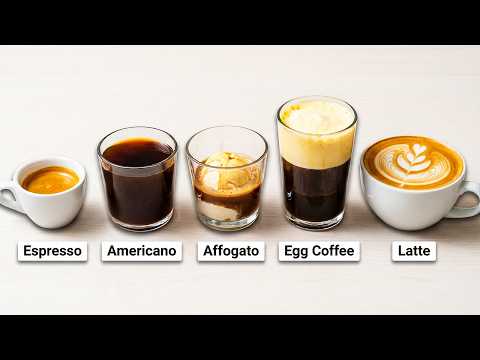
All Coffees Explained
FooDiscover
15m 43s2,979 words~15 min read
YouTube auto captions
Transcript source
YouTube auto captions
This transcript was extracted from YouTube's auto-generated caption track. The transcript below is server-rendered so it can be read, searched, cited, and shared without opening the original YouTube player.
Pull quotes
[0:00]The foundation of most coffee drinks in the world is espresso, a highly concentrated coffee made by forcing hot water through finely ground beans at high pressure.
[0:00]This creates a small dense shot with a layer of golden foam on top called crema.
[0:00]The word "espresso" is Italian and roughly means "pressed out," referring to what is now one of the most popular coffee brewing methods in the world.
[0:00]The quality of an espresso is influenced by factors like the grind size, water temperature, pressure, and the barista's skill.
Use this transcript
Related transcript hubs
Watch on YouTube
Share
MORE TRANSCRIPTS


