[0:00]This video is brought to you by Curiosity Stream and Nebula.
[0:08]Hey, man. Hey, how's it going? Did you, uh, did you get the outline that I sent over yesterday that had the, uh, for the mythical creatures idea that you had? Yeah, actually, I That's a great idea, dude. I was thinking I could do a headline like, um, like five mythical creatures that kinda actually existed like with kinda in parentheses, you know. But Some of that was really interesting, like the, the thing about the dwarf elephants that, um, you know, they had the the hole in the skull, so people thought they were they were cyclops. That was really cool. I never I never heard of that before. Yeah, it's it's it's just that, um, What do you think about the kraken bit, though? I mean, like, like everybody knows about, um, giant squid now, don't they? I mean, it's kinda obvious, like, I mean, I mean, yeah, kinda, but Oh, and the cynocephali thing. Like, I hadn't heard of that one before. Like, it makes it all more interesting if it kinda looks like we actually did some research and we got something in there people never heard of before. I don't know. What do you think? Sure. I think this one's gonna do really well. It was a good idea. Thanks for suggesting it. I didn't suggest it, actually.
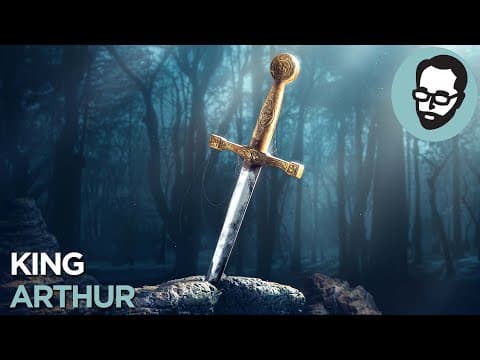
[1:10]Oh, was that one of the other guys? Yeah. No, I mean, what I suggested a video on mythical characters, like King Arthur, that that kinda thing. Oh. Yeah, mythical characters that may or may not have existed. Like, you know, like historical figures. I think I said mythical creatures. No.
[1:41]You didn't spend too much time on this, did you? No, I mean, I was up till three, four, 5:00. I didn't sleep. I mean, we we we can do this. Yeah, we can still do this one. We can do the mythical characters one later. Yeah, I mean, we can always come back to it. How's mid-September sound?
[2:04]Long before recorded history, there was oral history. People learned about their past through stories, stories of the great kings and leaders that established their societies. They learned their morals through parables about gods and demigods, sometimes passed down through oracles and wise men and sometimes immortalized in song. These were passed down from generation to generation over hundreds and even thousands of years. And as the times changed, often these stories would change to accommodate for those times. So, of course, over time, kings become legends, legends become myths. And after enough time has passed, it becomes really difficult to suss out exactly what's true and what's false. The deeper you go back in time, the more difficult this becomes. Uh, and then there's also the problem that humans have imaginations, you know, just because somebody wrote a story doesn't mean it's a story about a real person. Even though those stories may still extol the virtues of certain morals or actions, but they're told through characters that obviously never existed. I mean, you experienced this almost every single time you watch a movie, and even movies that are based on real people are still subject to interpretations. And that's all interesting, sure, but what that means is that there's a lot of historical figures throughout history that we think were real, but may have never existed. Let's start with Gilgamesh, the world's first superhero. Gilgamesh is the main character in an epic written between 2150 and 1400 BCE that addresses immortality, the meaning of life, and friendship. His father was priest king Lugobanda, who had magical powers, and his mother was a goddess Ninsun, making Gilgamesh a demigod with superhuman strength. So yeah, right off the bat this is sounding more like mythology than actual history. But here's the deal, Gilgamesh is listed in the Sumerian Kings list from the 26th century BCE. And he's considered to be the fifth historical king of the city of Uruk, which many consider to be the first true city. But the King's list also says that he ruled for 126 years, which is probably not true. And if it is true, I want to know what vitamins he was taking. And in 2003, a team of German archeologists actually claimed to have found his tomb in an ancient riverbed of the Euphrates, which actually corresponds to how he was buried in the story. And he was referenced by other historical figures of the time like King Enbaragasi of Kish. So it seems that unlike some of the other people in this video, Gilgamesh did actually exist. He was a king and a popular one, and over time, his story became one of myth more than reality. Next up, we have Homer, and, I mean, come on, we all know he's not real, right? He's the flappable, lovable buffoon father from that cartoon show. What are you gonna tell me that a cartoon is real? That's not the What? Oh, the the writer? Oh, Oh, he he might yeah, okay. Sorry. Okay, yeah, apparently there was another Homer and he was known to have written the works of like the Odyssey and the Iliad, not the cartoon guy. Any, here's what we know about him. Uh, nothing, virtually nothing. He may not even be a man. 19th century author Samuel Butler proposed that the author of the Odyssey was a woman. He believed a man wrote the Iliad, though. Ancient Greek historian Herodotus places Homer living between 750 and 700 BCE. Now, it's commonly thought that Homer was blind, but this might be because of a mistranslation of the Greek word Homerus, which means hostage or he who is forced to follow in some contexts, blind. And some scholars believe that the name Homer was just sort of like a placeholder name for any author that didn't want their actual name on there. He was like the the Alan Smithee of the Greek world. Or it's thought that Homer didn't actually write his stories but just kind of collected various pieces of his story and then coalesced them into his historical epics. Kinda like how we often attribute fairy tales like Snow White and Rapunzel to the Brothers Grimm, even though they didn't actually write them, they just sort of collected them and then published them. The Iliad and the Odyssey are usually dated to between the 7th and 8th century, uh, BCE because that's when writing became more widespread in Greece. Author and historian Daisy Dunn suggests that Homer, quote, composed the epics in outline, building on stories passed down from his parents, grandparents, and great-grandparents, which later poets developed and perpetuated orally. So yeah, this one's kinda up in the air. But maybe all that really matters is that they existed all and have been inspiring and entertaining us for thousands of years. And since we're talking about Homer in his writings, let's talk about one of the characters from the Iliad, Helen of Troy. According to the Iliad, Helen came from Sparta, and she was known to be very beautiful and very smart. She was supposedly the daughter of Zeus, and her mother was named Leda, although there are some interpretations of it that say that her mother was the God Nemesis, and that Leda just raised her. The short version of it is that she ends up marrying Menelaus, the younger brother of Agamemnon, who was the king of Mycenae. A Trojan prince named Paris visits one day, and he and Helen fall madly in love and run away together to Troy. The Greeks weren't happy about this, and thus began the Trojan War, which lasted for ten years. It said her face launched a thousand ships. And at least a thousand movies. But was she real? Did she exist, or was she just a fictional character made up by a possibly fictional author? Well, Homer isn't the only person to write about Helen of Troy. She also shows up in the writings from Euripides, Eratosthenes, Pausanias, and Stesichorus. Of course, some of these came way later, and at that point her story was a big part of Greek mythology. I mean, some writings describe her origin as Zeus appearing to Leda in the form of a giant swan, and they fell in love, and then Leda gave birth to three eggs, one of which became Helen and the other two became her brothers Castor and Pollux, who later traded faces for a John Woo movie. You either get that joke or you don't. So to say that Helen's story has been embellished would be an understatement, but that doesn't mean that there wasn't a real person whose infidelity sparked a war. I mean, for a lot of human history, intermarriage between different royal families was a way to secure alliances and keep the peace. And a good way to break that peace would be to break that marital alliance. So it's very possible that some marital problem may have sparked a war once upon a time. Uh, there probably have some other underlying issues around it, but that could have been a trigger. So while there may have been an actual Helen of Troy, what we think of as her story is probably far different from what actually happened. Uh, she she probably didn't hatch out of an egg, for example. But what is real is a milli-Helen, which is a humorous way of measuring beauty. The term comes from an anonymous source from Punch magazine in 1954. Some people claim it was Isaac Asimov, though there have been some others that have been suggested as well. But the idea is that basically if Helen of Troy had a face that launched a thousand ships, a milli-Helen is the amount of beauty it would take to launch one ship. It's metric beauty, I guess you could say. Next up is Sun Tzu. Now, The Art of War has been heralded and used in military strategies and military academies for thousands of years. But its influence extends past battlefields and into boardrooms and inspirational Instagram posts. And the author of the influential Chinese book, of course, is Sun Tzu. Maybe. And the reason maybe is because, uh, the name Sun Tzu translates to Master Sun or just The Master. Traditional accounts claim that Sun Tzu was born in 544 BCE in the Kingdom of Wu. Another account says he was born in the state of Qi. Either way, he was a brilliant military general and strategist. So The Art of War uses the phrase Sun Tzu said a lot. So it's possible that it was written by a student who simply wrote down the teachings of his master. There are two works that support the existence of an actual Sun Tzu. One is the Spring and Autumn Annuals, which are the state records of the Zhao Dynasty from 722 to 481 BCE. And the records of the Grand Historian written by Sima Qian, a Han Dynasty historian around 94 BCE. It should be noted that both of these works have been uh, criticized for their inaccuracies and sort of mixing up historical events. And there's the argument that if he really did exist, there would have been more written about him than just quick references here and there. But scholars who believe that he was real reference his role in the Battle of Boju in 506 BCE. Sources also claimed that he served King Luo of Wu during the Wu-Chu wars between 512 and 506 BCE. Historians today think that The Art of War was written between 470 and 220 BCE, and that's based off the writing style and the references of different weapons that were around at the time. Whoever he was, his military insight has inspired people throughout the centuries, everybody from Mao Zedong to military Academy graduates here in the United States. And that one guy you know from college who loves to post this stuff on his Facebook page. But whether or not he was a real person or just sort of an amalgam of various wisdom over the years is still up in the air. Next up, let's talk about Ragnar Lothbrok. If you're a fan of the TV series Viking, you're already probably a little bit familiar with the character of Ragnar Lothbrok. He was a chieftain and warrior of the Vikings that raided France and England during the 9th century. The main source of information on his life comes from an Icelandic tale from the 13th century called The Saga of Ragnar Lothbrok. But other sources that reference Ragnar include The Anglo-Saxon Chronicle, a 9th century English document that's generally considered authentic, the Vikings were mentioned several times in it with Ragnar named as a prominent raider. Other Icelandic sagas like Heimskringla, Sögubrot, The Tale of Ragnar's Sons, and Hervarar saga. The Gesta Danorum, a Danish document by historian Saxo Grammaticus that combines historical information mixed with legends, and various paintings and poems. Now, there are three ancient Viking rulers that are believed to have been real that claimed to be sons of Ragnar. But Ragnar's existence itself is more difficult to answer. That's because his legend is due mostly to political propaganda and mythology. For example, writing about how vicious and evil Ragnar was made the English victory over him sound a lot more impressive. And much like Greek and Roman myths, it wasn't unusual for a leader to claim to have been descended from a God. In this case, Ragnar claimed that he was descended from Odin. And as in the case of Gilgamesh, that would make Ragnar a demigod, capable of superhuman feats of strength. And those sons I mentioned, well, they may not have been his actual sons. It's not unusual for leaders back in that time to adopt people to, uh, succeed them later on. And those sons could have claimed a a bloodline to Ragnar just to increase their own status. But Ragnar himself may have been just an amalgam of various historical figures in the past that were all mixed together to create a mythic hero. And some of those candidates include these fine fellows, who I'm just going to put on the screen and not even attempt to say their names because good God, man. And even how he died is up for dispute. Some say that he died at sea, some claim that he was thrown into a pit of snakes. But yeah, his life is as much mythology as it is history, which makes it a perfect candidate for a history channel series, if you ask me. And finally, we come to one of the world's most popular historical figures, King Arthur. Just his name alone brings up 18 million results in Google. From The Once and Future King, to Excalibur, to Monty Python and the Holy Grail, he's been written about, portrayed and parodied for hundreds of years. And even though it's claimed that he fought Saxon invaders, he doesn't seem to show up in any of the documents from that time period. He does appear in the writings of a Welsh historian named Nenius, but that was several centuries after the invasion. Nenius claims that Arthur fought in twelve different battles, but they were so far apart and so widespread that there's no way he could have possibly been at all of them at the same time. But from there his legend took off with writers around the world embellishing his story into mythical status. We have a British cleric named Jeffrey of Monmouth to thank for adding figures like Guinevere, Merlin, and Morgan to Arthur's life story, along with the sword Calibur, which was later renamed to Excalibur. But Arthur may also be an amalgam of other people, such as Magnus Maximus, a Roman officer in Britain, who attacked Gaul. Cassivellaunus, a warrior from 1st century BC, who led an uprising in Britain against the Romans. Arvirargus, a 1st century British king who married a great beauty, possibly the inspiration for Guinevere. And Ambrosius Aurelianus, a Roman British military leader who won several battles against the invading Saxons. I mean, Aurelianus, Arthur, seems seems pretty pretty close anyway. But until we come across a time traveling phone booth, well, never know for sure. Now, you may have noticed that I left out some religious figures like say the Buddha or Jesus, because, yikes. But if I don't at least bring it up, I know it's all you people are going to talk about in the comments. So here we go. So for the Buddha, most scholars do believe that he did exist. Uh, he was a man named Siddhartha Gautama. He was born to a king in the 5th century BCE. But after that, as a historian Bernard Farre wrote in Tricycle magazine in 2016, quote, The rest remains lost in the myths of myth and legend. So, again, shrouded in mythology, but we do know that he existed. Now, with Jesus, we do have mentions of him in Jewish and Roman writings within a few centuries of his existence. But most of what we know about him though, could also be an amalgam of various preachers that were around at the beginning of the movement to sort of convert people to Christianity. And some of the more supernatural events that have been ascribed to him, like some of the miracles that he performed, his his miracle birth, his lineage to God. Uh, those are also things that have been attributed to various mythological people over the years. Now, all this doesn't mean that he wasn't a real person with good ideas, just that he has been mythologized like many other people have. Dodging that bullet. As I said in the beginning, stories are how we have always defined our world, and that continues to be true today. I mean, when somebody dies and you go to their funeral, what do you hear? You hear stories about them, stories that people share about events that happened, things that they did with that person. The narrative of that person's life begins to be created. And over time that life can become sanitized, you know, we remember the good things and forget the bad things, or it can go the other way. Maybe some unsavory actions that that person did come to light or society shifts in a way that makes that person not look so good in the long term. And of course, the bigger and more impactful the life, the more those stories become embellished over the years in one direction or another. So maybe the takeaway here is that someday your life will be nothing but a story. A story told by a lot of authors that aren't you. So, give them some good source material. But as I said before, sussing out legend from myth becomes more difficult the further back you go in time, especially when you're talking about that those who created the nations and empires that we know of today. And if that's something you find interesting, I can highly recommend the series The Story of Europe, on Curiosity Stream. Hosted by historian Dr. Christopher Clark, The Story of Europe tells the history of a dynamic continent whose various forces, for better or worse, have made their marks on the entire world. It's a six-part series that begins with the first civilizations in Europe and the myths and legends that they were founded on. If you like this video, it might be right up your alley. Curiosity Stream, of course, has thousands of documentary series from some of the best documentary filmmakers from around the world, and it keeps growing. My list of stuff to watch is getting ridiculously long. You might say that Curiosity Stream is the streaming service for your curiosity. Even better with your subscription to Curiosity Stream, you get free access to Nebula, the streaming service I'm a part of, as well as many other great channels, including Extra History, Cogito, and The Great War, if you're a history nerd. You see all of our videos ad-free, and you get access to Nebula originals that you can't see anywhere else, including my original series Mysteries of the Human Body. This is a series where I take a look at the bodies we inhabit and all the weird stuff that goes on with it. We just released the fifth episode. There's one more coming in the next month or so. So if you get in there now, you'll be just in time for the grand finale. And you, dear viewer, can get this bundle for 26% off the normal price, which gives you a yearly subscription of less than $15 for two streaming services. It's ridiculous. So if you're curious, just head over to curiositystream.com/joescott to get started. It is seriously the best streaming deal on the planet, and I use both of them quite a bit. I enjoy it. I know you will, too. So, yeah, curiositystream.com/joescott. Go get it. Big thanks to Curiosity Stream for supporting this video, and a huge shout out to the answer files on Patreon that are forming an awesome community, supporting this channel and just being awesome people. Uh, I got some names I need to murder real quick. Some new people. We got A Rayati, Nathan M, Michael Huge or Huge, uh, Dave E, Austin Hepperla, Charlotte McGarrity, Romeo Balta, Casey Preston, Jackson Dolman, Tom English, Mr. Coleman, and Martin Sikos. I think I said that right. Uh, thank you guys so much. If you'd like to join them, get early access to videos, and get exclusive live streams and just form, uh, or be a part of an awesome community, you can go to patreon.com/answers with Joe. Please do like and share this video if you liked it. And if this is your first time here, you might check this one out because Google's been watching you and they think that you might like that, too. Or you can check out any of the videos over here. They got my face on it. And if you like them and enjoy them, I invite you to subscribe by come back with videos every Monday. All right, that's it for now. You guys go out there, have an eye-opening rest of the week. Stay safe, and I'll see you next Monday. Love you guys. Take care.