[0:00]84% of businesses in America don't have any employees. That's 30 million people running one-person businesses. And the crazy part is, 77% of them are profitable within the first year. And it's only possible because of the recent advancements in AI. Now, the problem for most people who want to build a one-person business with AI, you might go on YouTube and people will say, oh, you got to build an app. And once you get into vibe coding and Claude coding, you will quickly realize that it becomes super technical and not easy at all. Now, for my personal experience, you don't need to make an AI app to make $10,000 per month. All you need is to sell a skill and have AI do all the heavy lifting. Now, for me personally, I actually left my six-figure tech sales job in Silicon Valley to build my business in Vietnam. And AI is doing the majority of the work now. I even taught this exact model to one of my clients Sandy, who went from an employee to starting her own AI automation agency making $5,500 a month within just a couple months. And now she's one of the fastest growing female creators in the AI space on YouTube. So in this video, I'm going to show you the exact framework that you could essentially copy to build your profitable one-person business in the next 30 days. And specifically, we're going to be using Claude all the way through. And don't worry, if you don't have any coding experience, you're not technical at all, and maybe you've never even used Claude before, this is going to be the perfect place to start. Now, in order to build your profitable one-person business, the first question that most people are going to have is what are you even supposed to sell? You basically have two things you can sell. It's either you're going to sell a product, okay, so that's why everyone's selling the idea of like an app made with AI, or you're going to sell a service. Now, I want to quickly go through the pros and cons of each so you can make informed decisions on where you want to commit your time. Okay, so if you want to make some kind of AI app or some kind of product, the pros of that is you make it once and you sell it forever, right? So that's why people have these apps, people pay like five dollars a month for, and it might make sense, but the challenge of that is it's very time consuming to actually learn how to vibe code and create something that's usable. Even if you spent all that time, you're not even sure if people are going to buy it. And if you really look at the data, the majority of apps are created with AI, don't even make $100. Probably more than 99% of them like completely fail, right? For me, I kind of lean on AI powered services, because a service is really just a promise, meaning you sell the thing first and then you build whatever it is that you promise later. So you don't have to commit any time or resources to build something, right? You can make money right away. There's zero startup time and zero startup costs, because it's just a promise, and you use the money clients give you to build whatever it is you want to build. And in some ways, it's scalable because once you build it one time, you can sell the same thing over and over to different people. And the best part of this all is you can do all of this just using Claude and only Claude, without any like complicated automations and connecting all these APIs, just Claude, that's it and it works. And I'll show you later in this video, right? So you don't need any technical skills. The con of it is, yeah, maybe it's not as scalable as an app could be, because it is a service at the end of the day, but just an AI powered service. But that con is not actually a bad thing, because if you have an AI powered service, meaning you're doing the same thing for everybody, you could eventually turn it into an app and sell it to more businesses, right? But now the question is, what is an AI powered service to begin with? And the way I think about it is you're just taking some kind of skill that someone would do without AI. And then you're just having AI do all the work. So here's how I look at AI power services, right? It's just a service powered by AI. So let's say it's like cold emailing, YouTube script writing, thumbnails, you know, helping people get their dream jobs as a coach, right? Some kind of SEO. All these services traditionally can be done without AI, but when you have AI do all the work, then it's just going to be so much easier, right? People don't really care if something is AI or not AI, what they care about is the results. Okay? They don't really care how the meal is cooked in the kitchen, they care about how it tastes and how it's presented once the food is ready, right? I'll give you a perfect example, one of my clients Sandy, she had no experience in anything AI, but she was really passionate about and wanted to learn about this kind of stuff. So, I helped her get her first client, and the first AI automation business she did was writing blog posts, like SEO optimized blog posts for these tech companies. And they started paying her around $3,000 per month doing this, and she didn't really know anything about SEO, but she just did it using AI. A lot of it's Claude to generate these things, and then she would spend like, you know, 15 minutes a day creating a bunch of blog posts, they would post it, they would get results. And then the results were so good that they upped her pay to $5,500 per month just doing blogs, and she's even doing this while working her full-time job. So, this is an example of a service, which is just creating SEO blogs, but you're just delivering the output. You're just saying like, here's a blog I made, copy and paste it on your website. They don't really care how it's made, they know it's AI, but as long as it gets results, they don't care if you spent 15 minutes or 15 hours. Results are the most important at the end of the day. And the really interesting part of this all is Sandy didn't have to invest any time or resources to even build this kind of blog creating automation. She literally pitched it to the client, they agreed on a price, and then she took the money, found different people to make these automations, and then she made it with the money that the client gave her, right? It's all about selling first, building later. And by the way, guys, if you want the full training on exactly how to come up with a business idea, build a personal brand, and sign high-ticket clients, especially when it comes to doing all this with AI, check the link in the description where I have a free training that will guide you through the entire process from A to Z. So again, make sure to sign up for that free training, and I'll catch you there. So hopefully now I inspired you to think about, hey, maybe you should provide some kind of like AI powered service, right? As a one-person business. The next question you might have is, okay, how do we actually find your unique AI powered business idea? I'll start with this, most people, they get really overwhelmed because they have a lot of skills and they can do anything, but when they have too many choices, they just freeze up, right? Because they're afraid of choosing the wrong idea or picking ideas that they don't really have an advantage in, and they don't want to be stuck in a business that they don't like doing, okay, that would be the worst. Here's my advice to you if you're starting from zero, when you're selling a service, like an AI powered service, just remember, you're just selling a promise. Okay? You're not investing time, money, energy into building anything until somebody pays you money and it touches your bank account. Now, with that in mind, the simplest way to find your business idea is actually just to use the Ikigai. The Ikigai is a Japanese concept that is meant to help you find your reason for being. And it's combining things like what you love, what you're passionate about, what you can be paid for, as well as what the world needs. Now, I actually have a free gift for you where I'm going to help you find your purpose and your reason for being. And we're going to use Claude for this, okay? So I put a link in the description where you can actually download this specific Claude skill that I personally created for you. So how it works is, once you download it, you put it in Claude, you install it, you basically put a slash P D dash Ikigai. And then this is a skill that I created for you that you can use literally in your Claude, right? So you will have the same thing I will have. And then from here, once you enter it, what's going to happen is it's going to prompt you to fill out your Ikigai. So it's going to ask you different questions from, it's like, hey, we're going to help you find your profitable business idea. And then you're going to answer these questions one by one, right? So the first one is like, what do you love doing? You write it all down, then it's going to be, what are your passions? Write it all down, right? And you just basically follow the steps until at the end, it will give you some kind of result on what kind of business idea you should do. And I know this process 100% works because one of my clients Brandon, he is a VP at a construction glass company. And I basically took him from making, you know, as a side income, he was making like 750 bucks a month. We got him to 10k per month within 30 days using this literal Ikigai exercise, right? So I'm talking about this, like, you literally just follow it, it will find you a business idea. And for Brandon specifically, I actually made this for this video, basically I took Brandon's Ikigai, put it all together, and actually Claude is the one that made this and made it all pretty with the diagrams, right? He was good at like the all the construction kind of stuff in his company. He's good at videography, photography, camera stuff, uh, so this is all the stuff that he loves, right? He's good at basically sales, video production, personal branding, like basically content and sales. What does the world need? You know, all these glazing companies, like these ones that make like really nice wine cellars and all that kind of stuff, they need content. Because there's no one who's an authority helping that particular niche. What can he be paid for? Coaching these companies and founders on how to make content to get more clients, obviously. So we just combined his love and passion for creating content, combining it with his current industry, which the whole construction and glazing industry. Put it together to create not only a service where he's helping people create the videos, scripting it for them, and we're even coaching them on how to make good videos as well. So it's the perfect side business for him that uses all his strengths, interests and passions, and now he has a dual income. And I want to say, when you go through this exercise, the most important questions that you should walk away with after you do it is you need to be clear on what you sell. Okay? So what level of service do you want to provide to your clients? Are you doing the work for them? Are you coaching them and they do the work and you just give them feedback? You just need to be clear. You need to figure out who you're selling to, whether it's your working with businesses, everyday regular people, maybe it's a government, right? Just be clear on that and like, what are these guys look like? Are they 9 to 5 employees? Are they construction companies? You want to make sure you're playing in an issue you have an advantage in, right? Also understand you need pricing. So like, what are you going to charge? You know, for Brandon, he charges like $2,000 to $3,000 per client. You know, I do also highly recommend doing high ticket as well, because you'd be surprised even if you have a small following, you can still charge a lot if you provide value. And lastly, what's going to make you different? So for Brandon, he is uniquely positioned to help these companies because he's passionate about content and he's been to the industry for a while. For Sandy, she had real no advantage in AI when she first started, but what she does with the content, especially and she's becoming one of the fastest growing AI creators on YouTube. She makes it very non-technical, right? She's a mom, she has three kids, but she's able to spend a couple hours a day learning this AI stuff. And so she's appealing to all these regular everyday people that also want to learn AI. You don't need to be the best, but you need to have a different story for people to connect with. Now that we have the Ikigai, how do we actually deliver on your AI powered service? Like if somebody were to pay you $3,000, do you know what you would even do for them, right? And this is the question a lot of my clients have when they work with me, so I'm going to give you some sauce. When it comes to delivering your AI powered service, the goal is really to deliver maximum results with minimal effort. So, you want to design your business that supports your lifestyle. So a lot of us do this because we want to be free, we want to make money online, and we want to be able to do whatever we want, right? You don't want to put yourself in golden handcuffs and be making money doing something you hate. So a lot of people I coach, they want to help people get like their dream tech sales job or something, right? You know, in this example, I'm helping a client with a coaching offer where they're going to help other people land their dream jobs. The best way to figure out what you should even do for these clients is you look at the top three challenges that your ideal customer has, and you create a Claude skill, similar to the Ikigai one that I just showed you, right? Same process, but you create your own, and you use that Claude skill to solve each challenge. So let's say you're a coach, you're helping people find their dream job, okay? There's really three things that people have a problem with. Number one, their resume and their LinkedIn profile sucks, that's why nobody responds to them. Number two, they can't get any interviews with the right companies, and number three, when they get the interviews, they don't know how to perform really well. So for someone helping others get their dream job, these are the three major pain points. Now, for each of these pain points, you can actually create a Claude skill. So if you're coaching someone and you're on the call with them and you're getting paid $5,000 to guarantee they get a job at Salesforce or something, what you can do is instead of you having to do all the work, you just have Claude do the work for you. So if you want to create a skill for your own business, you would just go to Claude and say, hey, help me create a Claude skill to help my clients land their dream jobs. I'm going to say, I'm going to give you their, I'm going to give you their resume and LinkedIn, and you make it a perfect resume. You know, this is just an example, right? But to make it really good, you'd have to be more specific, give him more details like, hey, make this resume specifically to target these type of companies. Right? So there's always ways to make the skills better. And then I actually created the skill here. So basically, once you create a skill, you have a name for it. Then you put in the person's LinkedIn profile, then you put in their resume. And then you just press enter, and then it will make you the perfect resume. Now for this demo, I already did it, and I'm not saying this is the best resume, but it's just an example, okay? So, if you were to help someone get a job and you literally just use a skill, put in their information and created the whole resume, you can basically go back to them and say, hey, I created your resume for you. And now let's go ahead and send it to recruiters so that we can get you your perfect job. So that's just one application of how you can you be using Claude skills. Now for me, personally, what I do in my business is I help people build their personal brands, I help them start these one-person kind of businesses, and I help them escape their 9 to 5 jobs. So that Ikigai skill that I just gave you with the link in the description, this is literally what I use when I coach my clients. I just get all the data that they gave me, I run it through the skill to kind of figure out, okay, based on their unique experiences and everything they told me, what are some business ideas that make sense for them? I'll have Claude do a lot of the research, and then I use my human eye and experience to really dig deep to figure out if that's a business idea that makes sense. So, yes, the AI does all the work, it crunches all the data, but I still think for many of the offers out there, whether it's like coaching, consulting, creating good content, there still needs to be that human taste to curate the ideas to make sure the output is something that's high quality. Now, let me know in the comments if learning skills, especially on Claude, is something you want to see more of, and maybe you might want to see more of my personal skills that I'm using on a day-to-day basis. If that's the case, leave a comment in this video, and I'll be happy to make more videos like this. So now we're going to get into the final stage of building a profitable one-person business, and that's actually signing clients. Okay, we know what to sell, we know who to sell it to, we know how to deliver on the service, but how do we get people to pay us money? And to be honest, there's really only two ways. Number one, is you got to build a personal brand. That's creating content, whether it's on YouTube, X, LinkedIn, Instagram, it depends on where your audience hangs out and what kind of content you like to make. But you got to build your personal brand, cuz like, if you don't have a brand, why would anyone want to work with you, right? So, building a brand gets leads to come to you, it makes you differentiated because you're building a brand, people connect with you as a human being, and you're pre-selling your clients in the content itself, right? So when you get on the call with them, they're already sold. Now, the other way to do it, and I would recommend both is outreach. So you're just reaching out to people cold, who may have no idea who you are, right? Like I literally just closed a client today. They just paid the first payment, it's a B2B client. I literally sent them a cold message on LinkedIn. They responded positively, I made a Loom video explaining all the things I could do to help their business. They love the video, we got on a call, and then I just sold them right there, and they're just paid. So it's really as simple as that. When you have a personal brand, what happens is when you do outreach, your chance of people responding is so much higher because you have a brand. If you do outreach with no personal brand, it's like, good luck, right? Like who's going to respond to a random stranger with no social proof? So, it's just the name of the game if you want to succeed. So LinkedIn DMs work, cold emails work, Loom videos work, even going on Upwork and hitting up people doing the jobs, like that works too. Right? Anything can work, but you have to find the path that works best for you and your particular sale. And the way I think about it is, you're going to build a personal brand, you're going to do outreach, and at the end of the day, it all funnels down to sales calls, right? If you're doing B2B and you want to sign high-ticket clients for $2,000 plus, you got to get them on a call, you got to explain, you know, what you do, understand their problems, and then you just close them. If you cannot sell them on a call, it's pretty unlikely for you to sell them like on a sales landing page or a webinar, because you haven't understood what problems they have and how to speak their language. So that's why I always recommend do the calls first, it's a little grindy, but do the calls first, and then from there, once you have a brand, then you can think about like, oh, okay, maybe you could sell something without a call, right? But to be honest, if you're trying to get to 10k as quickly as possible, selling these AI powered services, getting on a call is the way to go. And in terms of timeline, realistically what you can expect for the first 30 days if you really implemented this. Days one to seven, you find your Ikigai and you create your offer, right? Day seven to 14, you reach out to at least 20 people per day. That's 100 per week minimum. You probably want to do 200 per week to be honest, but let's say just minimum, that's what you need to do. Now, days 14 to 21, that's when you really start building your personal brand, start creating content. Just pick one platform to build on, whether it's LinkedIn, Instagram, YouTube, it's up to you. And then, just post like these simple content. You don't need crazy editing. Sandy edits all her videos by herself with AI, and um, it's working fine for her, right? So, it doesn't matter if it sucks, just get started. And from days 21 to 30, just keep doing what you're doing. Outreach people, create content until you book meetings and you close. Sandy got her first client actually in the B2B AI automation space about one week of taking it seriously. Yvonne got her first client helping people get their dream tech sales job within the first month working with me. Brandon got three clients on LinkedIn, using these methods, and he got to 10k per month in 30 days. So, is it possible for you to get your first client in 30 days? It's possible, it's not a guarantee, but the system is there for you to do it. It's possible, many regular people have done it, so why not you? All right, so now you have the full system to build your profitable personal brand using Claude. But even if you have all the skills that I gave you and you have the roadmap, you still might have some challenges. From knowing exactly if you should commit to your business idea, trying to find your unique advantage that will make you different from everybody else. And sometimes it's just getting expert guidance from someone who's done it before. Now, at this point, I've helped countless of people like Sandy, Yvonne, and Brandon make a serious side income while working their full-time jobs. And if you want my help to craft a game plan for you so you can do it for yourself, I highly encourage you to book a time on my calendar, using the link in the description where we can map out exactly what this can look like for you. At the end of the day, it's about helping you sign your first clients as quickly as possible. And a lot of my clients that I mentioned earlier, they all signed their first client within the first 30 days of working with me. So again, if that's something you're interested in learning about, go ahead and click the link in the description to book a time on my calendar, and I'll talk to you soon. But if you want to watch another video to get to know me a little bit more, check out this one here where I show you how to sign clients on LinkedIn using Claude.
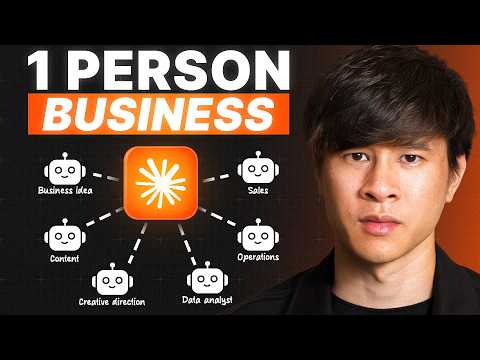
How I'd Start a 1-Person Business With Claude AI in 30 Days
Patrick Dang
19m 40s4,368 words~22 min read
YouTube auto captions
Transcript source
YouTube auto captions
This transcript was extracted from YouTube's auto-generated caption track. The transcript below is server-rendered so it can be read, searched, cited, and shared without opening the original YouTube player.
Pull quotes
[0:00]Now, the problem for most people who want to build a one-person business with AI, you might go on YouTube and people will say, oh, you got to build an app.
[0:00]And once you get into vibe coding and Claude coding, you will quickly realize that it becomes super technical and not easy at all.
[0:00]Now, for my personal experience, you don't need to make an AI app to make $10,000 per month.
[0:00]Now, for me personally, I actually left my six-figure tech sales job in Silicon Valley to build my business in Vietnam.
Use this transcript
Related transcript hubs
Watch on YouTube
Share
MORE TRANSCRIPTS


