[0:00]Every time that you post content online, people are making a decision whether or not they're going to remember you or if they're going to forget you entirely. Building some of the biggest personal brands in the business world taught me this. The success or failure of your personal brand is determined by how memorable you are. And if you show up online like everybody else is, I don't think you're going to be remembered. In this video, my goal is to share with you three strategies that are silently killing your personal brand and what you should do instead. And the first one is that you need to stop outsourcing your personal brand to AI. Everybody online right now is so hot on what we need to be doing with AI and having AI increase our output, having Chat GPT, Cloud, all these different tools write our content for us. What I have found is this causes you to blend in with everybody else who is also outsourcing their personal brand to AI. Open up your LinkedIn app and scroll for a couple of minutes. I mean, it's gotten ridiculous. Everybody is using the same format, they're using the same hooks. It it's really starting to all look the same. It reminds me of a show that came out in the last year on Apple TV called Pluribus. There's all these humans who are now due to a reason that I will not share. They're all part of this hive mind, but there's a couple of individuals who are still uniquely human, and they stand out significantly. It feels very reminiscent of what content online and what personal branding is looking like right now in 2026, and it needs to stop. We need to start leaning into the uniqueness of our experiences, our expertise, the stories of when we've had success and the stories of when we've had failures. And I think we can all relate to this. When you are scrolling through whatever app of your choice is, and you notice or you quickly immediately tell that this post is AI-generated, the skepticism rise for you, because I know it does for me. I don't trust the post, and it's not like I think that everything in the post is a lie necessarily. It's just that it doesn't feel real, it doesn't feel authentic. That's how a lot of personal brands are starting to feel. They feel almost like the off-brand version of something. Rather than Coca-Cola, they're the big Cola at your local grocery store, right, the grocery store brand. I don't want to be big Cola. I want you to stop using AI as your source and start using yourself as the source and AI as the multiplier. What that looks like is instead of opening up chat GPT, turning on voice mode and saying, I need you to help me create a new video, come up with 20 different ideas. I'm not a fan of that. I've talked at nauseum at this point in other videos about how you come up with ideas, so we're not going to hit that right now, but I want to just very briefly share with you my workflow for how I created the outline for this video. I like using Chat GPT or any AI tool that you use as a sparring partner or a tool to refine what you want to share, not to develop what you want to share. Again, AI as the multiplier, not as the source. And so for this video, I open up the voice mode, I went for a walk with my dog Bugsy, and I prompted, I said, I want to do a video for my YouTube channel on what personal brands need to stop doing in 2026. I have three main points that I want to hit, but what I would like to do is I'd like to give you those three points and one sentence to describe what I'm going to talk about with those points. And so I prompted it saying, I want you to interview me, Stephen Barlet style on each of these points. I want you to push back, find out like really press on my my thoughts and ideas, see if there's areas where maybe I'm wrong and I need to change my opinion or rephrase something to be more clear, but also like take it from the frame of a skeptic, right? Uh every time in a YouTube video, there's always somebody that presents a a scenario or a reason why they can't do what maybe I'm sharing in the video, so I told it to also take that angle. And so what's happening here is I'm going for a walk, I'm a verbal processor, and so I'm able to verbally articulate the points that I want to make, I'm getting pushback, AI is collecting all of this. And then my ask at the end of this interview process is, I just ask for the output and outline form. And then what I do is I take what I have there and I rewrite it in a Google Doc. I use that as a reference, but I did all the upfront work, because how many of us sit down at a blank Google Doc or Notion page or whatever the hell you use for outlining and scripting your videos, and we just sit there and we're like, what the hell? This allows you to get started, but again, it utilizes you as the source and AI as the multiplier. But there are enough individuals that are making this other mistake that I want to hit on really quick, which is outsourcing too much of the outlining or the process of creating the script for your video to your team. If you are having a team, you're trying to save yourself time, and I know that outlining and writing scripts takes a lot of time. And so what I'm not saying is that you should be spending, you know, 20, 30 hours a week writing content. That's not my point here. If you hire a team to write your shit for you, and you expect them day one, week one, month one, even year one potentially to be able to write everything in the way that you would, with the stories and experiences that you have, that maybe they don't know about. And the frameworks that you have developed, that is a pretty audacious assumption and thing to expect them to be able to do. In the first year of us making content, I didn't expect Trevor to do that, and that's definitely one of the reasons why we did so much long form content in the first year. There's tons of reasons behind it, but one big one is I wanted to give a lot of material that outlined those stories, experiences, frameworks and solutions that I have to problems so that Trevor had that material to work with. But if he could write it just as good as me, well then it should be Trevor in the content every time, not me, right? If your content director, if your team can write it just as good as you, how much of an expert are you really? I really hope that hits home for you. The thinking or the philosophy that this comes from, it's the audacious thinking that we can put in minimal amounts of effort onto the most competitive landscape that exists right now in the US and in the world. internationally, the most competitive is content online, right? The amount that is being posted every day is increasing rapidly every single day. And you think that you can just skirt by with minimal effort, that is an absurd way to think. I sit down with so many different founders that complain about how they're still having to participate in writing the content, or if they're not participating in it, they show up to the film session and they hate the outline that they're seeing. And I ask them, I'm like, well, how much time did you dedicate to this? You know, did you review it? Did you rewrite it? Add some points, did you round it out? Did you at least take it from third base to home plate? And almost every time the answer is no, and I just I pause and I look at them, and we both usually laugh. If you have built a successful business, you're keenly aware that in order to accomplish great things, you got to work really hard, but for some reason, a lot of people forget that when it comes to developing their personal brand, and they start to get lazy with it. That's some 2025 shit. In 2026, we are no longer going to be outsourcing our personal brand. We're going to utilize our team to save us time and to amplify the amount that we're able to do. We're going to utilize AI to save us time and amplify the amount that we're able to do, to refine our thoughts, our frameworks, our experiences, our stories. But we're not going to completely outsource our personal brand to AI, thus blending in to everybody else. Number two, is that you need to stop trying to build your personal brand around a curated aesthetic or a flashy lifestyle. For far too long, in my opinion, uh, it is worked for people to flash their Lambo that they rented or a private jet that they booked for an hour on their Instagram and build credibility in synthetic trust around these things. But in my opinion, in the rise of AI content nowadays, and how easy it is to fake all of that shit, and how many times we're starting to see that, well, a lot of these influencers don't actually own these fancy cars and fancy mansions they're posing in front of. We are now skeptical about this shit.
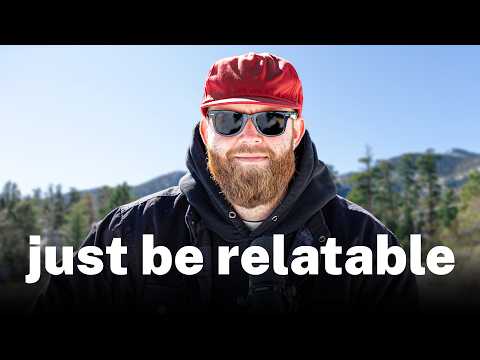
[8:19]No longer are people seen that Lambo and just going, oh, this must be successful. I'm going to buy their course on how to become successful. This is not working anymore. In my opinion, that is some 2025 bullshit. Let's leave that in the past, and in 2026, we need to be building brands around trust and around more meaningful real shit. I know it's kind of a millennial thing, this whole, you know, curated aesthetic and flashy lifestyle. Gen Z and Gen Alpha, I know make fun of it. I think the future, and what they're bringing to the table, is a far less curated and manufactured aesthetic, and far more real shit. I mean, we're already starting to see a rise in just walk and talk style content, where people are grabbing their cell phone, flipping it around, not using the selfie camera anymore. I know that's a millennial thing of me, uh right there. We're starting to see a lot more, and I hate this term because it gets overused, but low-fi content, right? Human-paced content. I think a lot of people are tired of this bullshit fronting that we're seeing online. Because we are now at the point where AI owns "remarkable" and so we as humans have to own "relatable". And if we need to own the relatable, then flashing that private jet or Lambo photo or your really cool colored G-Wagon is no longer going to be as effective, because maybe not all of that is fake or AI-generated. Even if it's not, it's just becoming so common that we're becoming desensitized, and it's no longer standing out in any meaningful way. I'm sitting here in my very basic RAM 1500, it's the baseline trim. There's nothing fancy about this, okay? I mean, maybe my my black rhino rims are a little fun and cool, uh for all the nerds out there, but I'm trying to show you like, this is a cool environment, it's beautiful, like I get that, but there's nothing really fancy here that I'm showing you. I'm trying to be more relatable and show you the things that I like to do. I love driving up to beautiful viewpoints and just sitting with a beer and casually thinking about the things that I want to work on in my business, or the stuff that I want to talk about in the content, right? And so this is where I'm trying to disregard the remarkable and be more relatable as much as I humanly can. And in trying to own the relatable and ignoring the remarkable, I I will say you can let your expertise, your experience, the knowledge that you have, let that be the remarkable element. And let the visuals, the way that you operate, the way that you show up in your content, that's the relatable factor. For some of you watching this, you're feeling a a little bit of a pain of anxiety right now, because you know that you are operating in this flashy aesthetic and you're faking it. What I would encourage you right now is you need to change this. This is not going to be a winning strategy anymore. It may have gotten you a fairly big business right now. I'm talking to you right now. If you are in that moment, what I encourage you to do is make some significant changes. If you're willing to, I would actually make an entire post sharing the non-realities of what you've been putting on. Apologize to the audience and have a complete shift. I think we're going to see a lot more of this in 2026, a lot of people that have been fronting and faking their lifestyles are going to be coming out and apologizing. And I think we're going to see a lot more people leaning into the reality of being a human. Some of those people are going to win big time because what they're going to walk you through is the process of what it takes to actually build a meaningful business and audience without lying and bullshitting to people, and they're going to get far more trust and credibility from their audience because they're leaning into that relatable human aspect. Some of you watching this that I want to address, you're not faking it. That is your lifestyle. Your lifestyle is going from the G-Wagon to the private jet, right? You're staying in all the nice hotels, and I'm not saying to hide that from your audience. That that's not what I'm saying at all. What I would encourage you to do is if that is truly your lifestyle and you are actually operating that way and you're showing that in your content, don't stop, but start increasing the volume of content that highlights the moments in between. The moment where, you know, your private jet is delayed because there's a storm and the pilot isn't willing to take off for the next three hours, and so you're sitting in the hanger drinking that nasty coffee while you wait. Show those moments. They might be viewed as champagne problems to people, but they are still a much more relatable moment than just the fact that you're boarding your private jet to go attend a Taylor Swift conference, Taylor Swift conference, to attend your VIP section eras tour tickets. We need to show more of the relatable, and so, no matter how basic or beyond incredible your lifestyle is, I recommend trying to show the more relatable moments as much as possible. Shit is about to get really remarkable when it comes to AI. Humans need to own the relatable. And the next one that I want to share is that you need to stop optimizing for going viral and start optimizing for trust. Now, this is something that I've talked about a lot. When I first started making content at the beginning of 2025, it was something that I saw very few people online sharing. I'm not, you know, saying that we are the reason for this by any means. I think we were maybe a catalyst in this. I'm noticing a huge tide is shifting online. There are more creators that are showing up talking about not trying to go viral or sharing the horror stories of them investing hundreds of thousands, sometimes millions of dollars and years of effort into trying to go viral to grow their business, only to realize that they brought in an audience that doesn't give a fuck about what their offer is. I'm seeing the tide change, but I want to really just like plant a flag in the ground. I want us to stop trying to go viral. Now, I'm not saying that you shouldn't be trying to get views. Optimizing for trust doesn't mean that nobody should be watching your content. If nobody watches your content, well, you'll never establish trust because they never see what you're saying. I'm not saying that. You need views. What I am saying is you don't want to optimize with that first in mind. You want to optimize for developing trust with your ideal customer and the ideal audience that you want to acquire by solving the painful problems that they face. And then the second thing, I view it as more fine tuning or optimizing in the second round for views. When we make content, when we're outlining a video, we never sit down and have the first thought be, what is going to get the most amount of views or what is going to have the highest likelihood for going viral and maybe giving, you know, we're a new channel. So a couple hundred thousand views on this YouTube video. That's not how we start. We start with what is the problem that we want to solve and help our audience solve on their own. The immediate next question that we ask is, how can we wrap this in a way that increases the odds that more people see it? A lot of you start with, okay, how do we get the most amount of views? And I I understand the psychology. I understand the strategy, but I am telling you, I implore you, please in 2026, try this method. Start with, how do we solve our customer's pain? And then, immediately, right after that, how do we make this more accessible to more people?
[15:35]Different niches and interests are growing at a monumental scale right now. I mean, it's absolutely insane. The amount of hyper niche content. As we get more niche down and we go more into our interest graph, the desire to go viral is going to become less and less relevant because you're not going to want the masses to know about what you're talking about, you want the right people. You want to get views. I just want to make sure it's clear. Views are very important, but you want views from the right people, and views from the right people come from optimizing for the right people. And in the event that you're wondering if your content is too niche. If you're thinking, okay, if I just try to solve problems for my ideal customer, that's going to be way too niche. If you're asking that that question, which I understand, it's a valid question to ask, but it's bullshit. I I think you don't realize that every single niche out there has at least 10,000 people interested in it. Don't quote me on that. I I haven't done the research to validate that, but I'm 99.9% sure that there is at least 10,000 people in every single niche out there. The cool thing about the way that everything is expanding right now based on the interest graft is niches are only growing more and more. The really small niches are expanding because people are discovering new interests and niches that they are interested in. The reality is is your content, what you want to talk about is not too niche. Now, I will say, there are some niches that have a a lower ceiling as far as the amount of, you know, followers, subscribers and revenue that you'll be able to generate in your company. I'm not saying that every single niche can be, you know, a $500 million company. That's not what I'm saying. But, uh, if you have realistic expectations for 99.9% of you, you are not going to be "too niche." If this video has caused you to realize that you need a restart on your personal brand, or you haven't ever started and you want to get going, click here to watch this video.
[17:41]Heigh ho, Silver, away! That's going to be it, right there.


