[0:00]You may enjoy going out for a burger and fries or a late night taco or two, but you probably don't know the fast food companies' secrets. You might just think twice about that fast food run after you hear what may be lurking in the soda machine, what your chicken nuggets are really made of, or what all that junk food can do to your brain. Whilst everyone realizes that fast food isn't exactly the healthiest thing, I must admit, you'll be shocked when you hear about these secrets and the studies that back them up. Amazing! Number 15, How to get it at its freshest. If you've ever wondered what makes fast food, well, fast. Here's the answer. These restaurants prepare for busy times by having a lot of hot food ready for peak hours, like rush hour, when everyone gets off work and rushes for the nearest drive-through for dinner. So, if you place your order around this time, you'll probably get the food at its freshest. But a few hours later, when things have slowed down, your food may be a little less fresh. Many companies have timers telling employees when to dump the food and make it from new, but sometimes they forget or just don't do it. Here's a tip to get the freshest food and save yourself some sodium. Order your fries without salt, and they'll make a fresh batch, since most are normally automatically salted. For other foods, just ask nicely for them to make it from fresh, and hope for the best. Number 14, How Fries Are Made. You could just skip the fries altogether. Wait, what? Skip the goodness of fried potatoes? Yes, because in reality, McDonald's fries contain 19 ingredients. According to MythBusters' Grant Imahara, who got a behind-the-scenes look at McDonald's fry production. The lengthy list includes flavor enhancers, an anti-foaming agent to keep the grease from splattering, and another aimed at keeping the potatoes from going grey. The fries are partially fried before being frozen, then fried later at the restaurant. Basically, they're potatoes and 18 other ingredients. Number 13, Only about half of your nugget is actually chicken. We all love chicken nuggets, but do you know what's really in them? Most people would say chicken and breading. Turns out, they're only about 50% chicken meat, at best. Dr. Richard de Shazo of the University of Mississippi Medical Center, studied some and found that only about half the nugget was meat, while the rest was fat, blood vessels, nerve tissue, and ground bone. Stuff that typically goes into dog food, it only gets less healthy due to breading and frying, and with so little meat, it's a better source of fat than protein. So, go have another order of nuggets, unless you're too chicken. Number 12, Soda machines are bacteria ridden. When stopping at your local fast food place for a quick burger and fries, you've probably enjoyed a nice cold beverage from the soda fountain. Unfortunately, some fast food soda machines may be contaminated with coliform bacteria and E.coli. A study from Hollins University in Roanoke, Virginia found 48% of soda fountain beverages contained coliform, a bacteria most commonly found in human feces, and 11% contained E.coli. This obviously isn't the case with all machines, but it appears at least a few people ignore those all employees must wash hands signs. The self-service machines you use in the lobby may also be infected with mold, which likes to grow in moist places, such as a drinks machine. But you can check for yourself, all you have to do is peer into the ice chute and check for signs of anything growing in there. Number 11, Don't Be First Through The Door. On the other hand, if you arrive first thing in the morning, your meal may be a little too clean. According to Dr. Oz, most restaurants clean with strong chemicals when they close at night, and these can linger the next morning on drink machines and other cooking utensils or machines. Those bubbles in your smoothie are probably there from stirring, but it's possible they're caused by traces of soap. The early bird may not get the worm, but he may get some detergent in his morning coffee. Number 10, Food Sources Are Rarely Inspected. You may think the FDA is staying on top of food safety in every local restaurant, but they're a busy agency and can't be everywhere all the time. According to a 2010 report from the Department of Health and Human Services, 56% of food facilities have gone five or more years without an FDA inspection. This includes fast food restaurants themselves, plus some suppliers, like meat producers. If you think things look bad in a local restaurant, it can't hurt to complain to your local office. They may be quicker to make a visit if they receive a large number of local complaints concerning a particular restaurant. Number 9, Even The "Healthy" Fast Food Places Really Aren't. Maybe you think you're choosing the healthy fast food by going to Subway instead of McDonald's, but not so fast. Dr. Leonard Lesser, a public health scholar at UCLA, conducted a study where he sent nearly 100 adolescents to eat at the two restaurants, then tracked what they ordered by their receipts. He found that the McDonald's meals averaged 1,083 calories, but the Subway meals weren't too far behind at 955 calories. It's important to note the Subway's fresh fit menu offers sandwiches with 230 to 500 calories, but it appears not many people in the study ordered those. The average Subway sandwich actually had 784 calories, higher than the average McDonald's sandwich at 582 calories. However, Subway's side items averaged fewer calories than the McDonald's sides. Subway's sandwiches were higher in sodium, while McDonald's were higher in sugar. Overall, you're probably better off just eating at home. Number 8, But If You Do Go To Subway, at Least Save Some Money. If you still want to go to Subway, here's something else that they may not want you to know. When you order two 6-inch subs, say one for you and one for a friend, it's much cheaper to order a footlong and customize each half. According to the Krazy Coupon Lady, who sounds very sane and trustworthy, you can't change the bread or meat, but you can customize condiments, cheese, and produce on each sandwich. Although the footlongs aren't actually a footlong, you'll still get a lot more sandwich for your money. While you're at it, just order a 60-cent cup of water instead of paying $2 for a plastic bottle of water. Number 7, Fast Food Junk Is Bad For Your Brain. You know fast food isn't healthy, but did you know it's bad for your brain as well as your waistline? One study in the Journal of Clinical Investigation found fatty foods damage the hypothalamus, which controls hunger, thirst, sleep, and moods. They can make you crave more food and contribute to weight gain. Researchers from the Australian National University and Deakin University found people who eat a Western or unhealthy diet with lots of sugary drinks, high sodium snacks, and processed meat have smaller hippocampi. The hippocampus is the part of the brain responsible for mental health, learning, and memory. Hopefully you'll remember the threat of shrinking your hippocampus and not the taste of a burger the next time you head to the fast food drive-through. Number 6, McDonald's Burgers Look The Same 20 Years Later. If you've ever wished you could save your burger even longer, you may have been onto something. A Utah man named David Whipple bought a hamburger from McDonald's in 1999 and decided to save it for a few weeks to see what it would look like. Then he forgot about it until a couple of years later when he found it in a coat pocket and discovered it hadn't rotted at all. This phenomenon has been seen with other McDonald's burgers, and some people believe it's due to the many preservatives put into the food. But the burger chain claims this is due to a loss of moisture during the cooking process, so the burger just dries out further instead of rotting. Either way, we suggest just eating your burgers straight away when you get them. Number 5, Fast Food Today Is Worse For You Than It Was 30 Years Ago. While that one burger may not change in appearance for years, there have been changes in just how unhealthy fast food is over the years. According to Eat This, Not That! authors, a cheeseburger has 75% more calories than it did in the 80s, and french fries have 190% more calories. Pizza also has 70% more calories. Part of this is related to supersizing everything and additional toppings and dressings can add more calories. Unless you want to supersize your waistline, it's best to skip the supersize option at fast food places, even if it is slightly more economical. Try to avoid asking for extra bacon, cheese, and dressing and request extra lettuce or other vegetables on your burger instead. Number 4, The Sugar Content Is Colossal. It's sort of a no-brainer, but you most likely have no idea the extent to which this is true. In the United States, the recommended daily sugar intake is about 9 teaspoons for men and 6 teaspoons for women. A strawberry milkshake from McDonald's contains about 20 teaspoons. Even smoothies, which sound healthy, often have an unhealthy amount of sugar, as do with some non-sweet items, like pizza and salad dressing. The Premium Asian Salad at McDonald's has three teaspoons of sugar, and the healthy fruit and maple oatmeal has eight. That's not a sweet deal at all. When dining on fast food, look at the online nutrition info and speed past anything with a large dose of sugar. It's bad for your body, and even worse for your teeth. Number 3, Good Gravy. If you enjoy the gravy at KFC, you may be surprised to learn it's older than you think. According to the 2015 BBC documentary, The Billion Dollar Chicken Shop, KFC uses chicken meat that's up to five days old in its gravy. The chicken is fried in rapeseed oil, which is reused up to five times. Then the scraps of chicken left in the fryer are added to the gravy. It appears even the chicken wants to ride the gravy train to the end of the line. Number 2, Wasteful Fast Food Restaurants. Of course, not every fast food place is so focused on saving money, um, conscientious about recycling its food. A study by the University of Arizona showed that fast food restaurants actually throw out about 9.6% of the food used, while regular eateries only toss about 3.1%. In fact, fast food restaurants produce more than 85 million pounds of food waste every day. Overall, the fast food drive-through is a fast track for wasted food to reach a landfill. Number 1, The Grill Marks on Meat May be Fake. You may find your mouth watering when you see a hamburger ad with those freshly seared grill marks on the meat. I hate to scorch this nice image, but it turns out those grill lines may be fake. According to the Food Republic website, these are usually on the burger before it's even cooked. They're branded on, or sometimes painted on with food dye before the meat is sent to the restaurant. The fast food place can then add their own grill marks, or just toss that frozen patty into the microwave and call it good. What's the biggest surprise you've ever had at a fast food restaurant? Do you know any other interesting fast food facts or studies? Let me know in the comments section down below. Also, if you enjoyed this video, please make sure to drop it a like and subscribe. Clicking that bell icon to stay notified. Thanks for watching.
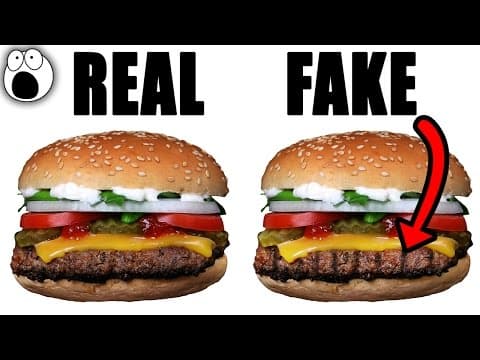
Secrets Fast Food Companies Don't Want You To Know
BE AMAZED
11m 33s2,007 words~11 min read
YouTube auto captions
Transcript source
YouTube auto captions
This transcript was extracted from YouTube's auto-generated caption track. The transcript below is server-rendered so it can be read, searched, cited, and shared without opening the original YouTube player.
Pull quotes
[0:00]You may enjoy going out for a burger and fries or a late night taco or two, but you probably don't know the fast food companies' secrets.
[0:00]You might just think twice about that fast food run after you hear what may be lurking in the soda machine, what your chicken nuggets are really made of, or what all that junk food can do to your brain.
[0:00]Whilst everyone realizes that fast food isn't exactly the healthiest thing, I must admit, you'll be shocked when you hear about these secrets and the studies that back them up.
[0:00]These restaurants prepare for busy times by having a lot of hot food ready for peak hours, like rush hour, when everyone gets off work and rushes for the nearest drive-through for dinner.
Use this transcript
Related transcript hubs
Watch on YouTube
Share
MORE TRANSCRIPTS


