[0:09]If you're going to another country, chances are, you've done your homework. You're familiar with a map. You've searched for hotels. You know the value of the currency. You've checked the climate. You've even studied how to count to 10 and say thank you. That's the easy stuff. What's really tough? Well, how do you avoid those pitfalls of offending people by mistake? It's so easy to say something, gesture in some way or do something that is normal in your own culture. That will shock or offend or confuse the people you're visiting. In the next few minutes, relax and enjoy watching how easy it is to make a cultural mistake. A gaff, a faux pa, anywhere in the world.
[1:04]Hey, it's so good to see you. Hey, how's it going, Sheena? Oh, yes, it's been so long. I know, too long. I have a surprise for you. Thank you. In a great many countries throughout the world, it is an insult to use the left hand for giving or for eating. The left hand is reserved for hygiene and is therefore considered unclean. So, how's it going, Shayna? Things are going well. Thanks. You? No, pretty well. Yeah. In regions such as the Middle East and Asia, it is an insult to allow the sole of the foot or shoe to face another person, since that is considered the dirtiest part of the body. So, how did I do on that test? Actually quite well. You got 100%. Oh, yes. In many countries around the world, giving a thumbs up sign is an obscene gesture. Avoid it wherever you are, unless you're sure it's acceptable.
[2:07]Are you ready to go? Almost. Just a sec. It is considered disgusting in Japan to blow your nose and put the handkerchief back in your pocket. Even blowing your nose in public is frowned upon. If you have a runny nose, use a paper tissue and throw it away.
[2:34]Have you decided what you'd like for the entree? Yes, I'm going to do the sirloin steak, please. Sirloin for the entree? So you thought because you spoke English, you knew all about speaking correctly in Australia? Well, down under, an entree is an appetizer, not the main course.
[3:04]Hey, I need to talk with you ahead of the staff meeting, if that's all right. Uh, yeah, that'll be fine. No problem. I just wanted to touch base about the presentation. In Mexico and many other places, it is typical for a conversation to occur between two people close together. It is unfriendly to back away.
[3:31]So hot outside. Do you have any orange juice? Okay. How about I know. I saw the lemons outside. Lemonade. How about some lemonade?
[3:43]Well, what do you have? What's the failure of communication here? In Bulgaria, a shake of the head means yes, and a nod means no. Who knew? This is also true in other parts of Eastern Europe and the Middle East.
[4:08]So, how was dinner in my establishment tonight? Perfect. In Brazil and many other countries, it is vulgar to make this sign. To be safe, don't use this symbol when indicating approval.
[4:27]Hey, how's it going? I haven't seen you in eons. Ah. In Kazakhstan, it is rude and strictly taboo to sit on the edge of a desk or table.
[4:44]I saw you the other day over on the bus, yeah. Uh, maybe I'll talk to you later. It's considered rude to chew gum while having a conversation. Better to leave the gum at home.
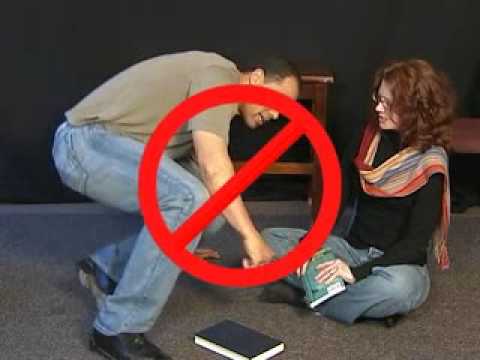
[5:05]In Nepal and other areas of South Asia, people treat books with great respect. You don't throw a book around carelessly, put a book on the ground, step over it, mark on it, or in any other way, handle it roughly.
[5:30]So it's really good to meet you. Thank you very much. Yeah, I really enjoyed this meeting. It was perfect. And in fact, I have my business card for you right here. Oh, good. Okay. Thanks. Sure. Take it. Thanks. Sure. And put it in. It is considered an insult to take someone's business card and put it in your back pocket. It's much safer to put it into an attaché case or your front pocket. Yeah, so I'm glad to hear that your trip was a success. I'd love to see the pictures, please do. Yeah, you know, I have some outside. Just a sec. I'll go get them. Yeah, it's really good. It is considered bad luck and definitely bad form to put your chopsticks anywhere but on the table or on a chopstick rest.
[6:19]Yeah, right this way, Madam. I'd like to wash up first if I could. Ah, now? Yes, of course, I'd like to wash up before I eat. In England, washing up means to do the dishes, not to wash your hands. Even in places you thought you understood everything, language is tricky. So there you have it. With the best of intentions, it's really easy to convey the wrong message, insult someone, or misunderstand what someone has said or done. What's the solution? How can you avoid such gaffs? First, read about the culture of the place you're going to visit well before you leave. Read about the everyday behaviors and practices of the people there. Second, talk to people who grew up in the country where you're going. Ask them specifically if there are differences in social behavior that you should know about. Third, take the time to be especially aware of your own verbal and nonverbal behaviors. These may be interpreted in ways that are different from your intentions. Finally, when you've arrived, watch for signals. And if you think you've goofed, ask someone what is happening. Be forthright, open and good-natured about a gaff, yours or someone else's. Ready to go? Have a great trip.