[0:00]Fog and snow cannot hide the horrors that unfolded here. There are many things I blocked out completely. The electrified fences caging people like animals, the starvation. The gas chambers. What are you feeling right now? That I can't go in there. I don't want to go in. I don't want to see where my family and whole world was killed. My whole world. This place is a reflection of humanity's worst, but at 94 years old, Ruth Cohen had to return. She was ripped from her home, forced onto cattle cars with her family. She remembers arriving at Auschwitz. First, my dad went that way with men. My mother went that way with my, my brother and my little cousins. And we went that way. This is the last place 14-year-old Ruth saw her mother, her little brother and two young cousins. They were likely immediately gas. It's awful and it's terrible. I didn't know about the gas chambers. I didn't know about the crematoria. Now that I know about it, it hurts even more. Ruth says she and her sister were sent to this block house. They slept on a wooden plank. Six of us slept this way. Six of us slept that way. So there were 12 in one little area. Was your sister here with you? Yes. Did you sleep right next to each other? Yes. Every night? Yes. To having her there with you, did that help? I'm sure I'm sure that it saved my life. She wants to take a photo here. You're smiling. I'm here and Hitler lost. Ruth, her sister and their father were eventually transferred to other concentration camps where they were liberated. What did this place take away from you? My life until I got it back. Took my family. It was only one year, 13 months, but it took a life away. They built a new life in America. Now she wants to make sure history does not repeat itself. Nobody is remembering what happened. So Ruth continues to share her story. I have to be a witness for the world that I went through the horrors. I made a, I I survived. I made a life. I have children. Wonderful children who are going to carry my, not my legacy, but my history. She's sharing that history today with her daughter Barbara, who found her grandmother and namesake in this book of names. Just so real. I mean, my grandmother is part of me. I have her name. What would you tell people to do to prevent something like this happening again? I could say it in one word. Love. Love would never permit something like this to happen. Jesse Kirsch, NBC News, Perko, Poland. Thanks for watching. Stay updated about breaking news and top stories on the NBC News app or follow us on social media.
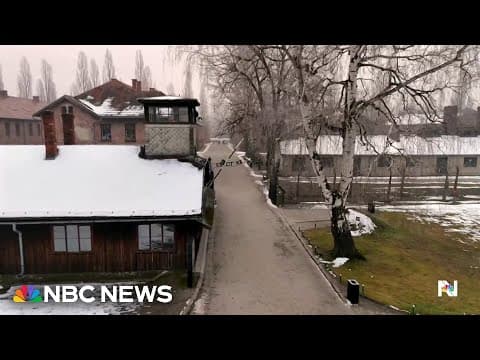
American Holocaust survivor returns to Auschwitz for the first time
NBC News
3m 12s479 words~3 min read
AI audio transcription
Transcript source
AI audio transcription
This transcript was generated from the video's audio because no usable YouTube caption track was available. The transcript below is server-rendered so it can be read, searched, cited, and shared without opening the original YouTube player.
Pull quotes
[0:00]This place is a reflection of humanity's worst, but at 94 years old, Ruth Cohen had to return.
[0:00]This is the last place 14-year-old Ruth saw her mother, her little brother and two young cousins.
[0:00]Ruth, her sister and their father were eventually transferred to other concentration camps where they were liberated.
[0:00]She's sharing that history today with her daughter Barbara, who found her grandmother and namesake in this book of names.
Use this transcript
Related transcript hubs
Watch on YouTube
Share
MORE TRANSCRIPTS


