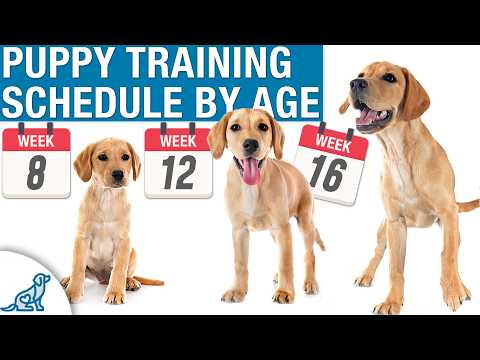
[0:00]Did you know that by the age of 7 weeks your puppy's brain is fully developed? That means that by the time they're ready to come home with you, they're ready to start learning. In this video, I'm going to tell you about a puppy training schedule by age as well as by the progressions and what level they should be at so that you can give your puppy the best start possible. I'm Ken Steep and welcome back to McCain Dogs.
[0:24]Knowing what you should be doing with your puppy and when is uh really confidence building for any puppy owner. It's also a great way to measure your progressions and that's really what I want you to think about. Now, before we start this video, I'm going to encourage you to grab a notebook or grab a notes app on your phone to make notes of the things that we're going to talk about today. I'm going to break these steps and stages down by weeks and then we're going to get to a point where a lot of the weeks are similar. And we're going to talk specifically about the progressions that you can go through for your specific puppy. Now, most puppies come home to their new families around the eight week mark, so that's where we're going to start our conversation today. And at eight weeks, this is a really important relationship building time. We're not going to focus so much on teaching our dog specific skills, but what we are going to do is really focus on some of the natural training opportunities that you're presented with. Because we're going to start building a bond with our puppies right off the bat, and I'm going to show you a couple really easy tricks to start doing that. Food is a valuable resource to puppies. They immediately see it as something that they want, and it's great that it's can be something that comes through you. So at eight weeks, one of the first things I want you to start doing is taking advantage of natural training opportunities like feeding your puppy. Hand feeding your puppy. You know, you portion out whatever their breakfast or dinner or whatever meal it is and then you can hand feed them some of that food. At eight weeks though, we can also do things like saying their name, then feeding them, saying their name and then feeding them. This is really going to load up value on that new word that they're hearing. Remember, they don't know what their name is. So what we need to do is start to build value on it and we're going to do it by doing things like that name then reward. Another thing I want you to take advantage of is we, uh, using the McCain method, we use yes as a verbal marker to let the puppy know or dog as they're growing up, know that they've done something absolutely right. So I want you to start building value on that yes. It's going to be really helpful down the road, and because you have so much opportunity to build a bond and try to shape a puppy to love to learn, I want you to do the same thing with that yes. It'll be yes, then reward your puppy. Yes, then reward your puppy. Now those food exercises are going to get your puppy's undivided attention, but we want to also have an opportunity to give our puppy information as they're moving around an open space, when they're not totally focused on us and on the food. So I want you to use something like a house line. We talk about house lines in a lot of our puppy videos because it gives you so much control and it allows your puppy to make some choices as they move around the area that you're in as you're supervising them. So make sure you attach a house line to your puppy. If you're not familiar with what a house line is, it's just a line or a leash that you've cut the loop of the handle off and you clip it to your puppy's collar so that you can keep them out of trouble and redirect them if you need to. Now keep in mind, your puppy's just gone through a dramatic life change. They've come away from their litter, they're now in a new environment, in a new home with new people, so really set your puppy up to be successful. The best way to do that is to ensure 100% supervision. Make sure that when your puppy's out of their kennel or crate that you're there with them to give them good information. This can be, you know, a pretty exciting and interesting and sometimes scary change for your puppy, so you want to be there to make sure they're getting 100% good information. Now, with supervision in mind, I mentioned using a crate and the first day home is a great day to start training your puppy to love their crate. It's so important to have a management tool because you want to make sure your puppy can't get into trouble and that your puppy doesn't learn the wrong things. During this first week home, your puppy is learning constantly, whether you're there to give them information or not. So make sure you manage them a little bit by teaching them that their crate is a great place to go. I've dropped a link in the description of the video for you to check out a video that will give you lots of exercises to teach your puppy to love their crate, but uh at the eight week mark, make sure you're using your crate for great management and that way you'll be giving your puppy great leadership. Potty training or house training, however you refer to it, will also begin the first week home with your puppy. So, make sure you're really proactive about this step. Your puppy's likely to have some accidents inside, but there are some ways you can minimize that by being proactive, taking them out before they go in their crate, after immediately after they come out of their crate, uh after every meal, after every play session, um if they have a nap, when they wake up, you're going to take them outside to go potty. But these are going to be really great ways to set them up to be successful. At the same time, you need to be supervising that puppy. So if you feel like you can't keep a 100% close eye on them, put them in their crate. Another added step that you can do is put up some baby gates, puppy proof that room, so your puppy can't make any bad decisions along the way. So, you know, blocking off some of the areas where they might get out and get into trouble is a really good idea and it allows you to set them up so that they don't go sneak away and pee on the carpet. I want to talk specifically about those first couple of nights home with your puppy in their crate. So, remember, this may be the first time that your puppy has ever had to hold their bladder or bowels. In the litter scenario, they may have had an area where they could just if they felt the need, they would walk over there and go, but in this situation, your puppy's going to be in their crate. And what I want you to do to set them up to be successful is elevate that crate. Try to make it line of sight, so, uh, if you can maybe put it on at eye level beside your bed, or maybe if you're sleeping in an area that's nearby the puppy for the first couple of nights, make sure that you can see what's going on. It's likely they're going to have to go out and you really want to uh acknowledge that they do need to go out. And then hear that they need to go and and take them outside so that they don't have an accident. Those first couple of nights in their crate, it's also going to be a little bit soothing for them to be able to see you as they're sleeping there at night. So really, uh, take advantage of that crate position those first couple of nights home. Now, if you want to level up your eight-week old puppy training just a little bit, something we'll often do is start to lure our puppies. Just guide them around, showing them some food, having them follow the food with really deliberate hand motions, so that we can teach our puppy that following food is worth something, that it's valuable to pay attention. Because these foundational skills are going to be really helpful in the next coming weeks for your puppy training. Now, at nine weeks old, your puppy's second week home, your puppy's going to start to get a little bit more confident. So supervision is even more important at this point. Using something like your house line, you're going to see how often you're using it to keep your puppy out of trouble. But it's so much easier preventing problems rather than fixing them, rather than to untrain your puppy to do some of these things. So really focus on supervision. Your puppy's going to be exploring more and they're going to be more active and they're going to have a little bit more energy. So you're going to have an eagle eye, you're going to keep 100% eye on them when they have freedom in your home. Once your puppy is nine weeks, you can start to increase the challenge of some of the things, the foundational things that we were doing the week before with them. I want you to continue doing some of these natural training opportunities, hand feeding your puppy. Absolutely you want to reinforce name, then reward, name, then reward with your puppy. We really want to build tons of value on that and the likelihood is that when we first bring that puppy home, we're probably calling their name a lot. And I want you to be really self-conscious about that. Really think about when you're using your puppy's name because if it's not followed with some sort of reward, uh, at this point in your puppy's training, it's going to start to lose value. So take advantage of these natural feeding training opportunities with that young dog so that you can really teach them that hearing that word means something special is about to happen. You can start to include some of your family members at this point in the training with some of the simple exercises saying the puppy's name, then rewarding them, marking the yes, really loading value on that word, yes. One really important thing at this point is that you're starting to increase the challenge a little bit of your luring. You're just showing your puppy that things are going to get a little bit more difficult, you're going to have to work a little bit harder for them. So if you were just luring your puppy back and forth, at this point, maybe you can teach them to spin in a circle, or how about you lure them to go through your legs? You're just bumping up that challenge level, and if you've spent a week teaching your puppy to follow food and that it can be rewarding, these things are easily accomplished. But what we're really trying to do is teach our puppy that we can level things up and it's lots of fun, and we've already shown them that the value of it, that they do something for you, they get rewarded. So start to increase the challenge a little bit. Another thing I want you to be doing at this point is handling your puppy's collar a lot. You're going to gently reach in when you reward your puppy and take their collar and then reward them. You're going to reach around maybe the other side, take their collar and reward them. Your puppy's going to have their collar handled a lot over the next few weeks and you want that to be a really rewarding experience so that every time your puppy comes near, you can take their collar and they know that something good is about to happen. You see a lot of people with hand shy dogs who uh you they go to reach out for their puppy and their puppy kind of backs away. You can entirely avoid this problem by bringing your puppy in nice and close, taking their collar, then rewarding. Now with your preparation and a little bit of understanding from your puppy, once you get to the 10 week mark, I'm going to group puppies that are 10 to 16 weeks together. Because it's much more important at this learning stage in your puppy's understanding and what the progressions are, rather than week by week by week. But what I'm going to do in the next part of the video is show you the exact progressions that you need to accomplish with your puppy so that you can help them to be successful and what exercises are going to be really important for them to know. At 10 weeks old, we can really start to expect some reliable responses from our puppy and now that you have spent some time teaching them how to follow food. We're going to talk about how to teach them to sit, down and stand and all of the progressions are going to be exactly the same for each exercise. I'll maybe demonstrate the sit because it's very visual, but I want you to follow the same steps for your puppy as you teach them each skill. Now for our puppies that are 10 to 16 weeks old, we can start to follow a very simple formula for teaching them a new skill. And it's going to be command, stimulus, reward. And I'm going to show you exactly how you're going to do that with the sit command. To teach your puppy to sit reliably, we're going to start out with a treat in our hand, something that you've learned through these first couple of weeks of exercises, something that they really like. And then we're going to follow that formula. So we're going to tell our puppy to sit, which is the command, then lure, which is the stimulus, and then reward your puppy once they're in that sitting position. Remember, this is a brand new skill for your puppy. So a couple mistakes that people will make is that they'll uh blend the command and the stimulus, so they'll have the treat in their puppy's nose, then they'll say sit. All their puppy is thinking about at that point, at that point is the food that's on their nose. So remember, it's always sit, then lure, then reward. Another thing people will do is after a couple successful repetitions, they will take the lure away or they'll stand up tall, they'll change the picture entirely. So for this first week, when you're teaching your sit, or your stand, or your down, I want you to use the command, say sit, then lure, then reward and stick to that for at least seven days. Now once you've put in solid week of work on this sit, then lure, then reward, it's time to make things just a little bit more challenging for your puppy. Now, I want you to think uh in baby steps here. So instead of changing something dramatically, we're just going to up the ante a little bit, and instead of having a treat in our hand, we're not going to have any food, but that lure is going to look the same. Something that people often do is once they don't have the food in their hand, as they're moving away from having to have a food lure on their puppy's nose, their hand signal changes. And they'll say sit and change they'll be pointing or they'll be like hi-fi, I mean there's just a million things they can be doing, but what is challenging for the puppy is that it doesn't look the same anymore. So that gradual step for this week's progression, I want you to say sit with an empty-handed lure that looks the same as it did last week. Lure the puppy into position once they're down, yes, then go into your bait pouch and reward. Now we've sort we've combined a couple of things there. That yes that we've loaded value on that marks the moment that your puppy is correct. That buys you the time to go into your bait pouch. It also makes it so that you don't have to have a treat in your hand the entire time, and I want you to work on that step for your sit, stand and down for the next week. Now after two weeks of solid training and great repetition and well-timed lures, it's time to test your puppy. So in week three, I want you to occasionally throw in a sit with a much smaller lure, or maybe no lure at all and see what you get. A lot of your puppies, if you're timing this well and if you're doing it consistently, a lot of your puppies, the moment you say sit, their little bums are going to hit the floor, and I want you to rejoice in that moment. I want you to jackpot reward them, really make it fun. Really let them know if they are offering that sort of, uh, you know, a fast response, that it's worth it. So really acknowledge your puppy's success. Now if you aren't getting those reliable sits, I want you to take a step back. Maybe that empty-handed lure, uh needs to be adjusted. You need to do a few more repetitions of that. Maybe you're in an environment that's a little bit too busy for that puppy. There's a little there's too many distractions for them, so you need to go back to a quieter environment or a location where they can be successful before you can test. We posted a really important video last week for you as a puppy trainer. I want you to watch it after this one and it's all about the train principle and how to get reliable skills from your dog, regardless of the environment. I'll post a link to that video in the description below. Far too many puppy owners underestimate the value of handling exercises. I there's there's just so, there's so much benefits to do to to doing these exercises with your puppy, things like trust, uh, relationship building, allowing you to touch their feet, uh, teaching them to be calm and relaxed in certain situations. There's just a million reasons why you'd want your puppy to be comfortable when you're handling them, but so many puppy owners overlook that. In this next exercise, Kill's going to show you the precise progressions to teach your puppy to be more comfortable with handling to instill that off switch in your puppy. And believe me, whether you understand it at this point or not, you will uh be really grateful that you've practiced some of these exercises when you have a puppy who's very comfortable being handled. Let's head over to Kale. Now, what I'm going to do is start off with the very first uh step to some of this handling and I when I want to touch different parts of her body, the first thing I want to make sure is that she's in a completely relaxed position and maybe not where she's trying to do tricks right now. So what I'm going to do is take a piece of food and I'm just going to lure her into a down position. And I want her to be rotated onto one hip. So all I did there, I'll show you that again, is I just moved her head towards her shoulder. And that causes her to flip over onto one side. I'm just going to give her all the food in my hands because once the food's out of my hands, I'm going to allow her to be a little calmer. Now, I like that there's a blanket under here because I can pull her around a little easier. Now, what I'm going to do is brace her outside leg and I'm going to just gently push on her shoulders to get her on her side. Good girl. Once she's on her side, I'm just going to pat her very calmly. Good girl, on your side. Good girl, very nice. Once she's relaxed and I can tell her, okay, good girl, and let her get up from there.
[15:37]So that's step one, that's what I would start off before you do any touching of the body parts. Good girl. Yes. Now, once your dog is very comfortable laying on their side, they're relaxed, they're calm, lie down on your side, good girl. The next thing I would do is start to uh touch different body parts. Now, I have a bag of cheese hidden behind my leg right now. It's out of sight so it's not super distracting. And if B is able to lay here calmly as I touch her paws, I'm going to say yes and then reward her. Now, the timing of this is very important. I mean her to believe that the best part of this, I love bug. The best part of this is when I actually touch her paw, it's important that I use the word yes to pinpoint that before I get my food out. So I'm going to get her back on her side here on your side. Good girl. Settle good on your side. So I'm going to take a hold of her paw. Good on your side. Oh, you're so good. Yes. So I'm going to say yes while I hold her paw, and then I'm going to get my cheese out to reward her. Good girl. Good. Yes, very nice. Good. What I wouldn't want to do is hold the paw, let go, yes. And get the food out because I want her to think the best part is when I'm actually touching her body part. So timing is really important in dog training, they learn within one second, so it's very important when you use your pin pointer pin point word, it's at the right time. So I'm going to try the other paw now. Good girl. I'm going to even make it a little harder, spread her toes apart, pull on each individual nail, that's something that I would have to do. Oops, settle. So she's a little uncomfortable with that, so I'm just going to lay her down again, settle. Good girl. Yeah. Oh, that's good B. Yes. Good girl. This is a really easy thing to practice, you know, between commercials, or between shows while you're watching commercials rather. Um it's also good to practice this while your dog is already a little bit tired in the beginning so that they're more likely to settle. And then as they get more experienced with it, you can also practice when they're more excited. You know, unfortunately, you can't always choose the energy level of your dog when you take them to the vet for an appointment. They need to be able to be comfortable with this type of handling anytime of the day and in any situation. You are ridiculous. Good girl. Now, it's not always convenient to have your dog laying on their side to do handling. There's going to be times where you need to look in their eyes, check their ears, look in their teeth. And for that, I usually prefer to have my dog sitting. So again, I'm going to get rid of the food for a second and I'm just going to have my hand in her collar just to brace her a little bit. And what I also like to do, I'm just going to swing her this way so you can see, is brace my hand underneath her chin to help keep her head still. And again, if your dog's not very used to you holding them in this position, I would take the time to pat and praise calmly. Yes, good girl. Yes, and you could even just certainly start off by rewarding that. Now, I have done this with this puppy since the day I brought her home at eight weeks old. So she's quite comfortable with this, but some puppies take a little longer. So you can see she just sort of settles when I hold her there, which means I can look at her eyeballs really easily. I can look in her ears really easily. Make sure there's no um, you know, dirt or grime in there. Um also too, this is going to sound really strange, but um one of the easiest way to to tell whether your dog has an ear infection, I babe, is by smelling their ear. If they have a funky smell coming from there, they might have an ear infection. So can she be still as I get without kissing me. Yes. Get my nose near her ear to smell it. Good girl. Yes, you're so good. And again, I take my time doing this. It's a good idea to practice handling when you don't actually have to check them from something. You know, I have some time to do this. I can take it slow. Now, last but not least, their mouth. This is one of the hardest things. So when I start to work on being able to look inside their mouth, I start off by just simply being able to lift her teeth. Look at those pearly whites. Yes. Good girl. If she allows me to lift her lips to see her teeth, I would reward that. Then I could practice maybe trying to open her mouth for a moment. So I have my fingers braced behind her teeth. I'm just going to open her bottom jaw there. So she wasn't quite leveling that, so I'm going to try it again. Good girl. Yes, good. So see how I just have her do it for just a moment. What I'm looking for is acceptance. I'm looking for her to be still, to be calm. If she's fighting me and trying to pull her head out of my way, I don't want to be yesing and rewarding that. Come here, monkey-moo, you're going to have to try it again. Sit. Come on. Up up up. Good girl. So I'm going to hold her head again. Try one more time.
[21:20]Yes, good girl. Excellent. Very nice. Good. And I can just do little bits at a time. Uh when you're doing handling, you can, you know, choose to do, you know, one body part and do that for a little bit. Um and then maybe the next day do something different, depending on the comfort level of your dog, it's always best to build on success so that your dog doesn't get worried or stressed during this. And they actually find it a pretty nice, relaxing, uh calm time with you. Another crucial step in your 10 to 16 week old puppy training is teaching your puppy their name. Now I know the first response you probably had when you heard that is, oh, my puppy knows their name. But would your puppy know their name and respond to their name if there were another puppy around, or if there were something exciting like another friend or family member or a toy in the room? At this point your puppy's ready to learn that they need to respond reliably to their name each and every time, no matter what's going on around them. And there's some simple ways to set up that training for them. Let's head over to our puppy Headstart Training Hall where I can show you the progressions for teaching your puppy to respond to their name each and every time, no matter what's going on in the room. When you start to teach your puppy their name, it's really important that you pay out each and every time. So we're going to call our puppy's name. We're going to say Biggie's name and then we're going to automatically lure him for the first several repetitions of this exercise. So I'm going to do something. I'm going to let him get naturally distracted, which doesn't seem to be that tough with an adorable little puppy like this, but I'm going to call his name and then lure him. So I'm going to get him distracted. I'll just show him something over there. Biggie. And then bring him around. Yes, good boy. Nice job, buddy. And we'll let him get it distracted again.
[23:20]I'm just going to take him out a little bit. Biggie. Show him that food. Bring him in. Yes, good job, pal. Way to go. When you reward your puppy, try to make sure you're rewarding them almost so they're touching your legs. That way they'll see lots of value for coming in really close. Now we're going to make it a little bit more challenging for Biggie by using a little bit more motion, but when we do that, we want to use our house line. And we posted a video about that not that long ago. Just so that Biggie doesn't leave me as we're working on this exercise, I'm going to use, I'm going to put a leash on him or I'm going to use his house line. And I'll link that video above just so that he doesn't he can't have an opportunity to be totally gratified by something that's not me. But I want to show you how we can really build some motivation for his name by using a little bit of motion and some exciting language or some exciting voice sounds. So I'm going to let him get a little bit distracted. Biggie. Yay, good boy. Way to go, buddy. And I'm going to move away from him to really reinforce the fact that him hearing his name and coming to me is lots of fun. So I'm going to let him get distracted again. Biggie. Yay, good boy. Very nice. Way to go, pal. And I'm going to use that motion. I'm going to use that exciting sounding language. Biggie. Yay, good boy. Way to go, buddy. And you can see how excited he is to uh respond to his name and how much fun he's having. That's really important as we're training our puppies is that they're loving every minute of the training. Now, as we increase the challenge, it's really important that we mark the moment that our puppies making a great choice. So, when there's that distraction, whether it's a tape on the ground, or maybe it's some motion in the environment, we mark that moment that he makes that great choice and that's with the yes. I use the yes to mark the moment that Biggie's making a really good choice. What if our puppies aren't responding right away? What if there's some distraction that they don't respond the first time every time to their name? Well, we're going to help them to be right. We're going to use something like a little touch on their side to break their focus, to get their attention back on us, and I'll show you what I mean. So we're going to help Biggie to get used to being touched. So we're going to do something really, really simple like a little touch. Good boy. Touch. Yes, good.
[26:14]So he's really comfortable with that action. Biggie. Yes, good boy. Buddy. By following these steps, you will have an excited and happy and reliable response to name in no time. At this age, some puppies can make it really challenging to be working on some of these skills and working through some of these exercises because they're using their sharp little needle teeth and they're nipping and biting all the time. Now, for the sake of brevity, I have made a playlist and it's in the description below if you have tried all kinds of things to try to stop your puppy from nipping while you're training, then make sure you check out that playlist. It's just for you. Once your puppy's reached the 16 week stage, they're ready for the big dog training stuff, walking on a loose leash, the come command, sit and stay. If your puppy is ready for that kind of thing, make sure you click that card right there. Now, I want you to enjoy every minute of your puppy training journey and if you still have any puppy training questions, make sure you leave them in the comments below. On that note, I'm Ken. Happy training.


