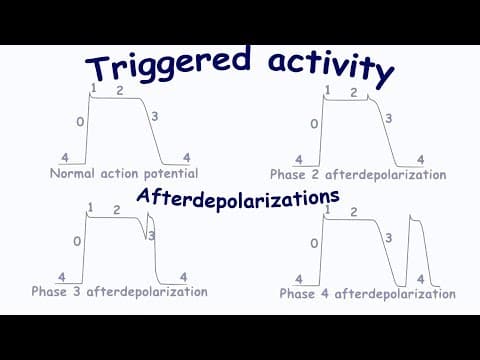
[0:00]Triggered activity is important in certain types of tachyarrhythmias. In this video, we will speak about them.
[0:12]Triggered activity results from the premature activation of the cardiomyocytes by afterdepolarization. After depolarization is a depolarization that occurs during or after the repolarization phase. After depolarization are classified into early and delayed depending on the fact of whether they occurred during or after the depolarization phase. Early afterdepolarization occurred during phase two or three of the cardiac action potential. They occur as a result of electrolyte channels imbalance. Opening of the L-type calcium channels plays a key role in the early after depolarization. Activation of these calcium channels may cause membrane depolarization. Prolonged QT interval, bradycardia, hypoxia, acidosis and hypokalemia contribute to this state. Delayed afterdepolarization occurred after full repolarization, corresponding to phase four of the cardiac action potential. They are caused mainly by intracellular calcium overload. Ischemia, hypercalcemia and the digoxin effect contribute to the delayed afterdepolarization. In other words, triggered activity is caused by depolarizing oscillation of the cells membrane during or immediately after the action potential and such oscillation may trigger new cells depolarization. This action potential shows some bump at the end of the plateau. Normally, this bump should be absent. Depending on the location of this bump, there are phase two, phase three and phase four after depolarization. After depolarization causes premature ventricular and atrial beats, digoxin-induced tachyarrhythmias, ventricular tachycardia, including torsade de pointes, multifocal atrial tachycardia and rhythm, atrial tachycardia. It's important that triggered activity may induce re-entry mechanisms of tachyarrhythmias. Thank you for watching this video. We hope you enjoyed it. If you want to see more of our videos, please subscribe and hit the like button.


