[0:00]So Amy, welcome to the Investing You podcast. Today we got a special guest for the viewers and listeners. Amy's actually one of our beloved clients. Um herself and her husband have come to us, I think now three properties we've done. >> Uh so it was awesome to get you on here today, but to share your story and I think in empower people to you invest out of families to you know help you know I guess create a financial backing. So I wanted to kind of like start off really telling about your story and kind of what made you go down this path of investing in property. >> Yeah. Well, I think if we go back to the start, Frank, I'm really fortunate that um with my family, we've had conversations around the dinner table about investing and finance. Even though I was completely oblivious to it, mom and dad have been talking about potentially buying a farm, making different decisions, weighing things up, um and seeing them invest through my whole childhood. So, it was really, really normal, I guess, thing to do. And as a result, I just assumed the first thing I'd do once I had a job was buy a house, start investing, and um I don't know, setting myself up for a future cuz I think um in this day and age, unfortunately, a 9 to-5 job isn't enough to provide the wealth that I wanted for my family. >> Yeah. >> Yeah. >> So, when when you bought that first property, how old you was it on your own? >> Yeah. So, I bought the first property on my own. I was 23, so I'd literally just finished my accounting degree. I was working full-time as an accountant in a public practice firm, but I was also working on the weekend as a swimming teacher and lifeguard because um a graduate wage back in the day. I think I was on $40,000 and it wasn't going to get me um very far. >> So $40,000 as a a graduate wage and then you're doing swimming lessons on the side. >> Just to top up. >> What was the borrowing capacity back then? Do you remember? >> I could borrow 300,000 and I bought my first house for 285. >> And where was that in >> 2013? And whereabouts? What's up sub? >> I was in Jalong. >> Jalong. >> Yeah. >> Jeez. Good good good old days. [laughter] >> And how' that property go? Like did you how was the process? Can you explain how did you go about buying that? The research or >> Oh, yeah. So, I'd been researching. I had my budget. I had um I was pretty clear on the post code that I wanted to be living in. And I'd spent probably 6 months looking for a house and dragging my dad around in particular um to some of those inspections. And then this house came up and dad said, "We should go look at this one." I was like, "Oh, I don't like it. It's not um I don't know as modern as I'd hoped for. I had some of the features like it didn't have an on suite. It was a three bed, one bath. It didn't have a garage." And I was like, "Oh, no." And then we went to the um inspection and actually happened to be the day of the auction. We went through and dad's like, "If you're not going to buy it, I'm going to buy it." I was like, "Oh, you bastard." So, I ended up buying it cuz I was like, "Oh, if dad thinks it's a good investment." >> It becomes that like competitive as well. It's like, "Oh, yeah. [laughter] You're going to buy it. No, I'm going to buy it. >> Yeah. So, um ended up getting passed into an at auction and then we um was successful afterwards in negotiating and yeah, got the house. >> So, investment or to live in as well? >> It was to live in, but I knew that I didn't want to live in it long-term, just do um a renovation and say in my head it was like a 2 to 5 years that I'd be living there. Um and within four years, it had doubled in value just because the time was right in Jalong. >> So, is that when the Ford factory was starting to close down? >> Um yeah. >> Yeah. And I remember there was a lot of news people saying, "Oh, it's going to collapse Julong's property market." >> It just took off. >> Yeah. >> During that time, so you bought that property, you lived in it. Then talk me through, I guess, >> that journey after that. Was there more investments after that or >> No, so I was very busy doing other things and like I think that's probably one of my regrets, which maybe we can touch on later. Um, is I was investing in myself. So I went and did a couple of um postgrad qualifications. was doing my charted accountancy, my MBA. I um met my husband Nate. We got married. We bought a block of land that we wanted to build a house on. We started a cafe. Co happened. So, there was all of these different moving parts. Um so, there was yeah a period of time where I was not investing in property. Like there was a 9-year gap between this property and then um my first investment purchase. >> Okay. >> Makes sense. And so you're you're working on improving yourself getting you know in your role increasing your you know >> increasing my earning capacity um yeah it went up significantly changed jobs yeah had got married co all of there was just so much yeah absolutely [laughter] and so um in 2021 we moved out of our Jalong house that first one I purchased and we' moved into the house that we had built for ourselves at that point in time it would have I in hindsight maybe been a good time to sell that first house that had gone up well over 100% growth. Um however it was one of those messages that people say buy and hold. If you can afford to keep your investment property you absolutely should. But in hindsight that property has done absolutely nothing from 2021 up until today. Um, last month was the first time that this house has actually started growing again cuz the Jalong market >> had been going down and then slowly picking back up. >> I always say the co time when the boom took off, 96% of regions boomed and >> the ones that boomed and then started to come back down on price or reset. Um, those markets weren't supposed to grow. So you weren't cuz of co >> some of it was artificial. >> Yeah, it was artificial. So >> like that's a cycle now. The cycle starting to pick back up and that's the proper cycle now that Jong's heading in. So, >> and I know that like we spoke about before I purchased when Nathan and I purchased a property at the start of this year that maybe I should look to sell this one, but we had a look at the um charts and it looked like something might be happening and I was like, "Oh, for the inconvenience of it all, maybe it's worth holding and hoping for the next um >> years. Don't sell. That's my >> of course my I know your portfolio quite well, so yeah, I would I wouldn't sell it." >> Yeah. with your the conversations around the table with your parents. Do you think that was the catalyst for you to you know going down this path or do you reckon it was like you becoming an accountant >> or you know what what do you think was the main you know driving force? >> Yeah. Um I wouldn't say being an accountant. I think there's a huge misconception. I don't know if I'm going to get in trouble with accountants. [laughter] the huge misconception that we're really good at managing our money and that we've got big plans and do great things um with our funds, but I think you'd find a large portion of accountants don't actually um make significant investments or they've got a really intimate knowledge of tax planning and the um legal system and how to play within the boxes of giving some business advice but maybe not so much in the personal advice space. So I would say my biggest influence has been um definitely my family. >> Yeah. >> Yeah. And those conversations around the table was very much I think at the start when you're younger you're not so cognizant that it might mean something or whatever. It wasn't until I was much older that I've gone oh these conversations were really rare. Like even to the point that like my dad has been anal with his figures. is an engineer by trade and he's got spread had spreadsheets that have tracked his net worth for his whole life that he would look at and go I've made this choice and this choice and it's resulted in this or we're looking to do this thing or this thing for the family and it would be a conversation with the whole family going what do you think what's your opinion should we look to make this choice or this choice >> it's very interesting so he would ask the yourself and your siblings >> yeah he would include us in the conversation >> what would you be under 18 or above 18 >> like I can't remember like there's one farm I was thinking about in particular like mom and dad were looking to purchase a farm and it was a conversation that if we were to purchase this it might mean that we can't do I don't know this holiday we couldn't do this thing but it would mean this for the family and that um we would all be working towards something that would hopefully be there for us in the future. >> Yeah. Oh that's awesome. Yeah. And >> I guess you get the that opportunity with your your three lovely children to, you know, when they get older into an age where they can understand, you can have those conversation and embed that in them as well. >> Oh, absolutely. And if you don't know any better and you've been indoctrinated to um grow up this way, it doesn't um feel as big or as scary. And um I like unbeknownst to my parents at the time, they've given me a whole lot of confidence when it comes to being able to play in this space and invest. >> Yeah, definitely. It's quite funny when you say like you didn't know you you didn't know that wasn't common. >> Yeah. Well, you don't >> you don't cuz I it's >> it's funny um how like when I was starting out investing like it's it's very different story to you but like I didn't know that certain things weren't common. And I thought it was common like so when I was 25 26 I worked so I dropped out school 15 by the time I got to 25 26 when I bu my f purchased my first property I saved up 200,000 >> I was very similar I was earning 40 grand as a fully qualified mechanic doing cash cash on the side working support worker on the side as well so I was like work my ass off >> but I got to that point and I remember going to the broker and he's like mate you know this is crazy I'm like what do you mean he goes you got $200,000 >> like this is nor I thought this was normal and and all and he was like no no no he goes like I kids your age or I was 20 something. He goes, he called me a kid at that time. >> Like they've got like 15, 20, maybe 50 grand. He goes, "This is not normal." I'm like, "I thought it was." And it's kind of like the same thing. You're sitting at the table >> and then you're realizing, "Oh, these conversations aren't normal." But then they've turned, you know, they've moved you into the right direction. >> Absolutely. Yeah. >> Yeah. It's >> really really lucky. >> So then you've gone gone married. >> Few children have come along [laughter] the way. >> Yes. >> And now you've got uh you've built up a property portfolio. you want to explain explain or talk about that journey of what you've done? >> Yeah. So, um so for context, we've got three children. Um a 4-year-old, a 2-year-old, and then um our most recent edition is like seven or eight months old. And um I would have been Nathan and I both would have been 32 at the time. And um we just had our second daughter. She would have only been a couple of weeks old. and I ended up on the phone with Adrian going [laughter] um talking about the possibility of buying some houses with you guys and then really quickly ended up on the phone to you planning a strategy call and then um with Ryan helping us um purchase and source these properties. So at the time we had um just sold our first business together, a cafe in Jalong. And um I was busy raising a young family. My husband was working. I knew that I didn't want to be investing in the Victorian market. There'd been some changes happening with land tax and things that had given me a bit of the ick to continue building um an investment portfolio within Victoria at the time. Um, and I didn't have the confidence to go buying in a different state without having an intimate understanding of the suburbs and what was around. So, I thought engaging with a buyers agent would be a really good choice. Um especially with I guess the fact of how quickly property changes that if for example I had spent 6 months like I had with my first property researching working out the area um the suburb the different um checks that you guys all do it would have taken me a significant period of time and it probably would have cost me more than what a buyer agents fee would have been a whole lot more time and a whole lot more stress. So I was like let's pay the professionals um as that's how we um got started with you guys. Um, in quick succession, we bought two properties with you. Um, >> first one was Townsville. >> Townsville. Yeah. >> Um, >> what did you pick that up for? What's that value today? >> So, we picked that up for it ended up being 423,000 and that was a 4 bed, two bath, and the valuations are just shy of 700 on that. So, that was really good. And that one makes me laugh. [laughter] >> Why was that? Um, when you talk about like bad advice people have given you over the years, there were a few people that said to me, um, don't invest in that area. It's, um, the [ __ ] hole hasn't had a lot of [laughter] you're going to get into me trouble. >> No, it's fine. You got be real. Just say it. Just say it. >> That that maybe that area um doesn't have the best history for growth. It doesn't feel safe. There's um like weather events and different things that maybe make that area not a good place to put your money. it could be a bit risky and I did my own research and obviously had you guys guiding me as well and I was like the fundamentals and everything made sense to me is why this could be a good place to put our money and um yeah I guess don't take advice from people who haven't walked where you want to go [laughter] >> exactly >> especially if they've only like nothing against it cuz I've obviously done it invest in your own backyard um the world's bigger than just your postcode >> yeah 100% do you think do you think some of the people in your past there's people have stopped you from investing because of that bad advice. >> Yeah. And sometimes it's even just like I don't know if this is too woo but just the energy like even though you might go in your head that's not true sometimes people just saying the same thing over and over can like I don't know beat you down a little bit like >> not that I'm a marathon runner and not that I could run a marathon [laughter] but like if I was trying to run a marathon and someone who'd only ever run a 5k came up and kept telling me what to do in the back of your mind you'd go that's not relevant. I'm going to ignore that. But like if if enough people say it, it's still like I don't know wasting your mind a little bit. So it's building a strong mindset around >> and you got a majority of people are probably that don't haven't done what you want to do. >> Yeah. >> Half the time as well. There's not many people run a marathon. Many people build a portfolio >> and then you just keep bashed and bashed and bashed and then you're like all right that's you just give up. >> Yeah. We just don't talk about it. >> Yeah. Exactly. >> So you bought this in Townsville done extremely well. >> Yeah. >> That property I want to kind of touch on because we bought that property with issues. >> Yes. And I think people that you know come to us there's a lot of them that don't want to take on the issue >> but you guys did and I think that issue has reaped you know rewards for you guys. >> Yeah. Absolutely. >> That had a bathroom defect or two bathroom defect. >> Yeah. So both um bathrooms had a bit of water damage and um would need to be entirely redone. So, um, Ryan was fantastic and, um, explained the whole process and was able to negotiate, I think, $20,000 off the purchase price and it cost us $40,000 to redo the bathrooms. Um, the problem was important, but it wasn't super super urgent. So, we um got the tenants locked and loaded, had all of that sorted, and then um 6 months down the track, we um fixed the bathrooms >> each by like one by one. And then yeah, and the builder that we'd engaged with, like we got a couple of different quotes, the real estate agent again helped facilitate that for us. Um, but they were really understanding and good and said we can do one start to finish and the other start to finish so the family living in the house wasn't too badly um >> affected. Yeah. >> Well, that's good. It always adds value. Like a bathroom ren is always going to do. >> Oh, and that was the thing like yes, it cost money. We were compensated for part of it, but I think us putting in $20,000 to increase or to to fix the bathroom problem actually increased the value of it. Yeah. As well. >> Definitely. Yeah. >> Awesome. >> So, you you end up going Townsville. You went got number two right away. >> Pretty much. Yeah. Um, >> explain that one. >> So, that one was in WA. Um, I reckon Ryan and I were talking. I reckon it would been like the 1st or 2nd of January. It was completely random. And he was like I said, "Oh, it's time to go." He was like, "Yep, good. I'll get on And then I reckon that next day or if not that night was like I've got one and it was like bang on the budget of what we um wanted to spend and it was absolutely perfect. Um and so that one's been actually so good to us as well. I think we purchased that one for five oh sorry 450 on the knocker and I was speaking to the real estate agent the other day and that's worth 700 now. So >> yeah and that was in Geraldton wasn't it >> and the rents there went bananas. >> Yeah, it's it's going crazy. And what's that renting? Cuz I know the rents when we bought that property was 550 I think. >> Yeah, it's gone. So I've only had that for what 18 months and then the rent went up a couple of weeks ago up to um640. So it was a $90 increase which >> Yeah. Jesus Christ. >> Yeah. >> $90 increase. That's >> It won't happen next year, but [laughter] >> it definitely didn't hurt for cash flow. >> Cash flow positive or neutral? >> So I've got nothing positive. >> Nothing positive. It's all still in the in the negative. >> Yeah. >> Yeah. So >> on or was it just >> Yeah. So, um, well, >> you've got all of them on PNI, haven't you? >> I've got everything on PNI and, um, Yeah. So, at the moment, it's about $800 a week, negatively geared across all four investment properties. >> Yeah. But if you hold them and then they pay themselves over the next 2, three years, it's >> it'll be positively geared in in no time. And it was very much a strategic conversation that Nathan and I had um that this season in life, we absolutely love being parents and it's really really fun and there's lots of things you can do. There's lots of things you can do, but it's harder and it's not worthwhile in our mind. And so, for example, at the moment, that's international travel. I would have loved to, for example, plan to take the kids this year to Europe for Christmas, but almost why would you? It's It feels really hard. It feels really tricky for the same sort of money that you could have a couple of great holidays with. we could set ourselves up now and still um enjoy today, have lots of fun doing things a little bit more locally, but um fund our future selves and set ourselves up. >> So, just sacrifice for later. >> Oh, yeah. And it's just the it's I was going to say it's even just the season of life and the time of life like >> three three young busy kids hopping on a big flight would be hard, inconvenient. [laughter] Like the trip would have to be really really good to do 24 hours on the flight. Yeah, definitely. Especially in economy. Yeah, >> I've got um we just went away this year for a month. >> Um and you know, we had our wedding there, so it was awesome, but we had all our friends bring their kids and and stuff, and there was, you know, it was it was pretty challenging for some people. So, >> y >> kind of makes it's actually probably a good time to invest when your kids are younger, I think, cuz you can't go anywhere. Yeah. >> And you're stuck at home and yeah, it can sometimes be tough, you know, bring up children, but I think as well, you know, you sacrifice that time by investing and then when you get a little when they get a little bit older, you can kind of enjoy the fruits of your hard work. >> Absolutely. And that's the thing now that um we will continue to invest, but if we did nothing now, we would be like work optional by the time that we're 40. If we wanted to work, we could, but if we >> don't want to, we wouldn't have to just because we've done the hard >> things early. >> Yeah. Well, you've done extremely well. You've gone, you got two now, two banging properties, both close to 700 grand or at 700 grand. >> Then we went again. There was one more left in the in the tank. >> That was about a year later um in Tasmania. >> Yep. >> And we picked that one up for 460. Um I think like immediately I noticed in a year's time you got a little bit less. So your money went a little bit less far than what it had um for our first two properties. So that one was a three bedroomedroom um one bath and in Tasmania so far the property is going really well. However, the big call out is that um the rents aren't as high but the costs are cheaper. So it costs us the same to hold but it doesn't have maybe the glamour and wow factor that um Geraldton's rent did. >> Yeah, definitely. And that was Bernie. >> Yeah. >> Yeah, Bernie. Yeah, it's true. Like it is getting tougher. I think you noticed that. You're like, "Oh, can we get the same property like the last two?" And I was like, "Oh, things have kind of changed, [laughter] >> which is fine." >> And it's Yeah. And I think it's the new It's just comes down to timing really. >> Absolutely. >> And I guess the longer you wait sometimes that the harder it gets with holding a property sometimes depending on the purchase price. So >> we I think now we're buying properties well above the fives, you know, in in those areas or they're selling for well above and some are selling in the sixes. So >> it's done quite well. Um, but that's probably important part there. It's like >> you go from this like having these expectations and then you like have to change those expectations and some people it's hard for them I guess. Was there anything that you kind of like looked at to say, "Hey, this is it is what it is and I'm going to move on with it." But it was like just a change of perspective. Like does anything that resonates? >> I just had to think through the process and have gone the first two properties that we had purchased were at a certain price and they grew at like a very high percentage and we were really happy with the outcome even though this was um like a bedroom smaller for example and it was like a weatherboard house and not a brick house. a couple of things like that. If it still got me half the result that the others did, it was still going to be a great decision and better than what I could have done on my own. >> Yeah. Yeah. And that that property, have you got that valued recently? >> Um yes. Um it's gone up I think maybe $30,000. But again, that was um not a bank val or anything like that or the real estate agent. That was just from real estate.com. And so that's obviously lagging. So I'm hesitant to say um what it's actually sitting be pretty interesting to get a bank fell on that one when when time comes. >> But so the interesting thing about this and people, you know, of course they don't know, but I think what you've done, the structure of your portfolio >> is probably important too cuz you've come on, you've got an accounting background and of course that does help a little bit um from understanding different entities. >> So you've put these under different entities. Is that correct? >> So the three properties that we purchased with you are all within a trust. Yeah. So it doesn't affect your borrowing personal borrowing capacity for later down the track if you want to upgrade or do things which is >> quite I guess strategic as well what was done. >> Oh absolutely. Um I think the other important thing to add is >> if we didn't have kids in certain circumstances you would have done things potentially or you would have done things in a different way in a different order. But for example, a lot of this time, pretty much the entire time I've been working with you guys, I've spent a good chunk of it on maternity leave and it's really important um for us as a family and the values that we've got is we want to make our life better and enjoy the future and enjoy today, but we don't want to do it in a position that makes us feel really stressed cuz I think there's nothing more icky than financial stress. And so we probably could have gone a little bit um harder and invested and bought the Bernie property earlier, but it was I'm going to be on maternity leave. Our earnings as a family is down for that period of time. Yes, I could do it, but it could stress us out and actually just weigh on our mind. And we didn't want that that pressure or that problem. And so it was doing something for us that we've balancing going what's good for now, what's good for the future, and what um you can sleep with and have with at night. Yeah, you don't want to do all of this and stress yourself out about it. >> Of course. And I think that is probably the most important part. We always say to people, they go, "When's the best time to invest? When's the next hot spot?" And it's like, "Oh, the best time to invest is when you can afford to invest otherwise if you don't want to put yourself at financial risk." But I think with with all that, do you have a way of understanding what that gu your guidelines are to when you hit that ceiling of how much money it's going to cost you to hold the property that okay, we got to stop like do you know where that limit is and how do you know if you do know? >> So our constraint within our portfolio is always going to be cash flow. we are generating enough equity and um probably as a result could have the borrowing power but I still want to make sure that we've got the funds for us to be able to um enjoy today as well as um I don't know prepare for the future for tomorrow like I think you've just got to know yeah know what feels good and have a sit down with like if you do have a partner be really clear on your values and agree and say this is what we want and what we want to be able to do and so like by no means do Nathan and I live a flashy life, but I still want to be able to go out on a date night with him. [laughter] Like, I don't know, make sure that the kids are having a good education and all of those things. >> Of course. And and and did was there any, you know, I guess combative discussions when it came to investing like from you and Nathan because of course there's always two people, people have two two different views. Was there anything that you guys had to overcome or tough a conversation that was, you know, that kind of spar? Yeah, I think his upbringing was a bit different in terms of the conversations that they had around um money at the dinner table and it was very much us sitting down going, I'm bringing my story with my family, you're bringing your story with your family, what we're making our own family now. What do we want? What's important to us? Um like how do we want to educate the children? Where do we want to live? What type of holidays do we want to have in the future? mapping it all out and going what do we I guess value love and appreciate and what's the stuff that we couldn't care less about and we're not going to spend or focus our time and energy on and once we got to that point we worked out how much money we would need and the types of investments we wanted to make to be able to get ourselves to our I guess end state or goal vision. >> Yeah. >> Yeah. >> Awesome. And so once we agreed on that, Frank, there actually hasn't been too many conversations cuz I'm in the really fortunate position that Nathan just lets me run with it. And not that he's got blind faith, but he fully trusts me. And then obviously the team I engage with, you um we've got a great accountant and great broker as well. um that between us all we're making good decisions and Nathan's informed and I'll keep him up to date and tell him how things are going, but he doesn't want to know that the air conditioner needs to be repaired or that we're um setting the price for the next um I don't know lease or something like that. He just doesn't want >> trust just go [laughter] do it. >> Just go do it. He goes as long as we're on the same page in the big vision, he's got trust in me and that um yeah removes some conflict. The communication, I guess, is the probably the most important part. >> Oh, absolutely. Yeah. And we're very clear on what we want. >> I I probably need to take a leave sometimes on, you know, I told my Mrs. Oh, yep. She finds out after, she goes, why is Seb sending me, you know, loan applications? Oh, yeah. I'm like, [laughter] yeah, we'll just find a couple more properties. She goes, what you told me? I'm like, yeah, I forgot. So, that gets me in a bit of trouble sometime. That's good. >> Nathan just complains going, "Oh, you've got so much stuff for me to sign. Every time we refinance, we got to sign all these forms or whatever." And he just hates it. So you've you now you've come down to this path and I think um to get to where you guys are, do you do you have any like tips or things that you that helped you kind of like with budgeting or tracking things to >> Yeah, absolutely. I've been tracking things for a long long time. Like it's probably a bit embarrassing, but dad taught me how to reconcile my first bank account at like 12 or 13 years old. He had me my own Quickbooks. [laughter] So, I've been very intimate in terms of tracking and understanding um where our money goes, but I try and keep it really high level and simple now. I don't want it to be something so burdensome. So, like every 3 to 6 months or if something changes, I work out what I call like my weekly living number. And so, for us, that's incorporates all of our personal expenses, our bills, but also the um what it would cost us to make the investments that we want to be making. And so I just know that that's our golden number that we need to be making sure that we've got and um run with that because I think if you sometimes get down and look at every single receipt, every single bill obviously there's a time and a place for that but um we don't need to do that so much in the way that we manage. >> Would you say that's a big that's a massive help on your portfolio or your trajectory of where you've headed? >> Yeah, absolutely. Um, and just knowing that number is just makes everything easy for us when it comes to managing our finances. >> Yeah. >> Um, and I I guess like for the for the general public, it's um [sighs] perhaps making sure that investing isn't optional. Like for us, investing is the same as paying the rejo. That's just something we do. That bill's there and we always pay for it. Um, just as if you were Yeah. If you've got your savings, your investments, it's something that you've got to pay. >> Yeah. >> Because if you don't do it, it's easy enough to negotiate with your own mind probably to come to skip it this week. We don't need to. >> It happens. Or some people even don't even want to go down the path cuz they're like, "Oh, it's expensive to hold a property now or it's like 5 grand, 10 grand to hold and >> that's fine." And then they'll go spend money on other things. And I think it's just you got to pick your poison to some degree as well, but do it in the right way. I think that's like the perception as well that people go like for you, they go, "Oh, was it six or eight? What have you got now?" >> Uh, eight now. >> Eight properties. They go, "Oh, Frank's absolutely loaded." But like >> Frank's carrying a lot of debt. Frank's got I'm going to say yours is negative. Yeah. It's not like you're getting paid to do this. It's costing you money at this point. And so I think sometimes there's a perception around that as well. If you tell somebody, "Hey, I've got these properties." >> [laughter] >> Oh, you're cashed up or whatever. >> Yes, they do. Yeah. A lot of my mates I was out on the weekend, they said the same thing. Oh, you're cashed up, Frank. And this and that. I'm like I'm like, "Oh, yeah. Look, you know, like I've got a lot of property, a lot of equity, but I don't get to use the cash flow. It's like I'm sacrificing my, you know, my my livelihood now for like future gains for my children." And that's, you know, I've kind of got the very similar values that I want to put my kids through good education. And I want to give him a life that that I didn't get to have cuz my parents didn't have money at all and everything was counted for and you know had to you have money to pay for food on the table and mom was working two jobs like it's so you don't want to go down that path and this is one way to help you know avoid that. So but I think the the budgeting side of things people will probably listen and be like oh it's easy for you Amy you're an accountant. >> Yeah. >> You know but I think you learned it from your father at a very young age before you're even an accountant. Yeah, >> it's just a simple sheet that just shows you what's coming in, what's going out, and going, "Okay, I'm spending well over my means or I'm spending." >> Yeah, absolutely. And yeah, at at accounting school at university, you don't learn how to manage your own finances. You don't necessarily learn how to invest. You learn how to read the tax law, how to interpret it, and then, I guess, take action from there. >> Um, save money on tax. >> Save money. Yeah. Um, this has been like a conscious choice. Yes. I've had influence and support from my family, but it's also something I genuinely am curious about and have interest in. I listen to podcasts, I read books, I do different things cuz to me, this is something that's um even though it's good for the family, I actually enjoy it and find it a bit fun. [laughter] >> Yeah, definitely. I get and some people don't. And I think it's like, >> but it's it is okay. And I think but there's a lot of things I don't want to do, but you just do it. Like I don't want to work out most days. I don't want to wake up early most days. Today I woke up at 5:15 and I was like, "Oh, you don't want, you know, you want to sleep in." But you do it because you have to do it because you know there's a responsibility. I think if people can just tap into those things like read a maybe a finance book once a year like to start there or you know understand a bit more about property or investing I think it just helps even though you don't want to do it or you're not interested. I think it helps. >> Yeah. And it might be a bit harsh but if you want to live an ordinary life you do ordinary people things. If you want to live an extraordinary life or have different opportunities and live different to maybe how you brought up, you need to make different choices. And you've made that choice. >> I'm making Yeah. my version of that choice. >> Of course. Definitely. So, what is the end goal? What's the goal? You know, Amy and Nathan's plan, what they're going to achieve with their portfolio and where they want to try and end up. >> Um, so firstly, Nathan and I want to um open a cafe again next year now that the kids, we've got the family. Um, we're hoping to get back into that. So, that's something that we feel really like it gives us good community connection. We have lots of fun being able to do that and it's going to provide good balance in our family in the sense that we're not tied to necessarily a 9 to 5 job so we can be present and more available for our kids. And so, that's like I don't know a community play but not necessarily going to be driving us the biggest income in the world. Um, and then from an investing side, we want to continue to invest. I guess our end goal is to be able to have maybe like freedom, choice, abundance. I want to have the opportunity to um spend time with the kids when they're young, go out and do anything that we might want to do with them. We want to be able to travel. We want to be able to have optionality around what we do and when we do it, and don't want to be tied to a job, tied to other stresses of life. [laughter] Um, and so we like based on the plan and everything that we're doing, we'll be able to definitely do that before we're 40, which is exciting. And whether we continue working, if we don't work, I don't know. >> Yeah, you'll work that out. >> That's still too too early to see, but yeah, >> you might be like your father. Is that >> Oh yeah, dad's going to [laughter] work till the day he dies. >> So you'll um so you you know, you've got a road map of you know where the property you're tracking everything. we're tracking as well. But that that must give you some peace of mind to be like, "Okay, I know where I'm heading and it's quite comfortable." >> Yeah, absolutely. So, I know if we do nothing, we're fine. Obviously, we're going to keep doing what we're doing. Um, and maybe after this, we'll have a conversation about buying another property. I don't know. [laughter] >> Um, but yeah, >> so we've spoken a lot. It just shows that I think the mindset here is probably the most the most important part. >> Absolutely. >> And then of course, you know, taking action. any pieces of advice you want to leave the listeners or the viewer the people watching as well is on YouTube. >> Yeah. >> Uh just I know one or two things that have kind of helped you to get you to where you are. >> You don't have to know it all and you don't have to do it on your own. Like for us, we've bought people along the way to make it um quicker, safer, easier being like yourselves. Um Matt, our brilliant broker, [laughter] >> he's awesome. >> He's awesome. Um and Ambrose as our accountant, David, they're great. And so that team gives us a lot of confidence that um even though we are taking what some might perceive as um risky decisions or actions, we've got real confidence that we're making the right choices there. And then also that we're growing with our friends and family in the same direction. So um >> surround your people. >> Yeah. Surround my people. Like both my brothers have bought a couple of properties with you guys. So we're all moving together that way. I've had a couple of good friends as well come and um buy investment properties and if we're all doing the same thing on the same path, it's nice to be able to talk and connect with other people who are doing the same thing and have that community feel. >> Yeah. So, >> so I absolutely could have done it on my own. It would have just been slower, harder. >> Oh, it's like anything really. Try and do anything on your own. It's always hard at the beginning. Takes a while to get good at it. 10,000 hours is [laughter] what they say. >> Absolutely. >> So, that's awesome. So I guess friends, family, surround yourself with the right people and just as well have the right mindset. >> Yeah. >> Yep. >> And then make sure like I go that my edge and my special bit that I've been given in my upbringing is exposure to all of this. It's something that I'm just going to be so conscious raising our kids that um we can put some of these values in with them and that they're exposed to these decisions and these things that we're doing because you're not going to get ahead in 2025 just working a 9 to5 job and it's going to be I think even more different 35 45 with these kids in the when they grow up in the future. Yeah. >> Yeah, definitely. I think that's very important. So >> yeah, >> with AI and all the things going on at the moment, pretty crazy. >> Wild. >> Um, >> but yeah, but that's another conversation in itself. [laughter] But >> no, awesome. I appreciate you coming on. >> Yes, I will. >> And sharing your story. We might get you back on maybe another year or two and you probably bought another one or two or three. Who knows how many there. And uh we'll we'll go from there. >> Awesome. Thanks for having me.
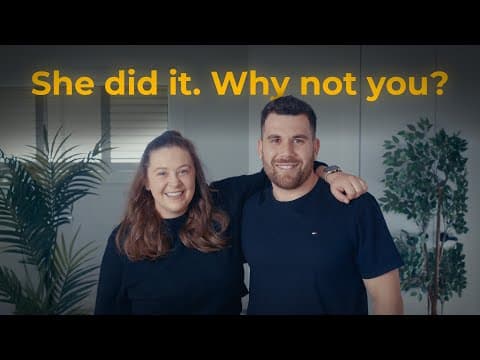
How a Young Mum Built a $2M Portfolio by 32 — While Raising Three Kids
Fresh Start Advisory
35m 40s7,942 words~40 min read
YouTube auto captions
Transcript source
YouTube auto captions
This transcript was extracted from YouTube's auto-generated caption track. The transcript below is server-rendered so it can be read, searched, cited, and shared without opening the original YouTube player.
Pull quotes
[0:00]Um herself and her husband have come to us, I think now three properties we've done.
[0:00]>> Uh so it was awesome to get you on here today, but to share your story and I think in empower people to you invest out of families to you know help you know I guess create a financial backing.
[0:00]So I wanted to kind of like start off really telling about your story and kind of what made you go down this path of investing in property.
[0:00]Well, I think if we go back to the start, Frank, I'm really fortunate that um with my family, we've had conversations around the dinner table about investing and finance.
Use this transcript
Related transcript hubs
Watch on YouTube
Share
MORE TRANSCRIPTS


