[0:00]Imagine stepping into a role where your decisions, well, they don't just influence, they literally shape the future direction of an entire company. Yeah, we're talking high stakes, massive impact. Exactly. and a dynamic environment where your strategic thinking is like the core currency. This isn't just about what you know, it's really how you think, how you strategize, and maybe most importantly, how you execute. Absolutely. It's the uh intriguing but also pretty demanding challenge of becoming a strategy manager. Right. This role demands a unique blend of foresight, rigorous analytical thinking and maybe most importantly, the ability to inspire and rally an entire organization behind a shared vision. And today, on the deep dive, our mission is basically to arm you with the essential insights. We want you to truly understand what a strategy manager does, the crucial skills they need. And how to handle those interview questions. Yes, how to confidently navigate those specific, often quite revealing questions that come up in an interview for this kind of vital role. Think of this as your uh shortcut to mastering the strategic mindset. And our source material for this deep dive, it's really rich. It comes from a recent, very insightful article called the 25 most common strategy managers interview questions. Okay. And what makes this article so valuable, I think, is it goes beyond just listing the questions. It really unpacks the why behind them. Ah, the motivation. Exactly. And it gives actionable how-to advice you can actually use. So here's the journey we're taking today. First, we'll peel back the layers on the strategy manager role itself, you know, core responsibilities, essential skills, or fundamentals. Right. Then we'll step right into the interview room, figuratively speaking. We'll dissect some of the most common and revealing questions. Looking at why interviewers ask them. And providing concrete, effective ways to answer, pulled straight from our source material. And we won't stop there. We'll actually flip the script. We'll arm you with the smartest questions you can ask to impress your interviewer. That's key. Yeah, plus crucial preparation tips. The goal is you walk into that interview or really any strategic discussion feeling genuinely confident. Okay, let's untack this role a bit more then. Strategy manager. That sounds like a pretty big title. What does that actually look like day-to-day? It definitely is a significant role. The strategy manager is really at the forefront, shaping the long-term direction of the company. Okay. They're the ones consistently looking ahead, spotting those broad market trends, identifying critical growth opportunities, maybe others might miss. So future focused. Very much so. And their core job is then to translate those insights into strategic plans, plans designed to hit specific business objectives. So they're not just creating these uh grand plans in isolation, right? So I mean, there's a lot of collaboration involved, making sure these plans actually, you know, take root across the organization. You're absolutely spot on. Collaboration is utterly central, they work across various departments, think marketing, operations, finance. All the key players. Precisely, ensuring company goals are aligned, but also that those strategic plans are effectively executed at every single level. And their work is deeply informed by, well, continuous data analysis, competitive research, constant performance monitoring. It's about being both a visionary. Seeing the future. And a very practical implementer who can actually make it happen. That makes perfect sense. It clearly requires a very specific kind of brain power, a diverse skill set. Our source highlights five core skills vital for this. What's first on that list? The first, and you could argue it's the most foundational, is analytical thinking. Okay. And this isn't just about, you know, crunching numbers, it's the ability to dissect complex data, market trends, understand what those numbers really mean for the business. The so what's. Exactly, the so what. And use those insights to make informed decisions. A great strategy manager isn't just processing data, they're telling a story with it. Connecting the dots. Yeah, into a cohesive narrative for decision makers. And then there's communication skills. Yeah. Seems obvious, maybe, but for strategy, what's the strategic part of it? How's it different from just speaking clearly? That's a great question. For a strategy manager, it's about conveying complex ideas clearly, concisely, and crucially persuasively, to stakeholders at all levels. You've got the C suite needing the big picture and then the teams needing actionable steps. Different audiences. Totally different audiences. And strategy often means change, right? Change requires strong, empathetic communication to get that buy-in. Assuming everyone speaks your strategy language is a big mistake. Then we have leadership. This sounds like it ties directly into that communication piece you just mentioned. It absolutely does. Leadership here is the capability to inspire and guide diverse teams towards achieving those strategic goals. Look, a brilliant strategy is only as good as its execution. And execution comes down to empowering and leading people through the changes needed. It's more than managing, it's motivating. Next up, problem solving. Things rarely go exactly according to plan, I imagine. So you need to be able to pivot. Precisely. This is the aptitude for identifying issues quickly, sometimes even anticipating them before they hit, and developing effective, sometimes unconventional solutions. Thinking on your feet. Exactly. The strategic landscape is always shifting, so the ability to navigate obstacles and adapt. It's completely non-negotiable. And finally, number five is project management. How does this fit into the bigger strategic picture? It sounds more tactical. Well, a strategic plan often breaks down into multiple, quite complex projects or initiatives. Ah, okay. So project management skills mean having expertise in planning, executing, and overseeing these specific projects to make sure they're completed successfully and on time. It's the bridge. It really is. It's the bridge between that high-level strategic thinking and the granular day-to-day action needed to make it real. Without it, even the best strategy can just fizzle out. Okay, so with those foundational skills laid out, let's step inside that interview room. Our source breaks down common questions and crucially how to answer them. Let's start with crafting and executing strategy. Here's a big one you'll likely face. Can you describe your approach to developing a strategic plan for a new initiative? Right. Interviewers ask this to understand your strategic thinking process right from the start. How do you plan? How do you prioritize? How do you actually execute? They want to see how your mind works. Exactly. They want to see the architecture of your thinking when faced with a new challenge, not just here you recite a list of steps. So what are the absolute non-negotiable components they're looking for in a strong answer here? Well, the source really emphasizes identifying key objectives and the desired outcomes right out front. What does success look like? Got it. Then conducting thorough market and competitive analysis to actually inform your strategy, don't guess. Data driven. And finally, developing a detailed actionable implementation plan. That plan needs clear milestones and metrics for success. Can you give us a precise example of how that might sound? Something concrete? Sure. A good answer might be something like, my approach begins with identifying the key objectives and desired outcomes. I then conduct a thorough market and competitive analysis to inform our strategy, followed by developing a detailed actionable implementation plan that includes clear milestones and metrics for success. That sounds solid. It shows the link between analysis and action. Which is the essence of strategy, right? Beautifully concise. Okay, how about this one? Can you provide an example of a successful strategy you implemented and the results it achieved? This feels like a classic, show me the proof question. It absolutely is. They want to assess your ability to not just plan but to execute strategies and deliver tangible results. So how do you structure that answer? You need to describe the strategic challenge or the opportunity you faced. Explain the specific steps you took to develop and implement the strategy. And then this is critical, highlight the measurable outcomes and impact. Numbers help. And for a killer answer, one that really stands out. What does the source suggest? The source gives a great example. I spearheaded a market expansion strategy that involved entering three new international markets. By leveraging local partnerships and a targeted marketing campaign, we achieved a 25% increase in revenue within the first year. Wow. It's impactful because it's specific, it's quantifiable, and it speaks directly to the bottom line. That's what executives want to hear. It's not just a story, it's a success story backed by data. Absolutely. Numbers definitely tell a compelling story there. Yeah. Now, a more nuanced question, kind of bridging that vision and reality gap. How do you ensure alignment between the organization's strategy and its operational capabilities? That's precisely why they ask it. They want to make sure your strategic plans aren't just sitting on a shelf, you know? They need to be feasible, executable. Real world ready. Exactly. Bridging that high-level vision with the day-to-day operations. So to answer this well, you should talk about conducting regular cross-functional meetings. Getting everyone in the room. Yes, developing clear, actionable plans with defined roles and responsibilities, and consistently monitoring progress, being ready to adjust as needed. And the example answer from our source. It goes like this. I ensure alignment by conducting regular cross-functional meetings to maintain open communication and collaboration. Additionally, I develop clear, actionable plans with defined roles and responsibilities to ensure everyone is on the same page and understands their part in the larger strategy. That shows a really practical collaborative approach to actually getting things done. Mhm. Now, let's talk about the unpredictable side of business. Strategy isn't always a straight line, is it? Definitely not. So what happens when things go sideways? Let's discuss how a strategy manager handles the unexpected. Specifically, this question. Describe a time when you had to pivot a strategy due to unforeseen circumstances. What was your process? Yeah, this one is a critical test. It checks your adaptability, your problem solving skills when things get dynamic or unexpected. This is what they want to hear. You need to clearly identify the unforeseen circumstance, what happened, and what was its specific impact on the original plan. Then describe the concrete steps you took to pivot, to implement a new approach. And finally, highlight the outcomes and importantly, the lessons learned. They're looking for resilience. Resilience and quick, smart thinking under pressure. What's a strong example that illustrates that? Okay, how about this? When a key supplier unexpectedly went out of business, I quickly reassessed our supply chain strategy. By identifying alternative suppliers and renegotiating contracts, we minimized disruption and maintained production levels. That works, it shows decisive action. Right, and crucially, it highlights not just that you can react, but that you can problem solve effectively under pressure to find tangible solutions that protect the business. That's a great example of turning a challenge into proof of your capability. What about resistance from within the organization? We've all seen that. Can you discuss a time when you faced resistance to a strategic change and how you handled it? Oh yeah, that's a common one. This question evaluates your ability to manage conflict and actually drive change when things get tough. So what's the approach? You should first identify the source and the nature of the resistance. Was it fear of the unknown? Worries about job roles? Then describe the specific steps you took to address those concerns, to listen, to gain buy-in. And finally, highlight the positive outcomes and maybe what you learned about change management from it. They're looking for resilience. Resilience and quick, smart thinking under pressure. What's a strong example that illustrates that? Okay, how about this? When implementing a new technology platform, some team members were resistant, mainly due to unfamiliarity and concerns about their workload. So I organized comprehensive training sessions, held one-on-one listening sessions to address specific worries, and provided ongoing support. And the result? This eventually led to full adoption, improved efficiency, and actually, we even got new ideas from the team on how to leverage the platform further. That's powerful. It shows you didn't just overcome resistance, but maybe turned it into an opportunity. Okay, let's shift gears slightly to data driven decision making and strategic tools. This feels really key to modern strategy, especially with all the data available now. First up, what methods do you use to analyze market trends and their potential impact on strategy? This question gauges your ability to interpret market data and importantly, understand its implications for strategic planning. So, what should the answer include? Your answer should definitely cover utilizing data analytics tools, conducting thorough SWAT analysis, you know, strengths, weaknesses, opportunities, threats. The classic. The classic, yes. And regularly reviewing industry reports and competitor activities, the interviewer really wants to see you connect the dots between that raw data and actual strategic insight. So how would that sound in an interview setting? You could say something like, I use a combination of advanced data analytics tools and thorough SWAT analysis to really dig into market trends. By regularly reviewing industry reports, talking to experts, and closely tracking what competitors are doing, I can anticipate shifts and proactively adjust our strategy to maintain a competitive edge. That proactivity seems crucial. Then speaking of results, how do you measure the effectiveness of a strategic initiative? This goes right to accountability, doesn't it? Continuous improvement. Absolutely. Companies need to know strategies are actually delivering the desired results. And they need to know that you, as the strategist manager, can make those data-driven adjustments. So what do you talk about? KPIs. Yes, definitely. You should discuss how you define clear, measurable KPIs, key performance indicators, things like revenue growth, market share, customer acquisition cost, whatever fits the goal. And they have to align with the goal. Precisely align with the strategic goals. Then you explain how you regularly review performance data and metrics against those KPIs, and how you make informed adjustments to the strategies based on those insights and feedback. Give me a precise answer that hits those points. Sure. I define clear, measurable KPIs that align precisely with our strategic goals. By regularly reviewing performance data and metrics, maybe through dashboards and consistent reporting, I can make informed adjustments to ensure we stay on track or maybe even accelerate towards our objectives. It's all about those continuous feedback loops. Okay, here's one maybe for the uh strategy wonks out there. Yeah. What tools or frameworks do you find most useful for strategic analysis? Ah, yes. This question reveals your familiarity with industry standard tools and frameworks used for effective planning. So name dropping tools is enough? Not quite. You should discuss specific tools, sure, like SWAT, Pestle analysis, that's political, economic, social, technological, legal, environmental. Right. Or maybe Porter's five forces. But more importantly, explain how you apply them in real world scenarios. What benefits, what insights did you actually gain from using them? So it's about application, not just knowledge. Exactly. These aren't just academic exercises, they're lenses you use to see the market's true dynamics. Any go-to examples that showcase that practical application? Yeah, you could say. I find SWAT analysis incredibly useful for quickly mapping internal strengths and weaknesses against external opportunities and threats. And Porter's five forces is invaluable for dissecting the competitive landscape and understanding industry attractiveness, especially when we're thinking about market entry or expansion. These tools give us structured ways to tackle complex problems and find actionable insights. Excellent. Now, let's talk about the human element, collaboration and stakeholder engagement. This feels absolutely critical for any strategy to succeed without buy-in. It's just a document on a shelf, you're right. So the question, what role does stakeholder engagement play in your strategic planning process? This question is all about your ability to collaborate and incorporate diverse perspectives. That's what they're testing. Okay, so how do you demonstrate that? You need to show you can identify key stakeholders who has a vested interest, who will be impacted, who has critical information. Then talk about how you engage them through regular, transparent communication and feedback loops. And finally, explain how you actually incorporate their input to make the strategy better and increase its chances of adoption. Can you give me a good answer that highlights how crucial it is? Sure. Stakeholder engagement is absolutely crucial in my strategic planning process. Why? Because it ensures diverse perspectives are considered, leading to more robust, inclusive, and frankly, more executable strategies. By maintaining open lines of communication, actively seeking feedback early and often, I can align our strategic goals with stakeholder expectations and foster a sense of collective ownership. Following right on that theme, how do you incorporate feedback from team members into your strategic decision making? This digs a bit deeper into collaboration, especially with those on the front lines. Yeah, it shows your commitment to a truly collaborative approach, not just top down. So what's the process here? You should explain that you actively seek input, maybe through regular team meetings, dedicated workshops, maybe even anonymous surveys ensuring all voices have a chance to be heard. Then you evaluate that feedback for relevance, alignment with the goals, and crucially, you implement actionable suggestions and communicate those changes back to the team. Close the loop. Right, closing the loop is important. And the example for that. I actively seek input through regular team meetings and dedicated feedback sessions, trying to create a safe space where all voices are heard. By evaluating feedback for relevance and alignment with our strategic goals, I can implement actionable suggestions, which often leads to more innovative solutions by the way, and then communicate those changes effectively back to the team, reinforcing their value and contribution. Finally on this communication tread, how do you communicate your strategic vision to different levels of the organization? Because a brilliant vision doesn't help if people don't get it or feel disconnected from it. Exactly right. This question ensures your strategic vision is clearly understood and hopefully embraced across all levels. What's the best way to do that? The key is to tailor your message. Tailor it specifically to each audience's level of understanding and their unique concerns or perspective. One size doesn't fit all. Definitely not. Use multiple communication channels, maybe company-wide town halls for the big picture, department specific briefings for details, and always provide clear actionable steps, showing each team how their specific work contributes directly to achieving that larger vision. What's the best way to phrase that concisely in an answer? Something like, I tailor my message to ensure it resonates with each audience, using clear and concise language that speaks to their specific roles and concerns. By leveraging multiple communication channels from all hands meetings to team huddles, I ensure that everyone not only understands, but also feels aligned with and hopefully motivated by our strategic vision. Okay, we've covered a lot about how they will question you. But here's where it gets really interesting, I think, turning the tables. Asking your own questions. Yes. Asking insightful questions of your interviewer shows proactivity, genuine interest and frankly, a strategic mindset that goes beyond just wanting the job. It absolutely does. It signals you're not just there to answer questions passively, but you want to understand the real challenges and contribute solutions, ideally from day one. Our source highlights four excellent questions to keep in your back pocket. First up, what are the biggest strategic challenges currently facing the company? Why is this such a powerful question? It immediately shows you're proactive. You're ready to think about and hopefully tackle the real issues, not just fill a seat. It positions you as someone aiming to contribute meaningfully to solutions. It shows strategic intent. Okay, good one. Next, how does the company measure the success of its strategic initiatives? This demonstrates your deep interest in tangible results and alignment with performance metrics. It tells them you're focused on impact and accountability, which is music to their ears. Not just busy work. Exactly, not just activity. Then, how about, can you describe the company's approach to fostering innovation? Why ask that? Well, that question highlights your commitment to continuous improvement, to staying competitive. It speaks to your longer term view of the company's health and its adaptability in what's usually a dynamic market. And finally this one, how does the company ensure alignment between strategy and execution across departments? This feels like it circles back to earlier points. It does, and it reinforces your understanding that strategy isn't just theory locked in a board room. It's about making things happen across the whole organization. It highlights your focus on practical implementation and cross-functional collaboration, which is really a hallmark of strong strategic leadership. So, beyond the Q&A, there are three essential preparation tips our source emphasizes. These feel like the non-negotiables before you even walk in the door. Absolutely. Bedrock stuff. First, and maybe most important, research the company thoroughly. And not just, you know, skimming their about us page. Right, dig deeper. Investigate their history, mission, values, recent news articles, check out their competitors, maybe even their stock performance if they're public. Why does that matter so much? Because it allows you to tailor your answers specifically to their context. It shows genuine interest, and honestly, it helps you anticipate some of their likely challenges or questions. Makes sense. Tip number two. Practice common questions. Familiarize yourself with typical questions like the ones we've just discussed and actually practice structuring your responses. Like using the star method. Yeah, the STAR method, situation, task, action, result is great for behavioral questions. Focus on highlighting your analytical thinking, your problem-solving, your strategic planning experience with concrete examples. Role playing with someone can really help. Don't just think about it, say it out loud. Exactly. And finally, a point we just made, but it's so critical it bears repeating. Prepare your own insightful questions. The ones we just discussed. Right. Develop maybe two or three thoughtful questions to ask the interviewer about the company's strategic direction, its current challenges, how they measure success, maybe even the team culture. And this really sets you apart. It truly does. It shows you're not just a candidate looking for any job, but a thoughtful, engaged potential future colleague. It shifts the dynamic of the interview. From an interrogation. Into a genuine two-way conversation, which is exactly what you want. Definitely. So to kind of wrap up this deep dive, we've covered a pretty comprehensive overview of the strategy manager role, haven't we? From its core responsibilities to those vital skills you need to excel. Yeah, and then we walked through some of the most common interview questions, really dissecting the why behind them. And giving those specific actionable answers straight from our source, explaining what makes them effective. And we didn't stop there. We flipped it, armed you with smart questions to ask, and laid out those crucial preparation tips to help you walk in with real confidence. And you know this deep diving isn't just about job interviews, is it? Not at all. It's about giving you a broader understanding of strategic thinking that's valuable in pretty much any professional context. Like leading a project. Or launching a new product, or even just trying to make better decisions in your daily work, it's about gaining confidence and getting that uh well-informed edge. Okay, so here's a final thought for you, the listener, to chew on. If knowledge is power, then maybe the ability to strategically apply that knowledge across unforeseen challenges and critically bring others along with you, that truly defines impact. Hmm. Good point. So think about this. What area of your own life or your work could benefit from a more strategic, maybe more long game approach, even when you're facing all those short-term demands?
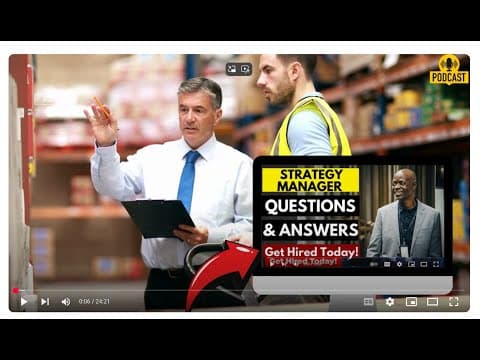
Strategy Manager Interview Questions and Answers | How To Ace Your Interview Successfully
JOB GUIDE 360 (PODCAST)
24m 14s4,027 words~21 min read
YouTube auto captions
Transcript source
YouTube auto captions
This transcript was extracted from YouTube's auto-generated caption track. The transcript below is server-rendered so it can be read, searched, cited, and shared without opening the original YouTube player.
Pull quotes
[0:00]Imagine stepping into a role where your decisions, well, they don't just influence, they literally shape the future direction of an entire company.
[0:00]and a dynamic environment where your strategic thinking is like the core currency.
[0:00]This isn't just about what you know, it's really how you think, how you strategize, and maybe most importantly, how you execute.
[0:00]It's the uh intriguing but also pretty demanding challenge of becoming a strategy manager.
Use this transcript
Related transcript hubs
Watch on YouTube
Share
MORE TRANSCRIPTS