[0:00]Today I'm going to share with y'all my least popular dating advice, which as a psychiatrist I have found to be incredibly effective. And that is to stop dating people that you are attracted to. Now, when I say this, the most common response is anger. Cancel this guy. What is this guy saying? Oh my God, this is so terrible, right? I deserve to date who I'm attracted to. You can't control who you're attracted to, right? Are you asking me to settle, Dr. K? Like that's insane, dude. Like I want this and I want to become an alpha, I want to become great, I want to become successful so that I can date this person. But let's think for a second, okay? Should we eat the foods that we're attracted to? Right? Not necessarily. Should we do the things that we're attracted to? Not really. But when it comes to love, this is when our mind or our brain gets it right, right? Like this is the one part. The brain can make mistakes when it comes to food choices, when it comes to how we spend our time, but when it comes to love, this is the time where our brain makes great calculations. Obviously not. So, in order to understand why you shouldn't date people that you're attracted to, you have to understand basically how the mind works on a basic level. First thing about the mind: It does not like internal conflict. So when we have cases of cognitive dissonance, mind hates that. So if I want something and I'm afraid of it, this is a problem because cognitive dissonance leads to inaction. And the mind needs to make its mind up, that's what the mind has to do. Like this is really fascinating, but you go to like a grocery store and you're trying to figure out what kind of chips should I get. The mind doesn't know, and then that confusion gets resolved. Do I want to get this kind of chip or do I want to get this kind of chip or do I want to get this kind of chip? And like 30 seconds later it's like, I want this one, right? So it's kind of weird. A moment ago you were conflicted and then your mind goes through this process of getting rid of the conflict. And if we are internally conflicted, we cannot move forward. So, our mind has this thing called defence mechanisms. Now here's the interesting thing about defence mechanisms. You may say which defense mechanism are we talking about, Dr. K? Are we talking about rationalization? Are we talking about suppression? Are we talking about narcissism? Which depression? The answer is basically all of them. So all of these defense mechanisms do basically one thing: they wall off a part of our mind. That's what they're for. Let's say that I have a lack of confidence in myself, and I'm trying to get a job interview. And I go to the job interview, and someone points out something that I'm not great at. The narcissistic defense activates and protects me from that insecurity, okay? So here's the key thing: Defense mechanisms in the mind of the person convince them that things that are true are now false, right? That's what defense mechanisms do. If I feel guilty after breaking up with you, I'm going to rationalize the breakup with you. I'm going to come up with all these reasons why it was a good idea. I'm going to wall that guilt off. This is how defense mechanisms work: Take a part of our mind that is accurate, split it off. Now we have a basic problem. Just because a part of us is defended, it doesn't mean that it disappears. Case in point with a narcissist. They're defended against their insecurity. If you call them insecure, they will argue against you, they will fight, they will defend against you, right? Because they're defending against themselves, they can't face the truth. We know this about narcissists. But there's a problem: That emotional energy is still there. Just because a narcissist is defended, just because I rationalize something away, doesn't mean that the guilt disappears. And if you look at studies on trauma, for example, we know that people with high amounts of emotionality, basically, they numb that part of their brain, but the part of the brain is still active. This is why they have nightmares, this is why they, you know, will jump when a door slams. They're all kinds of other things, but that emotional energy is still there, it doesn't disappear. Then we the brain runs into another problem, which is that defending against stuff is very cognitively exhausting, right? So if you attack a narcissist's insecurities, it's going to drain them immensely. So we need some place for this emotional energy to go. And what we do is something called projection. And if you want to understand why you should not date people that you're attracted to, it comes down to projection. So let's understand this, okay? If you find yourself in a pattern of dating. So this could be I continually date people who are afraid of commitment. I date people who are fuck boys. I date people who are clingy. And even this is what's really interesting. Even if you don't end up dating, you find yourself attracted consistently to people who are out of reach. People will say like, okay, they're incels, they're femcels, why don't the incels and femcels date each other, they'll have companionship done, solved, fixed, right? No, but incels only want super models, they're attracted to a very specific kind of thing. So if you find yourself in a pattern when it comes to dating, which can include never even dating because you're attracted to someone who's out of reach. If you understand this, you will understand the root to not all of those patterns, but it's huge. Loneliness is an all-time high, sexlessness is an all-time high, relationships are probably in the worst state they've ever been in the history of humanity. And that's why I made Dr. K's guide to love, sex and relationships. Let's talk about who you should actually date. Falling in love is sometimes one of the biggest mistakes that you can make. You know, I started to do a lot of research about how to have like really good sex. Visit healthygamer.gg/guide to learn more. Good luck out there, motherfuckers. Y'all are gonna need it. The first example that we're going to use is the movie Mean Girls starring Lindsay Lohan. So this is a movie about a group of high school girls who are pretty. But here's the thing: Even if you are a pretty girl in high school, there's a good chance that you are insecure and you are afraid of being ugly. Even pretty girls will feel ugly. I see this all the time with things like body dysmorphia. You'll see all of these beautiful actresses, I don't know if you guys noticed this, but everyone in Hollywood looks the same now. Like we're homogenizing appearances as even young women and men are starting to get work done, right? So even pretty people are afraid they're ugly. And so what do we do? We find an appropriate vessel. This is huge for projection. So when we have this emotional energy that's walled off, we need a place to stick it. And what we look for is an appropriate vessel. So queue Mean Girls, and this is why the movie is so successful, because everyone can relate to this. I'm going to find an ugly girl for the friend group, right? And once I have the ugly girl in the friend group, I'm going to project all of my feelings of ugliness onto that vessel. And the vessel should be receptive. So the girl feels ugly at the beginning too, so it works out fine. Then we run into a problem because if the vessel no longer becomes appropriate, if the vessel gets a glow up, they are no longer able to contain the ugly energy. And as they are no longer able to contain the ugly energy, the ugly energy starts to seep out and we will see this time and time and time again. And sometimes what can happen is when someone starts to become an inappropriate vessel, when we can no longer pass off our ugliness onto them, we will sabotage them. We will do something called induction, where we will make them ugly. I'm going to cut her hair, I'm going to talk crap about them, I'm going to attack their social standing. We see this also in friend groups when there's one person who's like the butt of the joke. And if that person, this person is the butt of the joke, right? So let's do this, let's let's practice this model. I am confident and inside I'm a loser, so I'm going to find a friend who we are going to bully. I take my feelings of being a loser and then I'm going to bully one person in the friend group. And friend groups love this because we have a vessel now for all of our insecurity. We all feel like losers, all of us are 25% loser, but am I a winner? I don't know, am I a winner, am I a loser? Let's find one person who's a convenient punching bag and we are going to all gang up on this person together. And here's what's really cool. When we all gang up on them together, they cannot become a winner, right? So we induce in them, we force them to stay a loser, which is awesome because then they can all this projected energy, they can keep taking it and keep taking it and keep taking it. Making sense? Really scary. This is how this works. So I'm going to go over this model for just a second, okay? So what do we need? We need a vessel. Here is the conscious mind. This is what we are aware of, and this is the unconscious mind, this is what we are defended against. And what we need is the qualities in here are going to be the same as the vessel. This is what we're going to see. So let's look at several patterns and see how this plays out. First pattern that we're going to look at, the nice guy, okay? So let's go over who the nice guy is attracted to. Oh my God, nice guy is attracted to, oh my, she's amazing. And I'm there for her, she's beautiful, she's awesome, she's talented. She keeps on dating the wrong guys, so she's unavailable. She doesn't appreciate me. She doesn't see, like she's like, oh my God, I want someone who's just like you. I need to find a boyfriend who's just like you, like I'm right here, like fall in love with me. Like why don't you fall in love with me, you bitch? Come on, what the fuck is wrong with you? Like I'm right here, I've been here for years. Why can't you see this? Like I'm exactly what you've been looking for. You fucking bitch. So, she's unavailable, she's evil, she's a bitch, she doesn't love me. So in the conscious mind, what is the nice guy view themselves as? They view themselves as the good guy. I'm a good person. But remember, when we talk about nice guys, we discover something really scary, which is that there's good guys and there's nice guys, and the two are not the same. So, let's go through our psychological equation. If good guys are over here, if if being a good guy is in my conscious mind, what is over here? Being a bad guy, right? And this is what's really scary. If you like talk to people about nice guys, what you discover is that many of them will say nice guys are not good guys. They're actually bad, they're manipulative, they're like emotional, they're like, you know, they're not actually good. Now, here's the really cool thing. Oh my God, look at that. The vessel for their projection, this person who they get really frustrated with and they think it's love, right? They think it's sacrifice, they think it's commitment, perfect vessel for their own walled off nastiness. And eventually nice guys will crack, right? Eventually they'll start to become resentful. I know this is what's so weird, that person, the person that the nice guy chose to fall in love with was fundamentally unavailable from the beginning. And this is the weird thing about being a nice guy, right? Is like, as the person signals to you, I'm not interested in you, you fall in love more, and you fall in love more, and you can't stay away. Think about that from a psychological energetic standpoint. Why can't you stay away? Because they're the perfect vessel for the part of yourself that you are unwilling to look at. Let's do another one, the fixer. I love this one. See this all the time. I like this example because this is an example that I think actually is like less defended against. I think a lot of fixers who try to find people to fix, right? And we all love this. I can fix her, I can fix them, like I can do it, like, oh my God, this person is so broken, I can, I'm so into this, like, yeah. Give me that goth chick who engages in self-injurious behavior and cutting and like I will fix her. She has so much deep sadness in her heart, and I will show her love. Like I will show her, like I can fix it, like I can do it, come on, guys. Like, oh my God, I'm so into her, right? So, we look for someone who is broken. This is super scary. So I've had like patients who have like bad depression and then we'll try a particular medication, we'll go into therapy, things like that. And then as the patient gets better, their partner who brings them to all of the appointments starts to sabotage the treatment. So sometimes we'll see this on things like house and stuff, like munch houses by proxy. But if you are in a fixer and fixy relationship, one of the most terrifying things that can happen is the person can get fixed. You can actually succeed. And then what happens? So if you're the fixer and you're in a relationship with someone broken, and you help them get healthy again, then things become can become really problematic, right? Because now they're like, what do you have to offer? They're going to move on, they're going to find somebody else, they deserve someone better. And so you start to withdraw from the relationship. And think about that, what happened? They're no longer an appropriate vessel. They had the glow up, they can't hold your ugly energy anymore. So you will start to retreat or you will sabotage. Doesn't happen 100% of the time, this happens to like, I want to say 30 to 40% of people who have chronic relationship problems. Projection is a huge part of it, okay? So, I'm the fixer, I am capable. So let's think about it. What is the cognitive dissonance? I am broken, right? And I look for someone who is broken. If they get fixed, they're no longer an appropriate vessel. Like I said, what I like about this example is oftentimes people who are fixers have greater insight into being broken. And this is what their experience is, like when I'm a fixer, I know I'm broken. But I become less broken when I help someone else. I can't get my shit together, I can't show up for my own appointments, I can't take care of my health. But when it comes to helping somebody else, then I can show up in a big way. The best version of me is brought out by helping someone, which has other mechanisms involved, but this is the psychological structure that sometimes cripples people. They're aware of their brokenness and they keep it at bay by fixing other people. Do we talk about this? Oh yeah, incels. So incels do not want to date femcels, they want to date super models, they want to date ten out of ten. So this once again is a vessel. Now here's the weird thing, what is that a vessel for? Let's see if we can run our script again. What is this person? This person is attractive, this person is good, this person is capable, this person is amazing, this person has self-esteem. Okay? Now, hopefully you guys are seeing the pattern already, but you're like, hold on a second. That's not what incels are. You're right, incels are hopeless, right? If you talk to an incel, they're losers, they're pathetic. And they try really hard to convince us of that, right? They're deplorable. The second you meet them, they'll start opening their mouth and when they open their mouth, he will start to think all of these things about them. They're so bad, so bad, so bad, so bad. They'll say it, you'll say it, we'll all agree, it's easy, they're pathetic, they're hopeless. They're ugly. Oh, I forgot ugly. So, if we look at this, I know you guys are going to fucking hate this because you already know this. What's on the inside? What are they defended against? That there's hope, that they're decent human beings, that they're not ugly. Okay? I had a really interesting interview with an incel a couple of years ago where the dude showed up in a ball cap and a mask. And he was like convinced he was really ugly. And at the end of the interview, like we, you know, it was a live interview and and chat was there and we kind of asked him, hey, bro, can you take off your like mask? Like do you feel comfortable taking off your mask? We really want to see what your face is. And the dude was like a solid seven, but in his mind, he's like a two. In his mind, he cannot like show up in places publicly. Mask on, hat on, all you can see is his eyes, convinced he's ugly. Now here's the really interesting thing. If you try to tell an incel, hey, bro, there's hope. You're not a loser, I have faith in you, I think you're a good person. What do they do? They argue with you. They're defended against that. They intellectualize, there may be hope for other people, but there's no hope for me. Such a potent intellectual defense mechanism. And what are they defending against? The belief of hope, because hope hurts. If there's zero chance, there's zero need for effort. See, human beings are really resilient. We can live through genocide and Holocaust and all kinds of stuff. We can live through all kinds of terrible things, terrible economic times. We're survivors, but don't give us hope. Because if we can hope, we can hurt. So, if you find yourself in a repetitive relationship pattern of being attracted to someone, you have to be really careful that the nature of your attraction is not projection. Why does projection manifest so much in romantic relationships? Because they're the best vessel. Because if I can find a vessel that I can get married to and spend the rest of my life with, that is the best way for me to offload this psychic energy, right? And we as humans are communal animals, this is like part of the way that our psychology works. We see it in high schools, we see it in movies, we see it in relationships. So step number one, ask yourself, do I have what I'm attracted to? And the answer will probably be no. So think about all the things that you're attracted to in this person, look for them within yourself. You may find that this stuff is hard to access for you. And this, by the way, is why we do things like coaching and stuff like that because we were doing some data analysis on our coaching program and like one of the things that we discovered is that, you know, when you spend 12, 14 weeks with someone, they analyze your patterns, they can point a finger to the things that you are ignoring, right? So this is where shadow work comes in. But shadow work is hard because it's hard to see the things that you're defended against, because the instrument that is doing the seeing is doing the defending. So look for what you're attracted to. If you want to break this pattern, there are two ways to do it. The first is to not follow that initial instinct. This is really important to understand. Tons of research shows that what you are attracted to is not the same as fit in a relationship. What makes you satisfied in a relationship is not the same as what you are attracted to in a relationship. So I had a patient who once said, Dr. K, I don't understand why I only attract fuck boys. And then what we discovered is she actually attracts everybody. She chooses the fuck boy. Second thing that we want to do is integrate this. So as we integrate whatever it is as an incel develops hope, as someone who is pretty starts to acknowledge that they may be ugly as well. As we integrate, we no longer need a particular kind of vessel, and then we can be attracted to the qualities that make that person themselves. We can fall in love with who they are instead of what we project onto them.
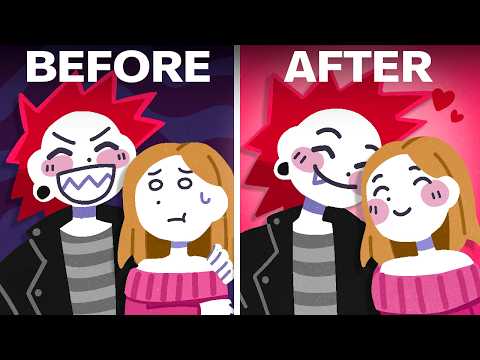
How To ACTUALLY Find The Right Person For You
HealthyGamerGG
18m 28s3,685 words~19 min read
YouTube auto captions
Transcript source
YouTube auto captions
This transcript was extracted from YouTube's auto-generated caption track. The transcript below is server-rendered so it can be read, searched, cited, and shared without opening the original YouTube player.
Pull quotes
[0:00]Today I'm going to share with y'all my least popular dating advice, which as a psychiatrist I have found to be incredibly effective.
[0:00]Like I want this and I want to become an alpha, I want to become great, I want to become successful so that I can date this person.
[0:00]But when it comes to love, this is when our mind or our brain gets it right, right?
[0:00]The brain can make mistakes when it comes to food choices, when it comes to how we spend our time, but when it comes to love, this is the time where our brain makes great calculations.
Use this transcript
Related transcript hubs
Watch on YouTube
Share
MORE TRANSCRIPTS


