[0:01]Hi, I'm James Oson, professor of Economics at Wake Forest University. This video, part of a Fraser Institute series on the key ideas of Adam Smith, based on my book The Essential Adam Smith, provides a quick snapshot of Smith's life and work. Who was Adam Smith? Born in 1723 in Kirkaudi, Scotland, Smith is widely recognized as the founding father of economics. At an early age in Scotland, Smith learned Latin, mathematics, history, and writing. And at 14, he entered the University of Glasgow to study moral philosophy, before beginning post-graduate studies at the University of Oxford in England. Disenchanted with the quality of instruction, however, Smith left Oxford in 1746. He worked for a time as a public lecturer before returning to the University of Glasgow as a professor, where he eventually became the head of moral philosophy. His lectures laid the foundation for his first published book, The Theory of Moral Sentiments, which elevated Smith's reputation both in Britain and Europe. After 12 years in Glasgow, he resigned his professorship and toured Europe as a tutor for a young British aristocrat. He met many intellectuals, including Voltaire, and the economist Francois Kene of the French physiocrats, who argued for fewer trade barriers and freer economies with less government regulation and lower taxes. His time in France was particularly important. While Smith had already developed his own similar ideas, the physiocrats likely helped shape his economic views. When Smith returned to Kirkcaldy in 1766, he was already a key figure of the Scottish enlightenment, a period of great intellectual accomplishment. Smith devoted the next 10 years to write his most renowned work, The Wealth of Nations, which explored why some countries prosper, while others languish in poverty. Published in 1776, it was an instant success, selling out its first edition in just six months, and it remains one of the most important and influential scholarly writings of the last millennium. In the days before he died, Smith asked his friends to burn his unpublished manuscripts, all 16 volumes, which likely explored the history of literature, philosophy, poetry, law, and government. As such, except for some essays and lectures, we are left only with his two published books, which together comprise a towering achievement in the history of Western thought. They contain insights as relevant today, as our world becomes increasingly integrated by trade, finance, and commerce, as when they were written. To learn more about Adam Smith, visit essentialadamsmith.org.
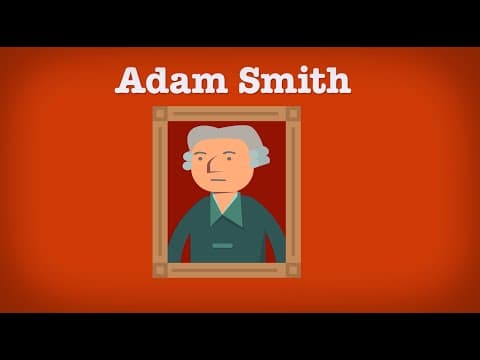
The Essential Adam Smith: Who is Adam Smith?
The Fraser Institute
2m 40s411 words~3 min read
YouTube auto captions
Transcript source
YouTube auto captions
This transcript was extracted from YouTube's auto-generated caption track. The transcript below is server-rendered so it can be read, searched, cited, and shared without opening the original YouTube player.
Pull quotes
[0:01]This video, part of a Fraser Institute series on the key ideas of Adam Smith, based on my book The Essential Adam Smith, provides a quick snapshot of Smith's life and work.
[0:01]Born in 1723 in Kirkaudi, Scotland, Smith is widely recognized as the founding father of economics.
[0:01]At an early age in Scotland, Smith learned Latin, mathematics, history, and writing.
[0:01]And at 14, he entered the University of Glasgow to study moral philosophy, before beginning post-graduate studies at the University of Oxford in England.
Use this transcript
Related transcript hubs
Watch on YouTube
Share
MORE TRANSCRIPTS


