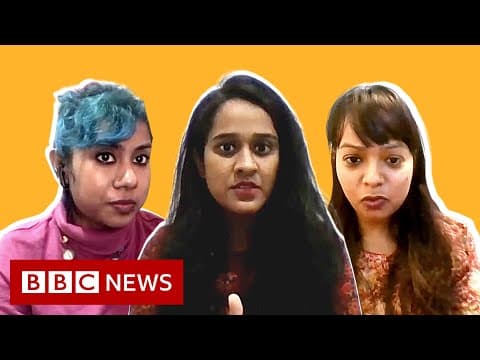
[0:00]The minute I say I'm Dalit, people say things like, really you don't seem sad enough. Dalit women lie at the bottom of the gradation of both caste and gender. We are not allowed the same pathways to dignity and and justice that other women receive.
[0:25]India's caste system is over 3,000 years old, and it divides Hindus into four main categories. Dalits, also known as untouchables, don't even make it into this hierarchy. When India gained independence, discrimination on the basis of caste was made illegal. But cases of violence against the Dalit community are still reported on a daily basis. Today, Dalit women make up 16% of India's female population. Where's your mic? We spoke to some of them about how they live with caste discrimination and gender bias. While walking away he said, you know, we're never going to work out, my parents are never going to say okay to our relationship because you're Dalit. And it didn't matter that uh I was studying and he had dropped out and he was practically doing nothing with his life. He still thought his parents would say no to me because according to caste, I am supposed to be the dropout. You know, another student does well, people say, wow, what a smart person. I do well, people say, who did she copy it from? My whole life has been a construction, uh, towards hiding this identity. For people in this community, just saying, I'm a Dalit, they hesitate and then say it. This internal dilemma is really difficult.
[1:54]I am also a survivor and I have many survivors of cast based sexual violence in my family. It's a unique spectrum of crimes that includes being stripped naked, having your head shorn, um, you know, being, you know, tarred, you know, black, um, being raped and being even murdered. I received like some extremely rude, extremely aggressive commentary, both in front of myself and behind my back, from like the parents of kids, like parents of boys that I was beginning to date, that's like, this girl will not be included in our family, like this marriage is not happening and she's a terrible person.And I'm like, After college when I got a job, I started working as a designer. So there's all this paperwork to fill in like your address etc.
[2:49]One of the things there was a question about the caste you belong to. So that one line hit me. I was so shocked. Why are you asking this? So only upper caste people who're Rajput or Brahmin they would write it in easily. And if I don't write it then you'll understand why I didn't write it. I felt like I was dragging the carcass of my identity on my back, and it was heavy and it was I carried it for so long that it just became a part of who I was. And when I came out, I was able to finally take it off my shoulders and set it down. And I felt free and I felt light, and I felt like I had nothing to hide anymore. I want the world to know and, you know, sort of be surprised or blown away all you like is that Dalits also laugh. We are remarkably joyful people. I guess what surprises people is that Dalits are human, not just caricatures, or people they read about in newspapers. This is difficult for me to answer because we've been striving for equality for so long. How do we even start talking about equality? Like equality, equalizing is a conversation that happens only when you're nearly at the same level. to think of a possible time where you don't have to do that it's just seems impossible. If people look at this as Dalit women's issue and they think only Dalit people should care about it, we we, you know, this will still take a much longer thing to achieve. For me, equality begins with you first understanding everything that your ancestors have done to mine that has left you in a much, much better place, and it has left me in a much, much lower position that I also do not deserve.


