[0:00]清明节。 清明节一到,大人们都会去扫墓。其实呢,扫墓是清明节前一天寒食节的内容。 今天这两个节日已经合到一起了。两千多年前,有一个叫晋国的国家。 晋国的公子重耳常常帮助百姓,但后母总是想害死他。 可怜的重耳公子只好带着几个忠心的大臣逃出了晋国。 他们逃啊逃,逃到了一个荒凉的地方。 重耳公子又累又饿,倒在了地上。 我就要饿死了。晋国的老百姓可怎么办法呢? 这时介子推突然拿来了一碗热乎乎的肉汤。 快呀快呀,快让重耳公子把它喝了。 喝了肉汤,重耳公子终于慢慢睁开了眼睛。 这肉汤真是太美味了。 你们真有办法。 这都是介子推做的。突然重耳公子看见介子推的大腿正在流血。 聪明的他立刻就明白了,那肉汤就是用介子推的大腿肉做的。 您对我这么好,以后我一定会好好报答您的。 后来,重耳公子在大家的帮助下,终于当上了晋国的国君。 大家呢都叫他晋文公。于是啊,有人就说晋文公了。 介子推那么忠心,您怎么可以不赏赐他呢? 晋文公听了,封了一个大大的官,请介子推来当。 可是介子推不想当官。 我们躲到绵山去吧,这样他们就找不到我们了。 可晋文公还傻乎乎地等着介子推呢。但左等右等就是见不到他。 原来啊,介子推已经和母亲去了绵山。 晋文公犯了愁。 绵山那么大,我到哪里去找他呢。 有人对晋文公说: 您别担心了,只要放火烧山,留一个方向不点火,介子推就一定会从那里跑出来的。 农历二月二十三日,晋文公来到绵山,命人放起了大火。 小动物们都吓得纷纷跑了出来,但就是没有介子推。 晋文公使劲地找,终于在一棵烧焦的大柳树下,找到了介子推和他的母亲。 可他们娘俩已经永远地闭上了眼睛。 晋文公既悔恨又悲痛,哇哇地放声大哭。 人们从大柳树的树洞里找到了一封信。 信上说:如果晋文公想报答他,就为老百姓当一个清明的好国君吧。 大家看晋文公那么伤心,都劝他: 您不要哭了,只要您对老百姓好,介子推也就没有遗憾了。 第二年二月二十四日这天,晋文公扫墓时,发现那棵大柳树竟然活了过来。 他轻轻折下一根柳条,缠在了自己的头上。 后来晋文公就把寒食节后的那天叫做清明节了。 天下的老百姓也都学着晋文公的样子,开始扫墓折柳。 这个风俗一直延续到了今天。 晋文公十分后悔自己烧死了介子推,就把农历二月二十三这一天叫做寒食节。 不准人们生火做饭,只能吃冰冷的食物。 这个节日现在已经没有了。
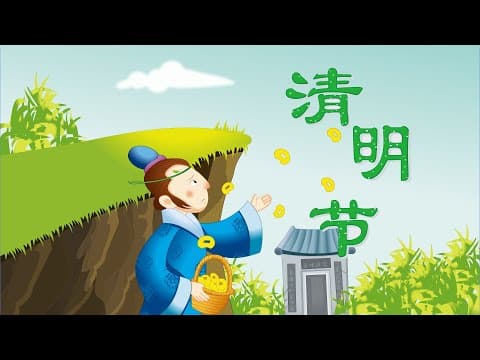
【精彩的传统节日】02 清明节丨Chinese Traditional Festival丨中国好绘本【三淼儿童官方频道】
三淼儿童官方频道
YouTube auto captions
This transcript was extracted from YouTube's auto-generated caption track. The transcript below is server-rendered so it can be read, searched, cited, and shared without opening the original YouTube player.
This video recounts the origin story of the Qingming Festival (Tomb-Sweeping Day) and the now-defunct Hanshi Festival (Cold Food Festival), which are traditionally linked. The narrative begins over two millennia ago in the State of Jin, where Prince Chong'er, known for his kindness, was forced to flee due to his stepmother's schemes. During his exile, he and his loyal ministers faced extreme hardship. In a moment of severe hunger, one of his ministers, Jie Zitui, selflessly cut a piece of flesh from his own thigh to make a warm meat soup, saving Chong'er's life. Chong'er promised to repay Jie Zitui for his loyalty and sacrifice.
Later, Chong'er ascended to the throne, becoming Duke Wen of Jin. Remembering Jie Zitui's devotion, he offered him a high official position. However, Jie Zitui, uninterested in power, chose to retreat to Mianshan Mountain with his mother. Duke Wen, desperate to find him, was advised to set a fire on the mountain, leaving one path unburned, believing Jie Zitui would escape through it. Tragically, the fire led to the deaths of Jie Zitui and his mother, who were found under a burnt willow tree. A letter from Jie Zitui was discovered, urging Duke Wen to be a "clear and wise" ruler for the common people.
The remorseful Duke Wen established the Hanshi Festival on the day of Jie Zitui's death, forbidding the lighting of fires and allowing only cold food, as a tribute. This festival, however, eventually faded away. The following year, upon discovering the burnt willow tree had revived, Duke Wen designated the day after Hanshi Festival as Qingming Festival. He started the custom of sweeping tombs and wearing willow branches, a tradition that continues to this day, symbolizing remembrance and respect for ancestors.
Key Takeaways
- Qingming Festival and Hanshi Festival originated from a historical tale in the State of Jin.
- Prince Chong'er, later Duke Wen, was saved from starvation by his loyal minister Jie Zitui, who sacrificed his own flesh.
- Jie Zitui rejected an official position and retreated to Mianshan Mountain with his mother.
- Duke Wen's attempt to force Jie Zitui out with a mountain fire tragically resulted in Jie Zitui and his mother's deaths.
- A letter from Jie Zitui urged Duke Wen to be a wise and just ruler for the people.
- Duke Wen established Hanshi Festival (Cold Food Festival) on the day of Jie Zitui's death to commemorate him.
- The Qingming Festival (Tomb-Sweeping Day) was later established by Duke Wen, initiating the traditions of tomb-sweeping and wearing willow branches, which continue today.


