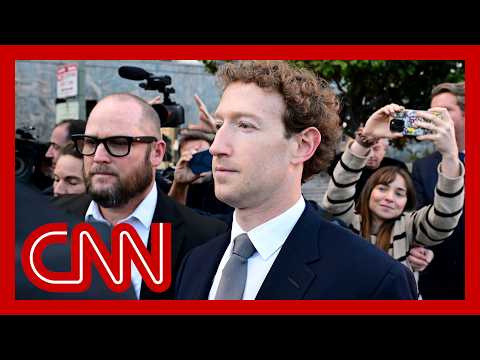
[0:00]A verdict has been reached in a potentially landmark social media addiction trial. Meta and YouTube essentially on trial.
[0:09]Uh CNN's clear Duffy has the latest and clear. What is the verdict? I understand you've got the news.
[0:15]Well, Boris Bronte, Meta and YouTube have both been found liable in this case for negligence and how they've operated their platforms, building these features that have been called addictive of young people.
[0:27]And also, you know, found liable of failing to warn users of the risks of their platform. So really a significant moment here.
[0:34]The jurors have decided that meta bears a 70% sort of responsibility for what happened to this 20-year-old plaintiff, YouTube bears 30% responsibility, but they have found that these companies were responsible for addicting her and causing harm to her mental health.
[0:53]And of course, this does set the stage for potentially similar verdicts in hundreds of similar cases.
[0:58]So, massive moment here. We are awaiting more information about what exactly the financial damages could look like in this case, but this is again a landmark moment where both meta and YouTube are being found responsible, being found liable for building addictive features that have harmed the mental health of young people.
[1:15]All right, clear, huge news, stay with us. Let's bring in former state attorney Dave Aaronberg to talk about uh the legal implications here.
[1:23]Hundreds more cases, Dave, walk us through this. As you mentioned, this is a bell weather case. So explain to us what that means for these other cases.
[1:35]Right, Brianna, so there's about 10,000 similar lawsuits. They're bundled into multi-district litigation across the country.
[1:43]So, you have all these groups, parents, school districts, attorneys general, they're all over the the country.
[1:49]They're putting their cases together to consolidate them so they could follow with this lawsuit, but this is the bell weather.
[1:58]This will serve as a real tough point for Facebook and and uh Google, they're going to have to live with this because the outcome and the damages will serve as a template for how the rest of these thousands of cases are litigated or settled and I suspect they will settle.
[2:17]This was remember, it was TikTok and Snapchat that settled with these plaintiffs before trial and Facebook and Google said, nah, we're going to take our chances, roll the dice.
[2:26]Well, they rolled the dice and it came up snake eyes. Snake eyes indeed. We we just got a a statement from Meta saying quote, we respectfully disagree with the verdict and are evaluating our legal options to what Dave said just a moment ago. They are likely to appeal this decision.
[2:38]Uh let's bring in uh Brian Stelter who's been tracking the latest on this news. Uh Brian, what's your reaction?
[2:45]That's right. And that statement from Meta coming moments ago from the company.
[2:50]This is the second uh verdict in a case against Meta in as many days.
[2:57]There was that New Mexico case yesterday, that jury finding Meta liable as well. That dollar figure, uh $375 million.
[3:07]Meta said it would appeal. Now you have Meta reacting again today and the company have been waiting, of course, for more than a week as these jury deliberations were going on in LA.
[3:20]Uh the company reacting to this case saying, yes, it it's evaluating its legal options, not immediately saying it will appeal.
[3:27]Uh it is notable we're going to read about, we're going to hear about the compensation, the comp uh the compensatory damages in this case, uh, you know, it looks like it's probably going to be $3 million.
[3:32]$3 million for a single plaintiff is significant, uh, but for Meta, that is, of course, a very, very small amount of money.
[3:40]We're talking about some of the biggest companies on the planet here, worth trillions.
[3:46]Uh, so Meta has weighed in so far. I suspect we will hear something similar from Google, the owner, the parent company of YouTube as well.
[3:50]A couple of other social media players, they actually settled right on the eve of trial to avoid going through this trial process, to avoid facing a jury and that spoke volumes in and of itself.
[4:00]But Meta and Google went forward and now we have this really significant ruling. I feel like in America and around the world, we're at the beginning of a conversation about what smartphones and social media companies have done to our society.
[4:22]Both the positives, yes, but also the negatives. We're only at the beginning of that conversation, even though it's been many years and even though we are now at the point where trials are taking place over the addictive nature of these technologies.
[4:26]We all feel the addictive pull of these tools. We all feel the consequences in our own lives, but to see it displayed on trial, to see the effects on one person brought up in front of a jury in this way, it is a monumental uh situation.
[4:42]It's a really important moment to take stock of of what these tools that have both in some ways transformed our culture in in good ways, have also have very harmful effects in other ways.
[4:50]So true. Um Brian, thank you so much. Stand by for us. I want to bring in Jacob Ward, technology journalist who is the host of the Rip Current podcast.
[5:01]Wow, Jacob. And to Brian's point, yeah, this is a small amount of money, but there are a lot more cases and this also speaks to how these companies do business.
[5:10]There is a conversation going on right about how social media companies are operating and the influence they have, but I think at a time where there's a feeling that social media companies maybe have been patronizing some of the users of social media and the people who have been complaining about the effects of them. Perhaps they have to listen a little bit more and this could really affect their bottom line and how they do business.
[5:35]I mean, yeah, from from Brian, from just a pure dollars and cents perspective, sure, $3 million for an individual plaintiff, maybe that's something that a company like this can afford, but there's 350 family cases in the pipeline behind this plaintiff.
[5:46]If you've got $3 million per, that's already over a billion dollars. Beyond that, you've got another 250 school districts lining up to sue, that's going to be, you know, a thousands more kids conceivably per school district and then you're getting into some very large numbers very fast.
[6:04]But all of that aside, I mean what this really says to me, what is such a big deal about this is that we're really looking at harm in this whole new way that the architecture of choice, the way in which these companies have built the experience of being together online, has, in this case, the jury has found, caused damage to young people.
[6:27]And that idea, which is beyond the sort of the the general feeling we all have that something is wrong with childhood, uh moves us into this legal theory that can be pursued, thinking now in very concrete terms about a behavioral harm at scale by design.
[6:45]And that is an entirely new world. We are literally sitting here, I think, at the moment when we figured out that seat belts in cars are the difference between, you know, danger and not, right?
[6:54]At we're at the moment here, I think where we're figuring out that there is a causal connection between, you know, cancer and cigarettes. It's that kind of legal theory that is suddenly been in place here and we're now, I think, you know, Brian's right there that we're at the beginning of an absolutely new era in thinking about how social media is really working on kids and the liability that companies have when they play around with kids behavior for profit, which until now has been entirely legally acceptable and now we're in an entirely new world, you guys.
[7:27]Yeah, really is. Um, uh, Jacob, thank you so much. Everyone, thank you so much. What a huge moment is a jury has found Meta and Google liable.


