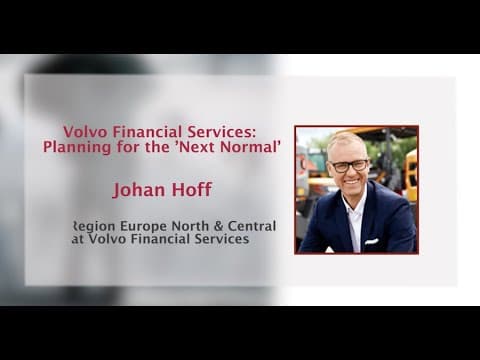
[0:10]Yeah, it's a pleasure for me to be here. I have spent most of my career in FP&A controlling roles and and CFO's across the globe. A majority of my career in in the Volvo Group and uh right now I'm I'm leading as a managing director uh European region for all Financial Services and you see a couple of things that we are financing here on on on the picture.
[0:36]So I will I will try to share my story and my experience from primarily from from 2020 during the pandemic year here and then hope to be able to share some lessons learned here with all of you here.
[0:52]So if we take next slide. So this takes me back to March 2020 and and uh everything stopped uh and for us uh one thing that stopped there for for us then in the Volvo group was was production.
[1:15]Uh we had problems with supplies in into our factories. Uh the situation is in in Europe as many of you know closed down for our customers. There were border restrictions. We had queues on on the borders.
[1:31]Uh we had customers that came to us and said that they want to postpone payments. We had governments that put in payment moratoriums. Everyone was in home office and and basically zero visibility. And then what what what do you do? How do you manage the business in in that context? Uh for obviously I think for for for many of us very very stressful. I think it doesn't matter if you are general manager or if you're sitting in an FP&A function here with a great responsibility.
[2:05]Uh very very difficult situation there and and how how how how do you then take the next step to to to get your arms around this.
[2:16]So if you go to next slide. For us uh for and and this is for the group. Safety is number one for for our employees. But then also a responsibility not only then to to to for the business as such, but but ensuring customer uptime because you have critical transports uh and and you needed to service trucks and and you you have a distribution network and and for us as well we need to make sure that uh that our customers could afford then run running the trucks uh so supporting them with with the payment holidays etcetera.
[2:54]For the group as such I think for for every one of us uh cash uh becomes critical important uh inventories etcetera and and normal cost measures. So I think probably not not not nothing special. Nothing special and but that so I think that that's the context for for for many of us. And then when we start to look into what do you do in this situation uh and then if you go to next slide uh Louisa.
[3:25]We we took a step back and we said how does this look now and and uh high uncertainty but a few things uh is certain and and uh and we we we put up four phases here along a timeline basically. So we said now is the stop phase.
[3:43]What is happening? What are the actions we need to focus on in management? Uh and and engaging with our FP&A team here. And and in this situation you need to take a lot of decisions. So so it it's critical having a proactive FP&A in in the in in these kind of situation.
[4:04]Uh next phase is somewhat a restart getting both the production ramp up and and getting customers back on the road in in some cases.
[4:14]Then a ramp up and and capacity dimension up up to uh where we are now with a new normal. I think uh there's a lot of speculation what kind of shape uh recovery would be and I think what we see now in in the commercial uh industry uh commercial transport industry it it looks like a V-shape and and even to that extent that we have supply issues in in for all automotive companies uh when it comes to uh semiconductors.
[4:46]Basically and and and I think we as a big OEM here and and with many others we were not able to forecast clearly here so so it's also constrained in in the total value chain uh and and the system you're in in here.
[5:01]I will give uh go to next slide uh Louisa.
[5:06]I will give a couple of examples here and that has been critical for us. First first and foremost uh always prepare for a downturn. It it it's coming. It's only a matter of of time here. And and we were lucky in that sense in 2019.
[5:22]Uh we did a big preparation and we did what we call a Flex program. We simulated a downturn with 30% uh reduction in volumes and then uh identified activities for that.
[5:37]We also did surveys along management if they were ready and I think here is very easy if you sit in management on top of the cycle. Many of us including myself we thought we were ready but but you can never be enough ready. You can never be enough prepared. So so preparation is important.
[5:54]Then a couple of things uh that we did during the different phases here. Stop of course then you need to make sure that your you have a revenue that is bigger than that than your cost. So expense management but then also looking at the capex side of the business uh so so you you need you need to put the brakes there.
[6:14]You need to adjust your governance and that means also here reporting frequency going from maybe monthly and and uh moving forecast on a monthly basis to to a daily to daily overview.
[6:30]Uh we realized quickly here also that our normal business drivers didn't really work because it moves so quickly here. So so what we were able to do here with the data science team involved is using what we call onboard connected data. So we were using telematics from trucks and machines and understanding how our customers were doing and in different segment and we used that then as as as business drivers.
[6:54]Restart uh very much here focused on supply chain and and understanding then also not only the T1, T2, T3 as suppliers but then also execute on downturn plans and what it meant for us. A lot of tough decisions here turning shorter savings into long-term permanent uh savings.
[7:18]And and then ramp up uh coming back here to to what might describe and and uh shape invisionary. For us uh acceleration in the industry and and uh we we looked over how we allocate capital in in the group and much more focus. One area for us that is big now is e-mobility, electric trucks for example.
[7:44]And and and also adjusting the governance all the time on work there. Normally you work with the centralized P&L but but here we had you had to centralize and and you need to take control also and and there FP&A is is is critical.
[7:55]So if I sum up on next slide uh Larissa.
[8:00]Three things uh that that uh we learned. Uh number one, be prepared. Uh always be prepared for a downturn and big granular. Make sure you have activities. It it will ease tough decision.
[8:16]Design your I call it narrative. Maybe it's a big word for for those boxes uh but uncertain it's high so you need something to hold on to. And then you need then in that environment adopt the actions that that you are taking. You can't continue with with doing the normal work that so to say. And then thirdly, crisis is an opportunity and never waste a good crisis and and I think again back to to to Mike here. He talked about Black Swans and so on so forth.


