[0:11]Genetic diversity is the variety of genes found within a species. Think of it like nature's survival kit, a wide collection of traits that helps a species deal with changes in its environment. Let's say there's a sudden disease outbreak, a drought, or a temperature shift. If every individual in a species were genetically identical, they'd all react the same way! If the conditions are harmful, the entire population could be wiped out. But with genetic diversity, not everyone is equally vulnerable. Some individuals may carry genes that make them more resistant to disease, better at conserving water, or more capable of finding food in tough conditions. Those individuals survive, reproduce, and pass on those helpful traits, keeping the population alive and adapting over time. In a forest, not all squirrels are the same. Some may have sharper eyesight that helps them spot predators more quickly. Others may be better at storing food or blending into their surroundings with slightly different fur colors. These differences, shaped by their genes, increase the chances that at least some will survive when danger strikes. Likewise, in the same forest, some trees may be genetically better at resisting certain pests or diseases. So while a blight might kill some trees, others survive and help the forest recover. This built-in variation is what keeps species resilient, evolving and able to face future challenges.
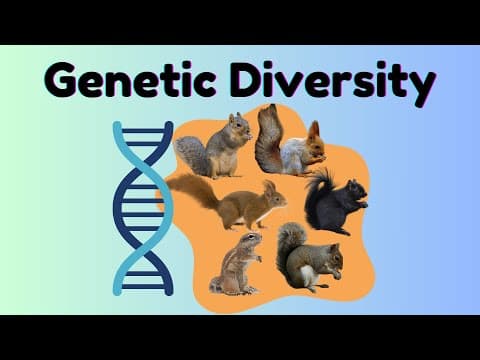
Genetic Diversity Explained 🧬 | Why It’s Vital for Species Survival and Ecosystem Health
Joedelyn Cruz
1m 57s228 words~2 min read
YouTube auto captions
Transcript source
YouTube auto captions
This transcript was extracted from YouTube's auto-generated caption track. The transcript below is server-rendered so it can be read, searched, cited, and shared without opening the original YouTube player.
Pull quotes
[0:11]Think of it like nature's survival kit, a wide collection of traits that helps a species deal with changes in its environment.
[0:11]If every individual in a species were genetically identical, they'd all react the same way!
[0:11]Some individuals may carry genes that make them more resistant to disease, better at conserving water, or more capable of finding food in tough conditions.
[0:11]Those individuals survive, reproduce, and pass on those helpful traits, keeping the population alive and adapting over time.
Use this transcript
Related transcript hubs
Watch on YouTube
Share
MORE TRANSCRIPTS