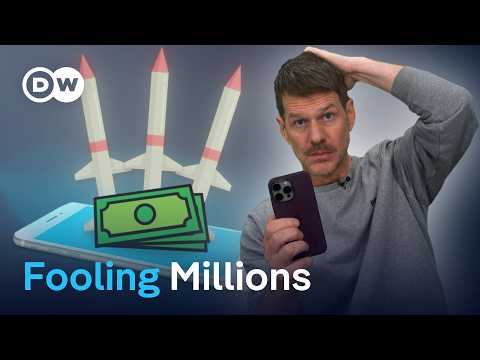
[0:00]Would you have known this is a fake? And it's not just about deceiving you. Someone is earning money by putting this in your feed.
[0:09]An unprecedented wave of AI fakes about the Iran war hit the internet recently, and creators worldwide are cashing in on it.
[0:16]Some of these clips got millions of views, earning their creators more in ad revenue and engagement bonuses, all while you're scrolling social media, trying to understand what's happening.
[0:26]Let's have a closer look at what's behind this. AI fakes going viral.
[0:31]Take this one. Burj Khalifa supposedly on fire. Looks real, right? Wrong. It's AI.
[0:37]How can you tell? Look closely. See the weird glitches? Flames that don't behave like fire and people morphing?
[0:44]Remember, big events like this would be covered by mainstream media. Always cross-check with trusted sources.
[0:50]Another video claims Iranian missiles hit Tel Aviv. Also fake.
[0:55]The explosions look too perfect, too smooth, like a video game animation.
[0:59]Many X users turn to Grok for fact checking. At first, the bot said the video was real until a user corrected it.
[1:09]Studies show that chatbots are notoriously bad at conveying news accurately. They are designed to please users, not to fact check.
[1:17]If they don't know something, they just make it up and with confidence. This is a new trend.
[1:21]AI altered satellite images. Some claim to show Iranian strikes on US air bases. They are fake too.
[1:30]How do we know? Cars and objects appear in exactly the same positions as in older Google Maps images.
[1:36]Something highly unlikely in real life. This matters because analysts use satellite images to see real battle damage.
[1:44]Fakes could cause serious security problems. And here's the key issue. People aren't doing this just to troll. They're making money with it.
[1:52]Platforms pay creators based on views, likes and engagement. However, to state the obvious, getting paid isn't as easy as just signing up.
[2:01]Your account usually needs verified views and followers, and in some cases, a premium subscription.
[2:06]TikTok pays creators via their Creator Fund. On YouTube, Meta and X, it's mostly ad revenue or brand deals.
[2:14]The more reactions a video gets, the greater the reach and the more money is being made.
[2:19]AI generated war content seems to be a money printer. War content triggers huge emotional reactions.
[2:25]Shouldn't platforms put a stop to this? Platforms are trying to fight back.
[2:29]X suspends creators for 90 days for AI war videos that are not labeled as such.
[2:35]Meta and YouTube also promise to crack down on AI generated spam and block their monetization.
[2:41]But the platforms themselves profit from viral posts too, because they make us stay and watch for longer, which means the platforms make more money.
[2:49]So a lot of AI fakes still slip through. Moderation is critical. But with tech deregulation in the US, there is less of it.
[2:57]So what should you as a user do? Scroll carefully. Think before you share. And remember, just because it looks real, doesn't mean it is.
[3:05]Comment if you've seen a fake clip recently. Bye and see you next time.


